
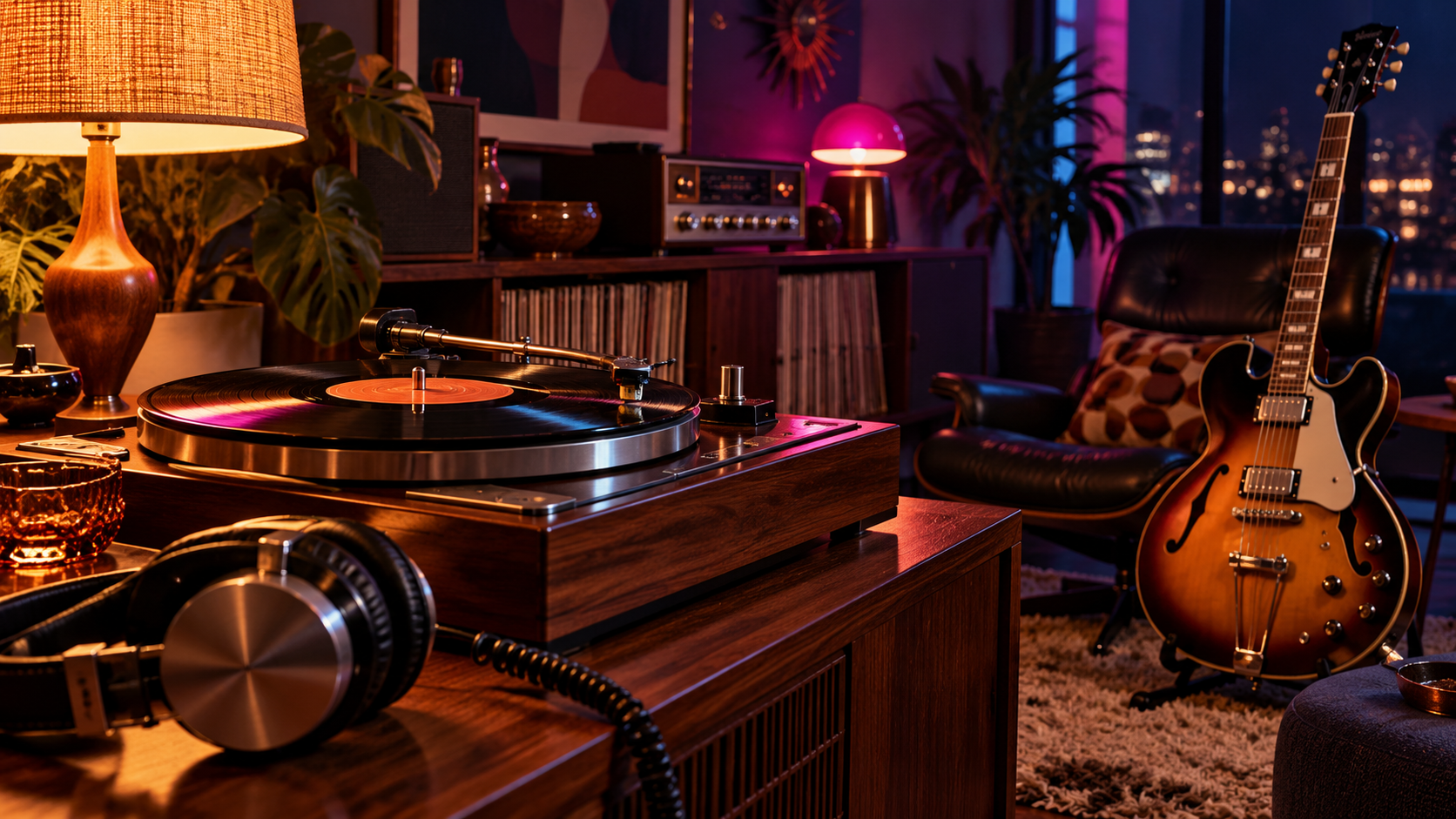
Imagine switching on the radio and hearing the opening notes of a Beatles song. A few minutes later, a Motown classic fills the room. Then comes a soulful voice, a jangling guitar, or a psychedelic recording that sounds as though it belongs to an entirely different world.
That's the magic of 1960s music radio.
Few decades offer such an interesting mix of familiar melodies and unexpected discoveries. The 1960s gave us unforgettable pop singles, powerful soul performances, adventurous rock albums, and folk songs that reflected the social questions of their time.
Yet the decade wasn't defined by one particular sound.
A song released in 1961 could be remarkably different from one recorded in 1969. Recording technology changed, musical tastes evolved, and artists began exploring creative possibilities that had rarely appeared in mainstream popular music before.
Spending an hour with 60s radio is a wonderful way to hear those changes for yourself.
Why Does 1960s Music Still Sound So Good?
There's a reason so many songs from the 1960s continue to appear in films, television programs, advertisements, and modern playlists.
Many were built around strong melodies, memorable vocal performances, and arrangements that made an immediate impression.
But the decade's lasting appeal goes beyond catchy choruses.
It was a period when musicians experimented with songwriting, recording techniques, instrumentation, and the relationship between popular music and cultural identity.
Some artists focused on direct, emotionally expressive performances. Others used the studio almost as another instrument, creating sounds that were difficult to reproduce on stage.
That variety makes the decade particularly enjoyable on radio.
You can move from a polished pop single to a raw blues-influenced rock recording without leaving the same musical era.
The Early 1960s: Pop, Doo-Wop and the Sound of Change
At the beginning of the decade, popular music still carried many influences from the 1950s.
Doo-wop, traditional pop, early rock and roll, and rhythm and blues remained important.
Artists such as Roy Orbison, The Shirelles, and Sam Cooke recorded songs that combined memorable melodies with distinctive vocal styles.
Girl groups also became a major part of the early-1960s pop landscape.
The Ronettes and The Crystals, for example, were associated with recordings featuring layered arrangements and dramatic production.
These songs often sound immediately recognizable, even to listeners who weren't alive when they were released.
Listen beyond the chorus
When an early-1960s song comes on, pay attention to the arrangement behind the singer.
You may hear handclaps, backing harmonies, piano figures, strings, or percussion that subtly changes the mood.
Those details helped make relatively short recordings feel complete and memorable.
It's one of the pleasures of revisiting the era with headphones rather than hearing the songs only as background music.
The British Invasion: When Rock Crossed the Atlantic
The arrival of British groups on American charts during the 1960s became one of the decade's defining musical developments.
The Beatles were central to this movement, but they weren't alone.
The Rolling Stones, The Animals, The Kinks, and The Who also helped bring different British approaches to rock and pop to international audiences.
Their music drew on a variety of influences, including American rhythm and blues, rock and roll, and earlier popular styles.
Over time, many of these groups developed increasingly distinctive musical identities.
The Beatles and changing songwriting
Listening to Beatles recordings from different years reveals just how quickly popular music could evolve during the decade.
Their early hits often featured direct melodies and energetic arrangements.
Later recordings experimented more extensively with instrumentation, song structures, and studio techniques.
That progression makes them an interesting starting point for anyone exploring the 1960s.
Rather than playing only the most famous singles, try listening to songs from different points in their career.
The differences can be striking.
Motown: The Sound That Brought Soul to Millions
While British rock groups were gaining international attention, Motown was building an extraordinary musical legacy in Detroit.
Founded by Berry Gordy in 1959, the record label became closely associated with polished, rhythmically engaging recordings and memorable vocal performances.
Artists such as The Supremes, The Temptations, Marvin Gaye, Stevie Wonder, and Martha and the Vandellas helped define the Motown sound.
Many recordings featured carefully arranged backing vocals, prominent basslines, and rhythms designed to work beautifully on radio.
What makes a Motown song recognizable?
Listen to the bass.
In many classic Motown recordings, it does much more than simply follow the chords.
It moves around the melody, adding energy and character.
The drums, tambourine, piano, guitars, and backing vocals also contribute to the groove.
Of course, Motown wasn't one unchanging formula. Its artists and producers developed a wide range of sounds.
But a good Motown station can introduce you to some of the most memorable recordings of the decade.
Soul Music: Voices That Still Move Listeners
Soul music developed through a rich combination of gospel, rhythm and blues, and other African American musical traditions.
During the 1960s, artists such as Aretha Franklin, Otis Redding, Wilson Pickett, and Sam Cooke helped shape its growing influence.
Their recordings often placed emotional expression at the center of the performance.
A singer might begin a phrase quietly, then build toward a powerful chorus.
The instrumental arrangements supported that emotional journey.
Some soul songs were energetic and danceable. Others were deeply reflective.
Why soul works so well on radio
You don't need to know the history of every recording to feel its impact.
A compelling vocal performance can immediately hold your attention.
But learning about the musicians, studios, and communities behind the recordings makes the experience even richer.
For a deeper understanding of African American musical heritage, the Smithsonian National Museum of African American History and Culture provides a useful starting point.
The history of 1960s soul is inseparable from the wider cultural and social history of the period.
Folk Music and Songs With Something to Say
The 1960s also brought increased mainstream attention to folk musicians and singer-songwriters.
Bob Dylan, Joan Baez, and Peter, Paul and Mary were among the artists associated with the era's folk revival.
Many songs explored personal experiences, social issues, and political questions.
Some became connected with civil rights activism and opposition to the Vietnam War.
Others focused on storytelling, relationships, and everyday life.
A quieter side of the decade
After listening to energetic rock or soul, a simple folk recording can feel surprisingly intimate.
An acoustic guitar and a distinctive voice may be enough to carry the entire song.
Pay attention to the lyrics and the way the performer phrases each line.
The arrangement may be minimal, but the storytelling can be powerful.
This side of 1960s music is especially rewarding when you're in the mood for thoughtful listening.
Psychedelic Rock: When Music Became More Experimental
By the second half of the decade, some musicians were moving beyond conventional pop arrangements.
Psychedelic rock became associated with unusual instrumental sounds, studio effects, extended performances, and experimental songwriting.
Artists such as Jimi Hendrix, Pink Floyd, Jefferson Airplane, and The Doors explored different aspects of this musical landscape.
Not every psychedelic recording sounds alike.
Some songs are melodic and accessible, while others are more atmospheric or improvisational.
Listen to the production
This is one area where headphones can make a real difference.
Notice the use of reverb, distortion, unusual instrumental textures, and changes in dynamics.
You may hear sounds moving across a stereo recording or layers of instruments creating a dense atmosphere.
These production choices helped expand what rock music could sound like.
They also influenced later generations of artists working in rock, electronic music, and other genres.
The 1960s Weren't Only About Rock and Soul
It's easy to focus on the biggest British and American hits, but the decade's musical story is much wider.
Jazz musicians continued developing new approaches to improvisation.
Country music remained popular, with artists such as Patsy Cline, Loretta Lynn, and Johnny Cash recording influential work.
Brazilian bossa nova gained international attention through artists including João Gilberto and Antônio Carlos Jobim.
Reggae began emerging in Jamaica toward the end of the decade, following earlier developments in ska and rocksteady.
French, Italian, Spanish, and other national pop traditions also produced memorable recordings.
A radio station that includes international music can reveal a much broader picture of the 1960s.
If you're curious about discovering sounds from different countries, start with the 1LiveRadio online radio directory and explore stations beyond the most familiar genres.
How Recording Technology Changed the Sound of the 60s
One reason the decade feels so varied is the rapid development of studio recording.
Early-1960s pop often relied on relatively straightforward arrangements and production methods.
As multitrack recording became more widely used, artists and producers gained additional possibilities.
They could layer instruments, experiment with vocal harmonies, and create arrangements that would have been difficult to capture in a single live performance.
Producers also began exploring more ambitious uses of effects and studio equipment.
Compare a hit from 1962 with an experimental rock recording from 1968.
The difference may be dramatic.
Yet both recordings belong to the same decade.
That's part of what makes 1960s radio so fascinating.
How to Spend One Hour With 1960s Music
You don't need an entire weekend to appreciate the decade's variety.
Try dividing a listening session into different musical moods.
Time Music to explore What to notice 0–10 minutes Early-60s pop and vocal groups Melodies and backing harmonies 10–20 minutes British rock Guitar sounds and songwriting 20–30 minutes Motown and soul Basslines, rhythm and vocals 30–40 minutes Folk and acoustic music Lyrics and storytelling 40–50 minutes Psychedelic rock Studio effects and arrangements 50–60 minutes Forgotten hits and international music Unexpected discoveriesThe idea isn't to rush through a checklist.
If a song catches your attention, stay with that style a little longer.
Radio is often most enjoyable when you allow the next track to surprise you.
Finding the Right 60s Radio Station
Not every station labeled 60s music offers the same listening experience.
Some focus almost entirely on chart hits.
Others specialize in classic rock, Motown, soul, oldies, or psychedelic music.
If you want familiar melodies, a general 1960s hits station is a good starting point.
If you prefer energetic guitar music, look for classic rock or British Invasion programming.
For smooth vocals and danceable rhythms, explore Motown and soul stations.
And if you're interested in less familiar recordings, specialist stations can be particularly rewarding.
You can browse available music formats through 1LiveRadio.
Give a station enough time to show its range before deciding whether it's right for you.
Why Forgotten 60s Songs Deserve Another Listen
The same famous recordings often dominate discussions about 1960s music.
There's nothing wrong with enjoying those classics.
But thousands of other songs were released during the decade.
Some became regional hits. Others received limited radio play or were overshadowed by more successful artists.
A lesser-known recording can still offer an unforgettable melody, an inventive arrangement, or an extraordinary vocal performance.
That's one reason decade-focused radio remains valuable.
It can introduce listeners to music they might never search for themselves.
When you hear something unfamiliar, note the artist's name.
You may discover an entire collection of recordings worth exploring.
60s Music and the Power of Nostalgia
For listeners who lived through the decade, a familiar song may bring back a particular place or moment.
For younger listeners, the connection may come through family memories, films, or a simple appreciation of the music.
Both experiences are valid.
You don't have to remember the 1960s personally to enjoy the recordings.
And nostalgia doesn't mean ignoring the decade's complexity.
The period included significant social and political change, and its music reflected a wide range of experiences.
Listening with curiosity allows you to appreciate both the songs and the world in which they were created.
Frequently Asked Questions
What is 60s music radio?
60s music radio refers to stations or programs featuring recordings from the 1960s. Playlists may include pop, rock, soul, Motown, folk, jazz, and other genres.
What music genres were popular in the 1960s?
Rock, pop, soul, Motown, folk, rhythm and blues, and psychedelic rock were among the prominent styles, although popularity varied across countries and different years.
Who were some famous musicians of the 1960s?
The Beatles, The Rolling Stones, Aretha Franklin, Bob Dylan, Marvin Gaye, Jimi Hendrix, and The Supremes were among the many influential artists active during the decade.
What was Motown music?
Motown was a Detroit-based record label founded in 1959. It became known for influential soul and pop recordings by artists including The Supremes, The Temptations, and Marvin Gaye.
Why did 1960s music change so much?
Changes in musical tastes, cultural movements, recording technology, and artistic experimentation all contributed to the decade's evolving sound.
Can I listen to 1960s radio online?
Yes. Many internet radio stations specialize in 1960s hits, classic rock, Motown, soul, and related styles.
Is 1960s music still popular?
Yes. Many recordings from the decade continue to attract listeners through radio, streaming, films, and other media.
Final Thoughts: One Hour Can Open Up a Whole Decade
The 1960s produced far more than a collection of famous old songs.
They brought together changing musical traditions, new recording possibilities, and artists whose work continues to influence listeners.
A single hour of 60s radio can move from a simple love song to a powerful soul performance, then into adventurous rock or thoughtful folk music.
Those contrasts are what make the decade worth revisiting.
You may arrive hoping to hear a favorite Beatles song and leave with a completely different artist in mind.
That's the pleasure of exploring music through radio.
You never know which recording will stay with you after the listening session ends.
Reader comments
No comments yet. Start the conversation.
Leave a comment
Your email stays private. Comments appear after approval.