
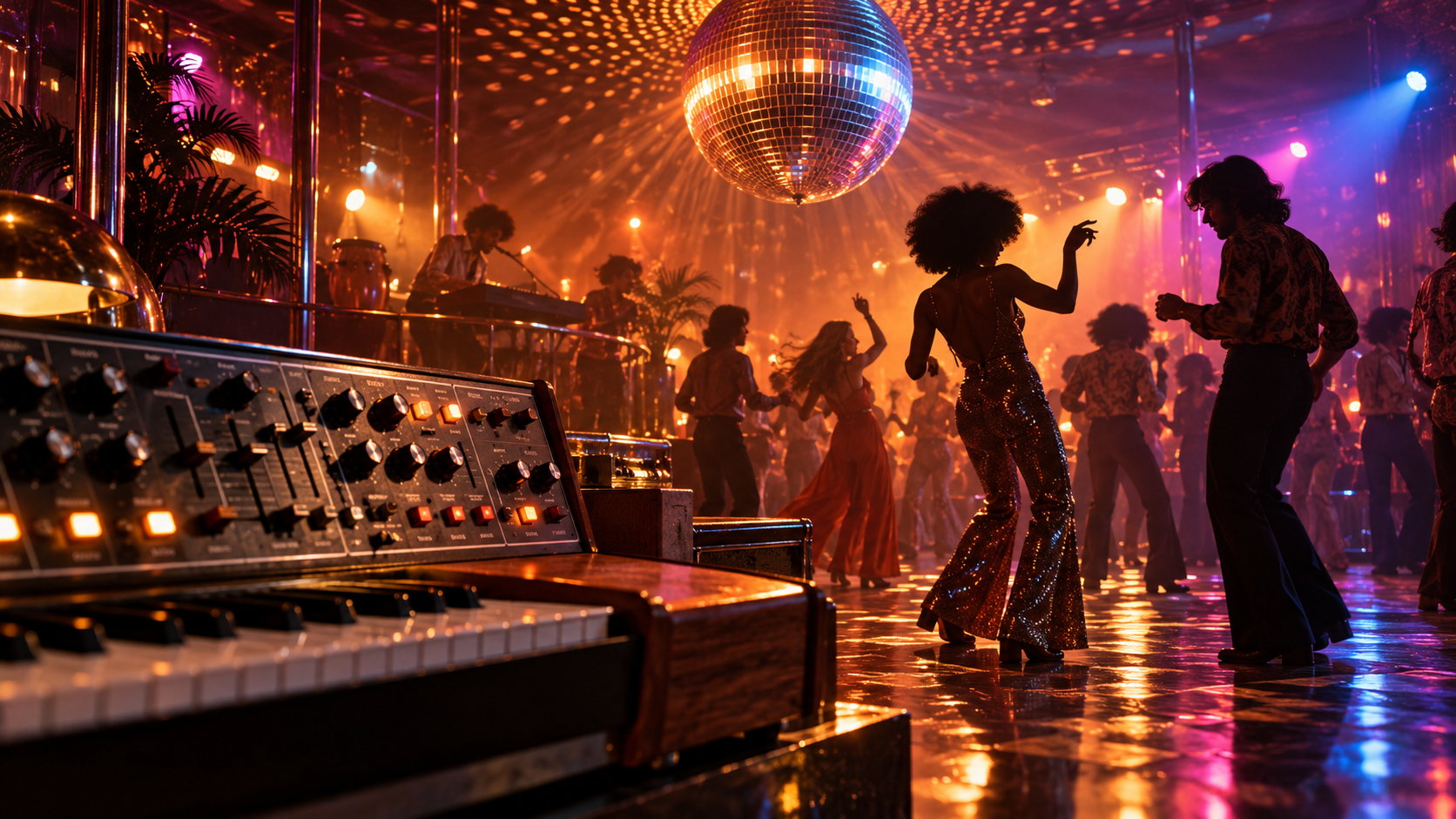
There's something about a great song from the 1970s that makes you want to turn up the volume.
Maybe it's the opening guitar riff of a classic rock anthem, the steady bassline of a disco record, or a soul singer delivering a chorus with such conviction that you forget the recording is more than forty years old.
Sometimes, it's a quieter moment that stays with you: a piano melody, an acoustic guitar, or a voice that sounds almost as though it's singing directly to you.
That's the appeal of 1970s music radio. It brings together songs that sound completely different yet somehow belong to the same extraordinary decade.
The 1970s gave popular music some of its most recognizable artists, influential albums, and memorable recordings. Rock became increasingly ambitious, disco transformed dance floors, funk pushed rhythm into the spotlight, and singer-songwriters brought intimate storytelling to mainstream audiences.
But the decade wasn't simply a collection of famous hits.
It was a period of musical experimentation, cultural change, and creative freedom. Listening to 70s radio today gives us a chance to hear that variety again—and discover some of the music that history's greatest-hits playlists tend to overlook.
Why 1970s Music Still Feels So Alive
The 1970s are often described as a golden age of popular music, although every decade has its own remarkable achievements.
What makes the period especially interesting is the range of sounds that developed alongside one another.
A radio station might play Fleetwood Mac, followed by Earth, Wind & Fire, then a song by David Bowie or Donna Summer.
Those artists approached music in very different ways.
Some focused on carefully arranged studio recordings. Others emphasized live-band energy, dance rhythms, or emotional songwriting.
And because many of these styles were developing rapidly, the music of 1971 could sound very different from the music of 1979.
The best 1970s radio stations capture that diversity.
Rather than treating the decade as one nostalgic sound, they allow listeners to experience its contrasts.
Classic Rock: When Albums Became Musical Journeys
Rock music expanded in several directions during the 1970s.
Bands such as Led Zeppelin, Pink Floyd, Queen, and Fleetwood Mac released recordings that became central to the decade's musical identity.
Some artists experimented with extended compositions and elaborate arrangements.
Others created direct, guitar-driven songs that worked just as well on radio as they did in concert.
The appeal of the classic rock sound
Listen closely to a great 1970s rock recording.
You may notice the interaction between electric guitars, bass, drums, and keyboards.
Sometimes the arrangement begins quietly before building into a powerful chorus.
Other songs rely on a repeating guitar riff that immediately establishes their identity.
The production also varies considerably.
Some recordings sound spacious and atmospheric, while others emphasize the raw energy of a band playing together.
That's why classic rock radio can be so satisfying.
Even familiar songs reveal new details when you listen carefully.
Disco: The Rhythm That Changed Dance Music
Few genres are as closely associated with the 1970s as disco.
Emerging through club cultures that included important Black, Latino, and LGBTQ+ communities, disco became a major international musical phenomenon during the decade.
Artists such as Donna Summer, Chic, Gloria Gaynor, and the Bee Gees helped bring disco to wide audiences.
Disco recordings often featured prominent basslines, steady dance rhythms, strings, keyboards, and carefully arranged vocals.
But the genre was never limited to one formula.
Some songs were elegant and atmospheric. Others were energetic and designed to keep a crowded dance floor moving.
Why disco still works today
A great disco record doesn't depend entirely on nostalgia.
Its rhythm can still feel irresistible.
Listen to the relationship between the bass and drums, then notice how guitars, keyboards, and percussion add movement.
Many disco arrangements develop gradually, introducing small musical changes that keep the groove interesting.
Disco also influenced later house, electronic dance music, and contemporary pop.
When you hear a modern dance track built around a steady beat and a memorable bassline, you may be hearing ideas that became especially prominent during the disco era.
Funk: When the Groove Became the Main Attraction
If disco made people dance, funk gave rhythm an entirely different kind of personality.
Artists such as James Brown, Parliament-Funkadelic, Sly and the Family Stone, and Earth, Wind & Fire helped shape the development and popularity of funk.
The music often emphasized interlocking rhythmic patterns, syncopation, and distinctive bass and guitar parts.
Rather than treating rhythm as simple accompaniment, funk made it central to the entire arrangement.
Listen to the spaces between the notes
One of the most enjoyable things about funk is how musicians use space.
A guitar may play a short rhythmic figure.
The bass answers with its own pattern.
The drums hold everything together, while horns or vocals add another layer.
No single instrument needs to play constantly.
The groove emerges from the way the parts fit together.
If you're new to funk, try listening to the rhythm section before focusing on the melody.
You may start hearing the music in a completely different way.
Soul and R&B: Music With Emotional Depth
Soul and rhythm and blues continued evolving throughout the 1970s.
Artists such as Marvin Gaye, Stevie Wonder, Al Green, and Curtis Mayfield released influential recordings that explored love, social issues, personal experiences, and broader cultural questions.
Some songs featured rich orchestral arrangements.
Others relied on a smaller group of instruments and a deeply expressive vocal performance.
More than beautiful melodies
A great soul recording often communicates emotion through details that are easy to overlook.
The way a singer holds a note.
A slight change in the rhythm.
A backing vocal that enters at exactly the right moment.
Those choices can transform a relatively simple song into something unforgettable.
The 1970s also saw soul and R&B artists experimenting with synthesizers, complex arrangements, and new production techniques.
That creative variety makes the decade especially rewarding for listeners who enjoy expressive vocals and sophisticated songwriting.
Singer-Songwriters: The Quieter Side of the 70s
Not every memorable 1970s song was designed for a stadium or a dance floor.
The decade also brought enormous attention to artists whose music emphasized personal storytelling.
Carole King, James Taylor, Joni Mitchell, and Cat Stevens were among the influential singer-songwriters of the period.
Their recordings often featured acoustic instruments, thoughtful lyrics, and arrangements that allowed the voice and melody to remain central.
Some songs explored relationships and personal change.
Others reflected on identity, society, or the passing of time.
Why these recordings feel personal
The appeal often comes from their directness.
A piano, an acoustic guitar, and a carefully written lyric can create an intimate listening experience.
When you hear these songs on the radio, they can provide a welcome contrast to louder or more rhythmically intense recordings.
It's a reminder that the 1970s weren't defined only by spectacle.
Some of the decade's most memorable music came from quiet moments.
Progressive Rock and the Art of Experimentation
The 1970s were also an important period for progressive rock.
Bands such as Yes, Genesis, King Crimson, and Pink Floyd explored extended compositions, unusual song structures, and elaborate arrangements.
Their recordings sometimes combined rock instrumentation with influences from classical music, jazz, and other traditions.
Some tracks lasted far longer than conventional radio singles.
Others used changing rhythms, atmospheric passages, and instrumental sections to create a sense of musical storytelling.
Progressive rock isn't always ideal background music.
It often rewards focused listening.
If you're interested in discovering the more adventurous side of the decade, specialist progressive rock stations can offer a fascinating experience.
Punk Rock: A Different Kind of Energy
By the second half of the 1970s, punk rock had become an important musical and cultural movement.
Artists and groups such as the Ramones, the Sex Pistols, and the Clash became closely associated with its development.
Punk often emphasized direct songwriting, energetic performances, and a rejection of certain mainstream rock conventions.
Many recordings were short, loud, and deliberately uncomplicated.
But punk was more than a musical style.
It was also connected to fashion, independent music scenes, political expression, and do-it-yourself creativity.
Listening to punk alongside progressive rock reveals just how different the decade's musical priorities could be.
One style might favor elaborate arrangements and extended compositions.
Another might deliver its message in two or three minutes.
Both were part of the 1970s.
The Rise of Reggae and Its International Influence
Reggae became increasingly visible internationally during the 1970s.
Developing in Jamaica from earlier musical traditions, reggae featured distinctive rhythmic patterns, expressive basslines, and a wide range of lyrical themes.
Bob Marley and the Wailers helped introduce reggae to audiences around the world.
Other important artists included Peter Tosh, Jimmy Cliff, and Burning Spear.
Reggae recordings could be uplifting, reflective, spiritual, or politically engaged.
The genre's influence later extended into rock, pop, punk, and electronic music.
A broad 1970s radio station may include reggae alongside rock, soul, and disco.
That variety helps reveal the international character of the decade's musical landscape.
How Recording Technology Shaped 1970s Music
The sound of the 1970s wasn't created by musicians alone.
Recording studios, producers, engineers, and changing technology played important roles.
Multitrack recording gave artists greater control over arrangements.
Synthesizers became increasingly important in some genres.
Studio effects and mixing techniques allowed producers to create recordings that sounded polished, atmospheric, or deliberately experimental.
At the same time, many artists continued to favor the sound of live instruments recorded together.
That's why the decade contains such a wide range of production styles.
A disco recording might feature carefully layered instruments and precise rhythmic arrangements.
A rock track might emphasize the spontaneous interaction of a live band.
Neither approach was automatically better.
Each offered different creative possibilities.
How to Spend an Hour Listening to 1970s Radio
If you're discovering the decade for the first time, try dividing an hour into several musical styles.
Time Music to explore What to listen for 0–10 minutes Classic rock Guitar riffs and dynamic arrangements 10–20 minutes Disco Basslines and dance rhythms 20–30 minutes Funk Syncopation and instrumental interplay 30–40 minutes Soul and R&B Vocals and emotional expression 40–50 minutes Singer-songwriters Lyrics and acoustic arrangements 50–60 minutes Reggae, punk, or progressive rock Different approaches to rhythm and songwritingYou don't have to follow this schedule exactly.
If a particular style catches your attention, spend more time with it.
The purpose is to discover the decade's variety, not to rush through a list of famous songs.
Finding the Right 70s Radio Station Online
Not every station labeled 70s radio plays the same music.
Some focus on familiar chart hits.
Others specialize in classic rock, disco, funk, soul, or soft rock.
If you enjoy guitar-driven music, try classic rock stations.
For energetic listening, explore disco and funk.
If you prefer expressive vocals and memorable melodies, soul and soft rock stations may be more appealing.
You can browse different music formats through the 1LiveRadio online radio directory.
The site's music blog is another place to explore listening ideas across different genres and decades.
Give a station some time before deciding whether it suits your taste.
The best discoveries often happen when an unfamiliar song appears between two favorites.
The Stories Behind 1970s Music
The music of the 1970s was shaped by social change, cultural movements, and the experiences of the communities that created it.
Disco, funk, soul, reggae, punk, and rock each developed through different histories.
Understanding those backgrounds helps explain why the music sounded the way it did.
For example, disco's development was closely connected to communities and nightlife spaces that created opportunities for expression and belonging.
Funk and soul drew on African American musical traditions and contributed to broader cultural conversations.
Reggae carried important connections to Jamaican identity, spirituality, and political expression.
The Rock & Roll Hall of Fame offers artist histories and educational material that can help listeners explore influential musicians and their cultural impact.
When a song catches your attention, learning about the people behind it can make the listening experience more meaningful.
The Forgotten 70s Songs Worth Rediscovering
The most famous recordings from the decade appear regularly on classic-hits stations.
But the 1970s produced far more music than a typical greatest-hits playlist can include.
Some artists released one memorable single before disappearing from mainstream attention.
Others developed loyal regional audiences without becoming internationally famous.
And many excellent album tracks never received the same radio exposure as major hits.
A specialist station can help uncover some of those recordings.
If you hear an unfamiliar song you enjoy, look up the artist and explore the rest of their work.
You may discover an album that becomes a personal favorite.
That's one of the best reasons to listen to decade-focused radio rather than relying entirely on a familiar playlist.
Why 1970s Music Appeals to Different Generations
For people who lived through the decade, these songs may bring back memories of concerts, friendships, family gatherings, or everyday life.
For younger listeners, the attraction may be the music itself.
A powerful guitar riff doesn't require nostalgia to be exciting.
A great disco groove can still make someone dance.
And an expressive soul performance can be moving regardless of when it was recorded.
The 1970s also continue to influence contemporary artists.
Elements of disco, funk, rock, and soul appear in modern pop, hip-hop, and electronic music.
Listening to older recordings can reveal the roots of sounds that remain familiar today.
Frequently Asked Questions
What is 70s radio?
70s radio refers to stations or programs featuring music from the 1970s. Depending on the broadcaster, playlists may include rock, disco, funk, soul, reggae, punk, and soft rock.
What music genres were popular in the 1970s?
Rock, disco, funk, soul, R&B, soft rock, and singer-songwriter music were prominent during the decade. Reggae, punk, and progressive rock also developed influential audiences.
Who were some famous 1970s musicians?
Led Zeppelin, Fleetwood Mac, David Bowie, Donna Summer, Stevie Wonder, Marvin Gaye, Queen, and Bob Marley were among the many influential artists active during the decade.
Why was disco so popular in the 1970s?
Disco developed through dance-club culture and gained widespread popularity through its rhythms, arrangements, performers, and growing commercial exposure.
What makes 1970s rock different from earlier rock?
Many 1970s rock artists explored more elaborate arrangements, extended compositions, and increasingly sophisticated studio production, although direct and energetic rock styles remained important.
Can I listen to 1970s radio online?
Yes. Many internet radio stations specialize in 1970s hits, classic rock, disco, funk, soul, and related genres.
Is 1970s music still popular?
Yes. Many recordings from the decade remain widely listened to, and their musical ideas continue to influence contemporary artists.
Final Thoughts: The 1970s Still Have Plenty to Discover
The 1970s weren't defined by one musical style.
They were a decade of contrasts: elaborate rock albums beside short punk songs, emotional soul performances alongside energetic disco, and intimate acoustic recordings sharing the airwaves with ambitious studio experiments.
That's what makes 1970s music radio so enjoyable.
You can return to the songs you already know, but there's always something else waiting between them.
A forgotten funk track. An unfamiliar singer-songwriter. A reggae recording that sends you exploring an entirely different musical tradition.
Give the decade an hour, and you may find yourself listening much longer.
Great music has a way of doing that.
Reader comments
No comments yet. Start the conversation.
Leave a comment
Your email stays private. Comments appear after approval.