
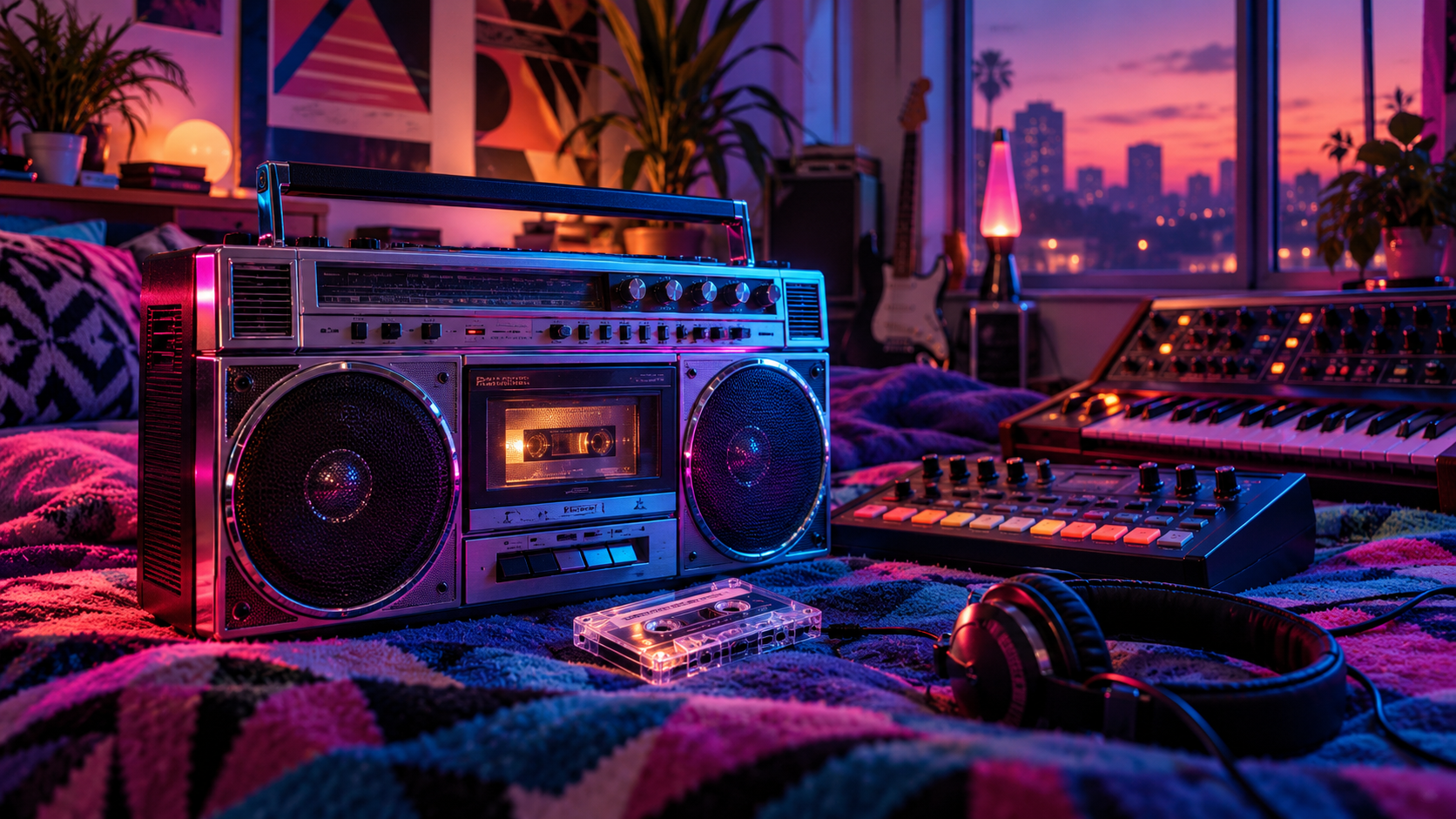
There's a certain kind of song that can transport you straight back to the 1980s within seconds.
Sometimes it's the opening sound of a synthesizer. Sometimes it's a powerful drumbeat, a bright guitar riff, or a chorus so familiar that you remember every word before the singer reaches the second line.
You might hear it while driving, cooking dinner, or scrolling through radio stations late at night.
Suddenly, an ordinary moment feels a little more colorful.
That's the appeal of 1980s music radio.
The decade gave us some of popular music's most recognizable artists and recordings, but its story is far more interesting than a collection of nostalgic hits.
The 1980s brought together electronic experimentation, stadium-sized rock performances, expressive soul and R&B, alternative music scenes, and dance records that helped shape the future of club culture.
A good 80s radio station can introduce you to all of them.
And the best part? You don't need to have lived through the decade to enjoy it.
What Makes 1980s Music So Recognizable?
Ask someone to describe the sound of the 1980s, and they'll probably mention synthesizers.
That's understandable.
Electronic keyboards, drum machines, and digital recording technologies became increasingly prominent in many popular recordings during the decade.
But there's much more to 80s music than electronic sounds.
Some artists relied on electric guitars and live drums. Others combined traditional instruments with new studio technology.
Vocal production also changed, with layered harmonies, dramatic reverberation, and distinctive effects appearing in many recordings.
Yet the most memorable songs often had something simpler at their center: a strong melody.
Even when the production was elaborate, the chorus remained easy to recognize.
That combination of bold sound and memorable songwriting helped give the decade its distinctive identity.
The Rise of Synth-Pop: When Electronic Music Reached the Mainstream
One of the defining developments of the 1980s was the growing popularity of synth-pop.
Artists began using synthesizers, sequencers, and drum machines not simply as occasional effects, but as central elements of their arrangements.
Groups such as Depeche Mode, The Human League, and Pet Shop Boys became associated with different approaches to electronic pop.
Their recordings could sound playful, romantic, melancholic, or futuristic.
Some tracks were designed for dancing, while others emphasized atmosphere and emotional expression.
Why synth-pop still sounds interesting
Listen closely to a classic synth-pop recording.
You may notice that the arrangement contains fewer traditional instruments than a typical rock song.
A repeating electronic bassline might provide the foundation.
A programmed drum pattern establishes the rhythm.
Different synthesizer sounds then create melodies, textures, and small musical details.
The result can feel both precise and expressive.
Modern electronic pop still draws on many of these ideas, which helps explain why 1980s-inspired production continues to attract new listeners.
New Wave: Where Rock Met Electronic Experimentation
New wave is another important part of the decade's musical story.
The term covered a wide range of artists and styles, many of which developed through the late-1970s punk and post-punk environment.
Bands such as Talking Heads, Blondie, Duran Duran, and The Cars explored different combinations of rock instrumentation, electronic sounds, dance rhythms, and pop songwriting.
Not every new wave artist sounded alike.
Some emphasized sharp guitar parts and energetic performances.
Others preferred synthesizers, unusual rhythms, or carefully arranged studio recordings.
That variety is what makes new wave radio particularly rewarding.
You can hear artists experimenting with different musical possibilities while still creating memorable songs.
Michael Jackson, Madonna and the Rise of Global Pop
The 1980s produced major international pop stars whose influence extended beyond recorded music.
Michael Jackson's Thriller, released in 1982, became one of the decade's defining albums.
Madonna emerged as a major pop figure, combining memorable dance-oriented recordings with a strong visual identity.
Prince developed an extraordinary musical approach that incorporated funk, rock, pop, soul, and electronic production.
Whitney Houston also became one of the era's most recognizable vocalists.
These artists were different in style, but they shared an ability to connect with large audiences.
The importance of music videos
Music television became increasingly influential during the 1980s.
MTV launched in the United States in 1981, helping establish music videos as an important part of popular-music promotion.
Artists could now build visual identities alongside their recordings.
Fashion, choreography, storytelling, and video production became closely connected to the way audiences experienced pop music.
Of course, radio remained essential.
A great song still needed to work when listeners couldn't see the performer.
That balance between sound and image helped define the decade.
Rock Music in the 1980s: From Arena Anthems to Alternative Sounds
Rock remained a major force throughout the 1980s.
Artists such as Bruce Springsteen, U2, Bon Jovi, and Guns N' Roses reached large audiences with different approaches to guitar-driven music.
Some recordings emphasized powerful choruses and polished production.
Others focused on raw energy, storytelling, or atmospheric arrangements.
Hard rock and heavy metal also developed significant audiences.
Bands such as Iron Maiden and Metallica helped shape different parts of the metal landscape.
Meanwhile, alternative rock scenes were growing outside the mainstream.
R.E.M., The Smiths, and Sonic Youth explored sounds that would influence later generations of musicians.
Not every 80s rock song was a power ballad
Power ballads are closely associated with the decade, but they represent only one part of its rock history.
An 80s rock station might move from a loud guitar anthem to a thoughtful alternative recording.
Those contrasts make the listening experience more interesting.
If you enjoy discovering music beyond familiar chart hits, specialist rock stations are worth exploring.
The Sound of 1980s R&B, Soul and Funk
The decade also brought important developments in R&B, soul, and funk.
Artists such as Luther Vandross, Anita Baker, Janet Jackson, and Sade helped shape different aspects of the period's sound.
Some recordings featured smooth vocals and sophisticated arrangements.
Others combined funk rhythms with electronic production, drum machines, and dance-oriented songwriting.
Prince's music also demonstrated how fluid the boundaries between pop, funk, rock, and R&B could become.
Listen to the rhythm section
In many 1980s R&B recordings, the relationship between bass and drums is especially important.
Sometimes the rhythm comes from live musicians.
In other tracks, programmed drums and electronic bass sounds play a central role.
The production may be polished, but expressive vocal performances remain at the heart of many songs.
This balance between technology and musical feeling is one of the decade's most interesting characteristics.
Hip-Hop Finds a Wider Audience
Hip-hop developed during the 1970s, particularly within African American and Latino communities in New York City.
During the 1980s, it grew into an increasingly visible recorded-music genre.
Artists such as Run-D.M.C., LL Cool J, Public Enemy, and Eric B. & Rakim helped shape different aspects of hip-hop's development.
Their recordings demonstrated a wide range of lyrical approaches, production techniques, and musical influences.
Sampling, drum machines, turntablism, and rhythmic vocal delivery became central elements of many recordings.
Hip-hop also influenced fashion, dance, language, and broader popular culture.
Listening to 1980s hip-hop today reveals the foundations of many sounds that would become prominent in later decades.
It also reminds us that the musical history of the 1980s extends well beyond mainstream pop and rock.
Dance Music: From Disco's Legacy to House and Techno
Disco's commercial popularity changed after the late 1970s, but its musical influence continued.
Dance-oriented pop, electro, and other electronic styles developed throughout the 1980s.
House music emerged in Chicago during the decade, shaped by DJs, producers, and club communities.
Techno developed in Detroit through artists experimenting with electronic instruments and futuristic rhythmic ideas.
These genres would become enormously influential in the following decades.
But their roots are closely connected to the creative environment of the 1980s.
A specialist dance station can introduce you to recordings that helped establish modern electronic club music.
And if you listen carefully, you may recognize ideas that continue to appear in contemporary dance tracks.
The Recording Technology Behind the 80s Sound
The distinctive production of many 1980s recordings was closely connected to changing studio technology.
Synthesizers became more accessible and versatile.
Drum machines allowed producers to create precise rhythmic patterns.
Digital recording and effects technology opened new creative possibilities.
One especially recognizable production technique was gated reverb, often associated with dramatic drum sounds.
But not every recording used the same tools or techniques.
Some artists preferred traditional recording approaches, while others embraced electronic experimentation.
The result was a decade full of different sonic identities.
When listening to 80s radio, try paying attention to the production as well as the song.
Notice the drum sound, the vocal effects, the keyboard textures, and the balance between instruments.
Those details can tell you a great deal about the recording's character.
Why 1980s Music Still Influences Modern Artists
Many contemporary musicians draw inspiration from 1980s production and songwriting.
Synth-pop textures, electronic basslines, retro drum sounds, and new wave-inspired arrangements continue to appear in modern recordings.
Some artists openly embrace the decade's aesthetic.
Others borrow individual elements while combining them with contemporary production techniques.
The influence extends beyond pop.
Electronic dance music, indie rock, R&B, and film soundtracks have all drawn from different aspects of 1980s music.
This doesn't mean modern artists are simply repeating the past.
Musical ideas are constantly reinterpreted.
Understanding their earlier forms can make new recordings even more interesting.
How to Spend One Hour With 1980s Radio
An hour is enough to explore several different sides of the decade.
Instead of listening only to the biggest hits, try moving between musical styles.
Time Music to explore What to notice 0–10 minutes Classic 80s pop Memorable hooks and vocal arrangements 10–20 minutes Synth-pop and new wave Electronic textures and rhythm 20–30 minutes Rock and alternative music Guitars, drums, and dynamics 30–40 minutes R&B, soul, and funk Vocals and basslines 40–50 minutes Hip-hop Rhythmic delivery and production 50–60 minutes Dance and forgotten favorites Unexpected discoveriesYou don't have to follow this schedule exactly.
If a song catches your attention, stay with that style a little longer.
The best listening sessions often develop naturally.
How to Find the Right 80s Radio Station Online
Not every station labeled 80s radio offers the same experience.
Some focus on familiar chart hits.
Others specialize in synth-pop, classic rock, dance, new wave, or R&B.
If you enjoy recognizable choruses, a general 80s hits station is a good starting point.
For electronic sounds, explore synth-pop and new wave stations.
If you prefer guitar-driven music, try classic rock or alternative rock programming.
And if you're interested in the roots of modern dance music, look for stations featuring classic house, electro, and related styles.
You can begin browsing music formats through the 1LiveRadio online radio directory.
For more ideas about discovering music across different decades and genres, explore the 1LiveRadio music blog.
Give each station a little time.
An unfamiliar track may turn out to be the most interesting part of your listening session.
The Stories Behind 1980s Music
The music of the 1980s developed through different communities, technologies, and cultural movements.
Hip-hop's growth was closely connected to urban creative communities.
House and techno emerged through club cultures and pioneering DJs and producers.
Pop and rock artists experimented with the possibilities of music television and increasingly sophisticated studio production.
Understanding these backgrounds makes the music more meaningful.
The Rock & Roll Hall of Fame offers artist histories and educational resources that can help listeners explore influential musicians and their cultural impact.
When you hear a song you love, learning about its creators can reveal connections you never noticed before.
Why Forgotten 80s Songs Deserve Another Listen
The most famous 1980s songs are easy to find.
They appear on radio, in films, and across countless playlists.
But the decade produced far more music than a typical greatest-hits collection can include.
Some artists enjoyed regional success without becoming international stars.
Others released memorable singles that gradually disappeared from mainstream radio.
There were also independent bands, experimental musicians, and emerging electronic producers whose influence became clearer years later.
Specialist radio stations can help uncover those recordings.
If you hear something unfamiliar, look up the artist.
You may discover an album or musical scene that becomes a new favorite.
Frequently Asked Questions
What is 80s radio?
80s radio refers to stations or programs featuring music from the 1980s. Playlists may include pop, rock, synth-pop, new wave, R&B, hip-hop, and dance music.
What music genres were popular in the 1980s?
Pop, rock, synth-pop, new wave, R&B, heavy metal, and hip-hop were among the prominent styles. House and techno also developed during the decade.
Who were some famous 1980s musicians?
Michael Jackson, Madonna, Prince, Whitney Houston, Bruce Springsteen, U2, and Depeche Mode were among the many influential artists active during the decade.
Why does 1980s music sound so distinctive?
Many recordings featured prominent synthesizers, drum machines, digital effects, layered vocals, and recognizable production techniques. However, the decade included a wide range of musical approaches.
What is synth-pop?
Synth-pop is a style of popular music in which synthesizers and electronic instruments play a central role in the arrangement.
Can I listen to 1980s radio online?
Yes. Many internet radio stations specialize in 1980s hits, classic rock, synth-pop, new wave, and other styles from the decade.
Is 1980s music still popular?
Yes. Many recordings from the decade continue to attract listeners, and their musical ideas influence contemporary pop, rock, and electronic music.
Final Thoughts: The 80s Have More to Offer Than Nostalgia
The 1980s are often remembered through bright colors, dramatic hairstyles, and unforgettable pop choruses.
But the decade's musical story is much richer.
It brought together electronic experimentation, powerful rock performances, expressive R&B, emerging hip-hop, and dance music that would influence generations of artists.
That's what makes 1980s music radio worth exploring.
You can return to the songs you already know, but you don't have to stop there.
Listen beyond the familiar choruses.
Pay attention to the production, the rhythms, and the artists whose recordings never became international hits.
You might discover that your favorite 80s song is one you've never heard before.
And that's a pr
Reader comments
No comments yet. Start the conversation.
Leave a comment
Your email stays private. Comments appear after approval.