
Some music asks for your attention immediately. A drumbeat starts, a singer enters, and within seconds you're following the melody toward the chorus.
Ambient music often asks for something different.
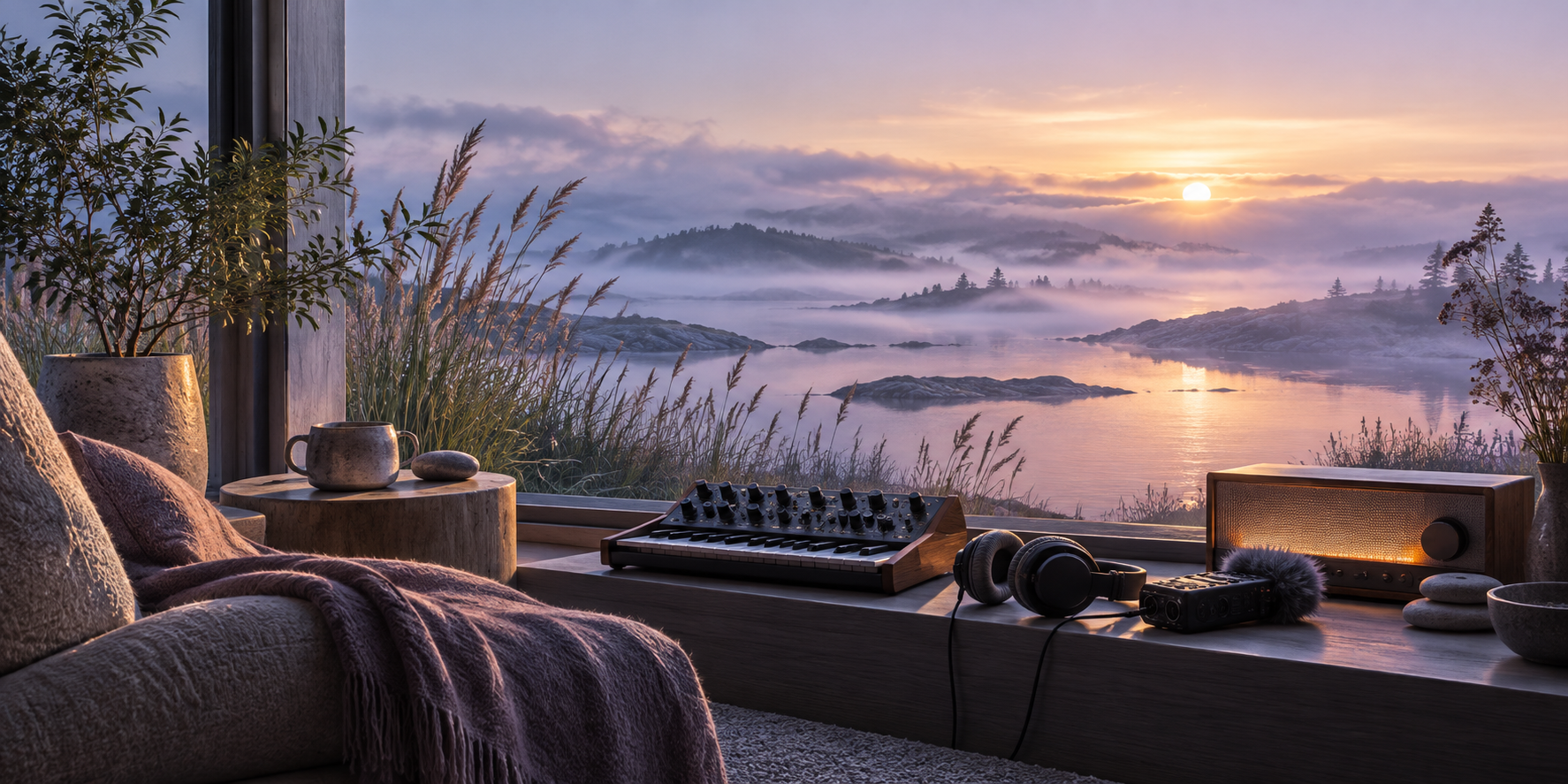
Imagine sitting beside a window on a quiet afternoon. There's a soft electronic tone in the background, almost too gentle to notice. Another sound slowly appears beneath it. A few minutes later, the atmosphere has changed, although you can't identify the exact moment when it happened.
Nothing dramatic has occurred.
Yet the room feels different.
That's one of the pleasures of ambient music radio.
Rather than organizing every recording around a strong beat, memorable hook, or traditional song structure, ambient music often explores texture, space, repetition, and gradual transformation.
Some recordings are warm and peaceful. Others are mysterious, melancholic, or even unsettling.
The genre can accompany reading, quiet work, or an evening at home, but it also offers plenty to listeners who want to pay close attention.
You don't need special equipment or extensive musical knowledge to begin exploring it.
Sometimes, all you need is a comfortable place to sit and a little patience.
What Is Ambient Music?
Ambient music is a broad musical approach that emphasizes atmosphere, sonic texture, and the experience of listening.
Many ambient recordings use sustained tones, repeating patterns, spacious electronic sounds, or slowly evolving arrangements.
A clearly defined rhythm may be absent, although some ambient music incorporates percussion or a subtle pulse.
Vocals may appear, but they're often treated as part of the overall sound rather than as the central focus.
The result can feel very different from conventional pop or rock.
Instead of moving quickly between verses and choruses, an ambient piece may remain within one musical atmosphere for several minutes.
Small changes become important.
A tone grows brighter.
A distant sound moves closer.
A repeating figure gradually disappears.
These details can be easy to overlook when music is playing quietly in the background.
But when you listen carefully, they reveal the composer's attention to sound itself.
The Origins of Ambient Music
Ambient music didn't emerge from a single recording or one isolated musical movement.
Its history connects with several earlier traditions, including experimental composition, electronic music, minimalism, and approaches that incorporated environmental sound.
Composers such as Erik Satie and John Cage explored ideas about musical atmosphere, repetition, listening, and the relationship between sound and its surroundings.
Later developments in electronic instruments and recording technology gave musicians new ways to create sustained textures and manipulate recorded material.
By the 1970s, artists were increasingly experimenting with music that didn't depend on conventional pop structures.
Brian Eno became particularly influential in developing and popularizing the concept of ambient music.
His work helped establish a vocabulary for recordings designed to interact with the listener's environment.
Brian Eno and the Development of Ambient Music
Brian Eno is one of the most important figures in the history of ambient music.
After his early work with Roxy Music, he developed a wide-ranging career as a musician, producer, and experimental artist.
His recordings explored electronic textures, unconventional compositional methods, and the possibilities of studio technology.
In 1975, Eno released Discreet Music, an important early work in his ambient-oriented catalog.
Three years later, Ambient 1: Music for Airports became a landmark release.
The album's title reflected its connection to the atmosphere of public spaces.
Rather than demanding constant attention, the music was designed to exist alongside the surrounding environment while remaining interesting enough for attentive listening.
Music that can be heard in different ways
One of Eno's influential ideas was that ambient music could accommodate different levels of attention.
You might notice it only occasionally while working.
Or you might sit down and follow every small change in the arrangement.
Both approaches can be meaningful.
That flexibility remains central to the appeal of ambient radio.
A good ambient station can create a pleasant background atmosphere without preventing listeners from discovering interesting musical details.
Why Ambient Music Sounds So Different
The difference often begins with the way time is organized.
In a typical pop song, listeners may expect a verse, chorus, bridge, and final return to the main hook.
Ambient music doesn't always follow that pattern.
A recording may begin with a sustained sound and develop through gradual changes in tone, harmony, or texture.
The music can feel spacious because it leaves room between events.
Silence, fading sounds, and subtle transitions become part of the composition.
Listen to the space
Choose a quiet ambient recording and pay attention to what happens between the most noticeable sounds.
Does a note fade naturally?
Does it leave behind a long reverberation?
Is there a low background tone that continues throughout the piece?
The space surrounding a sound can be just as important as the sound itself.
That's one reason ambient music often benefits from careful listening at a comfortable volume.
Ambient Soundscapes: Creating a Sense of Place
The word soundscape is often used to describe a sonic environment or an arrangement that evokes a particular atmosphere.
Ambient composers may use synthesizers, recorded environmental sounds, acoustic instruments, or processed audio to create these environments.
Some recordings suggest open landscapes, quiet rooms, or distant city sounds.
Others feel abstract, without an obvious connection to a physical location.
The listener's imagination becomes part of the experience.
Why environmental sounds work so well
Rain, wind, water, and other environmental sounds can create recognizable textures.
When combined with musical tones, they may produce a sense of continuity between the recording and the surrounding space.
But ambient music doesn't require nature sounds.
A simple electronic drone or repeating piano figure can be equally atmospheric.
The important element is how the sounds interact over time.
Drone Ambient: Finding Movement in Stillness
Drone ambient is associated with sustained tones and slowly changing sonic textures.
A recording may appear almost motionless at first.
Yet careful listening reveals subtle variations.
The pitch shifts slightly.
Different frequencies become more noticeable.
A second layer enters and changes the overall harmony.
Artists such as Stars of the Lid have explored expansive, slowly developing arrangements associated with ambient and drone music.
Give the recording time
Drone music can be challenging if you're expecting frequent melodic changes.
Try listening for five minutes without skipping.
Instead of waiting for a chorus, focus on the texture.
Notice how the sound changes in relation to the room and your own attention.
You may find that the apparent stillness becomes surprisingly engaging.
Dark Ambient: Atmosphere Without the Promise of Calm
Ambient music is often described as relaxing, but not every recording is intended to create a peaceful mood.
Dark ambient explores more mysterious, tense, or unsettling atmospheres.
It may use deep drones, distant industrial textures, unusual reverberation, or sounds that suggest an unfamiliar environment.
Artists such as Lustmord are closely associated with the development of dark ambient.
Ambient doesn't always mean background relaxation
This distinction is important when choosing a radio station.
A general ambient stream might include warm synthesizer textures and gentle piano recordings.
A dark ambient station may feature ominous drones or cinematic sound design.
Both belong within the broader ambient landscape, but they create very different experiences.
If you're selecting music for reading or relaxation, check the station's style before settling in.
Space Ambient and Cosmic Soundscapes
Some ambient recordings evoke a sense of enormous distance.
Long synthesizer tones, slow harmonic changes, and spacious effects can create an atmosphere that listeners associate with space or science fiction.
Artists such as Steve Roach have explored expansive electronic soundscapes across different periods of their careers.
The music may feel immersive without relying on a strong rhythm.
A sustained chord can create the impression of a wide-open environment.
Subtle melodic movement gives the listener something to follow.
This kind of ambient music can be especially enjoyable through headphones or a comfortable home speaker setup.
Ambient Piano and Acoustic Textures
Not all ambient music is primarily electronic.
Piano, strings, guitar, and other acoustic instruments can contribute to atmospheric compositions.
Some recordings use short piano phrases surrounded by long reverberation.
Others combine acoustic performances with electronic processing.
The resulting music may feel intimate, reflective, or spacious.
The importance of decay
When a piano note is played, the sound doesn't end immediately.
It gradually fades.
Ambient composers may emphasize that natural decay, allowing the resonance of each note to become part of the arrangement.
Try listening to how one note overlaps with the next.
Sometimes the relationship between fading sounds creates more atmosphere than the melody itself.
Ambient, Lo-Fi and Chillout: What's the Difference?
These terms are sometimes used together on online radio platforms, but they don't mean exactly the same thing.
Style Common characteristics Listening experience Ambient Atmospheric textures, gradual changes, sometimes little or no beat Spacious and immersive Lo-fi hip-hop Repeating beats, mellow samples, relaxed production Rhythmic and often understated Chillout Broad category of relaxed electronic and related music Gentle, often groove-oriented Drone ambient Sustained tones and slow development Minimal and immersive Dark ambient Ominous textures and atmospheric sound design Mysterious or unsettling Ambient piano Sparse piano phrases and spacious resonance Intimate and reflectiveThese categories can overlap.
A recording might combine ambient textures with a gentle beat, or use lo-fi production within an atmospheric composition.
Genre labels are useful starting points, not strict boundaries.
The best way to decide what you enjoy is to listen.
Is Ambient Music Good for Studying or Working?
Many people enjoy ambient music while reading, studying, writing, or completing quiet tasks.
One reason is that some ambient recordings contain few abrupt changes or prominent lyrics.
That can make them less demanding of attention for certain listeners.
However, the effect of music on concentration varies from person to person and from task to task.
Some people find background music pleasant.
Others work better in silence.
And a recording that feels calming to one listener may distract another.
Choose music for the task
For reading, you might prefer soft, beatless ambient music with limited melodic movement.
For routine work, a slightly more active electronic ambient station may feel comfortable.
For creative activities, you might enjoy atmospheric recordings with unusual textures.
Start at a low volume and notice whether the music helps you maintain attention or repeatedly draws you away from the task.
There's no universal setting that works for everyone.
Can Ambient Music Help You Relax?
Ambient music is often used to create a quiet atmosphere.
Slow changes, gentle textures, and a lack of abrupt musical events can feel soothing to some listeners.
But ambient music isn't a medical treatment, and listening to it doesn't guarantee reduced stress or better sleep.
Individual preferences matter.
A peaceful synthesizer recording may help one person unwind, while another may find it monotonous.
The best approach is simple: choose sounds you genuinely enjoy and use them in a way that feels comfortable.
If you're listening before bed, consider selecting a gentle station at a low volume.
Avoid assuming that every ambient subgenre is suitable for sleep.
Dark ambient or experimental recordings may be more intense than expected.
How to Spend One Hour With Ambient Music Radio
An hour of ambient listening can be an opportunity to explore different textures without constantly changing tracks.
Here's one possible approach.
Time Listening focus What to notice 0–10 minutes Soft electronic ambient Sustained tones and gentle transitions 10–20 minutes Classic ambient compositions Gradual changes in harmony 20–30 minutes Ambient piano Resonance and space between notes 30–40 minutes Drone ambient Small variations within long sounds 40–50 minutes Space ambient Depth, texture, and atmosphere 50–60 minutes Return to a favorite style Details you missed earlierYou don't need to switch genres exactly every ten minutes.
Some ambient pieces are designed to unfold over much longer periods.
If a recording creates an atmosphere you enjoy, let it continue.
The point isn't to complete a listening challenge.
It's to discover which sounds suit your mood and surroundings.
How to Find the Right Ambient Radio Station Online
Ambient radio stations can vary considerably.
Some focus on peaceful electronic music.
Others specialize in drone, dark ambient, space music, atmospheric piano, or experimental soundscapes.
If you're looking for gentle background music, start with stations described as soft ambient or peaceful soundscapes.
For more attentive listening, explore classic ambient and experimental electronic programming.
If you enjoy cinematic or mysterious atmospheres, dark ambient may be worth trying.
You can begin exploring music categories through the 1LiveRadio online radio directory.
For additional listening guides and genre discoveries, visit the 1LiveRadio music blog.
Give a station several minutes before deciding whether it fits your needs.
Ambient recordings often develop slowly, and their character may not be obvious during the opening seconds.
Ambient Music and the Art of Listening
One of the most interesting things about ambient music is how it changes the listener's relationship with sound.
In many popular genres, attention is directed toward the singer, melody, or beat.
Ambient music often encourages a broader awareness.
You may begin noticing subtle background textures.
A distant sound becomes important.
The fading edge of a note attracts your attention.
Even the surrounding room can influence the experience.
This doesn't mean you need to analyze every recording.
Sometimes ambient music is most enjoyable when you stop trying to identify every detail.
Let the atmosphere develop naturally.
Then, if a particular sound catches your attention, follow it.
Five Ambient Artists Worth Exploring
If you're new to ambient music, these artists offer different starting points.
1. Brian Eno
A central figure in the development of ambient music, Eno created influential recordings that explored atmosphere, repetition, and the relationship between music and its environment.
Start with Ambient 1: Music for Airports.
2. Stars of the Lid
Known for expansive drone-based compositions, Stars of the Lid created music that emphasizes sustained tones and gradual harmonic development.
Their recordings reward patient listening.
3. Steve Roach
Steve Roach has explored immersive electronic soundscapes, atmospheric textures, and expansive compositions across a long career.
His catalog offers several approaches to ambient listening.
4. Harold Budd
Harold Budd developed a distinctive musical language associated with spacious piano compositions and atmospheric collaborations.
His recordings can provide an accessible introduction to quieter ambient styles.
5. William Basinski
William Basinski is known for experimental recordings involving tape loops, repetition, and gradual transformation.
His work demonstrates how the passage of time can become a central musical element.
These artists don't represent every form of ambient music.
But together, they offer a useful introduction to its variety.
The Role of Technology in Ambient Music
Ambient music has a close relationship with recording technology.
Synthesizers, tape machines, effects processors, samplers, and digital audio tools have all contributed to its development.
Reverb and delay can create a sense of space.
Tape loops can establish repeating patterns.
Electronic instruments can sustain tones for extended periods.
Modern software allows musicians to manipulate sound in increasingly detailed ways.
But technology alone doesn't create an interesting ambient recording.
The artistic decisions remain essential.
Which sounds should be introduced?
How long should they continue?
When should something change?
And when should the composer leave the arrangement alone?
Those choices shape the listener's experience.
Why Ambient Music Still Matters
Ambient music continues to influence contemporary electronic music, film scores, sound installations, experimental composition, and other creative fields.
Its ideas have also become familiar in everyday listening environments.
But the genre remains artistically interesting because it encourages a different approach to musical attention.
It demonstrates that a recording doesn't need a prominent beat or dramatic chorus to be engaging.
A carefully chosen texture can create an atmosphere.
A slow harmonic change can alter the emotional character of a piece.
And a quiet sound can become memorable precisely because it isn't competing with everything around it.
For listeners interested in the broader history of electronic and experimental music, the EnoWeb resource archive provides background material related to Brian Eno's work and creative history.
Exploring the artists and ideas behind ambient music can make the listening experience even more rewarding.
Frequently Asked Questions
What is ambient music?
Ambient music is a broad musical approach that emphasizes atmosphere, texture, and gradual development rather than always relying on strong beats or conventional song structures.
Who is considered a pioneer of ambient music?
Brian Eno is widely recognized as a central figure in developing and popularizing ambient music, although the genre has connections to earlier experimental and electronic traditions.
Is ambient music always relaxing?
No. Some ambient recordings are peaceful, while others are mysterious, intense, melancholic, or unsettling.
What is the difference between ambient and lo-fi music?
Ambient music often emphasizes texture and atmosphere, sometimes without a clear beat. Lo-fi hip-hop typically uses repeating rhythms and sample-based production, although the styles can overlap.
Is ambient music good for studying?
Some listeners enjoy ambient music while studying because certain recordings are understated and contain few lyrics. Its usefulness depends on personal preference and the task.
Can I listen to ambient radio online?
Yes. Many internet radio stations specialize in ambient music, drone, atmospheric electronic sounds, and related styles.
What are some good ambient albums for beginners?
Brian Eno's Ambient 1: Music for Airports is a classic starting point. Recordings by Harold Budd, Stars of the Lid, and Steve Roach can introduce listeners to other ambient approaches.
Final Thoughts: Give Quiet Music a Little Time
Ambient music doesn't always announce itself with a memorable melody or dramatic opening.
Sometimes it begins with a single sustained tone.
Another sound appears.
The atmosphere changes gradually.
And before you realize it, you've spent several minutes listening to something that initially seemed almost motionless.
That's part of its appeal.
Ambient music invites you to notice small details, appreciate space, and experience sound without constantly waiting for the next big moment.
You can enjoy it while reading, working quietly, or simply sitting with your thoughts.
Or you can give it your full attention and explore the subtle musical decisions hidden within its textures.
The next time you tune into an ambient radio station, resist the temptation to skip after a few seconds.
Let the recording develop.
Sometimes the most interesting music is the kind that doesn't ask you to hurry.
Reader comments
No comments yet. Start the conversation.
Leave a comment
Your email stays private. Comments appear after approval.