
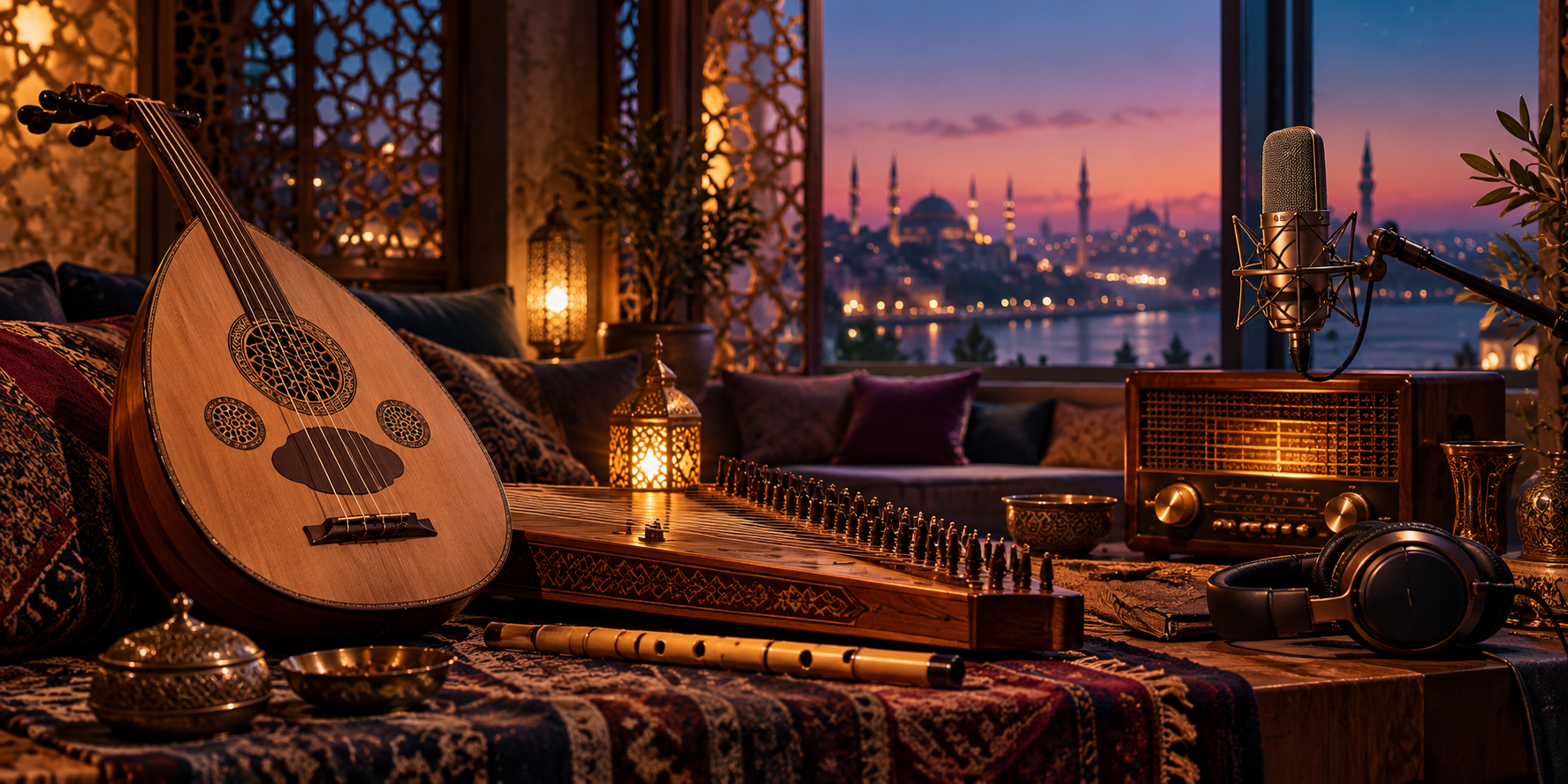
Some songs don't need a dramatic introduction to make an impression.
A string instrument begins with a slow, expressive melody. The singer enters, stretching a phrase just long enough to make the emotion unmistakable. The accompaniment grows stronger, but the voice remains at the center.
Even if you don't understand the language, you can hear that the performance matters.
This is one of the pleasures of Arabesque radio, particularly stations dedicated to the Turkish musical tradition known as Arabesk.
The music is often associated with longing, heartbreak, separation, fate, and the emotional difficulties of everyday life. Yet describing it simply as sad music misses much of its appeal.
Arabesk can be dramatic, intimate, rhythmically engaging, or surprisingly energetic. Its singers use melody and vocal ornamentation to give familiar emotions a distinctive musical character.
And behind those recordings lies a fascinating history involving migration, urban culture, musical exchange, and the changing sound of Turkish popular music.
Whether you're discovering Arabesk for the first time or returning to songs you grew up hearing, radio offers a natural way to explore its many voices.
What Is Arabesque Music?
The word Arabesque has several meanings in art and music.
In a broad musical context, it may suggest ornamented melodies or decorative musical figures. In radio directories, however, the label often refers to Turkish Arabesk, a popular-music tradition that developed during the twentieth century.
Turkish Arabesk combines influences from Turkish musical traditions, regional popular music, and musical cultures associated with the Middle East.
Its sound can include expressive singing, richly ornamented melodies, string arrangements, percussion, and instruments such as the bağlama.
The genre developed through changing social and cultural conditions, particularly during periods of rapid urbanization in Turkey.
Not every Arabesk recording uses the same arrangement.
Some emphasize traditional instruments and restrained accompaniment.
Others feature orchestral strings, electronic keyboards, electric guitars, or modern pop production.
The most useful way to understand the music is to listen to individual artists rather than expecting every recording to follow one formula.
The Origins of Turkish Arabesk
Arabesk developed within a changing Turkish society.
During the mid-twentieth century, migration from rural areas to expanding cities transformed the country's social and cultural landscape.
New urban communities brought different musical traditions, experiences, and expectations into contact.
Popular music became one way of expressing those changes.
Songs about longing, separation, hardship, and belonging resonated with listeners navigating unfamiliar surroundings and changing circumstances.
Arabesk drew on several musical influences, including Turkish folk and art-music traditions and popular sounds circulating across the wider region.
By the 1960s and 1970s, artists associated with the genre were reaching increasingly large audiences.
More than a musical style
Arabesk also became the subject of cultural debate.
Some critics viewed it as an expression of social hardship or excessive sentimentality.
Others valued its emotional honesty and its connection with everyday experiences.
The genre's popularity demonstrated that listeners could develop strong attachments to music regardless of whether cultural institutions considered it prestigious.
Over time, Arabesk became an enduring part of Turkish popular culture.
Orhan Gencebay: A Foundational Voice
Orhan Gencebay is one of the most important figures in the development of Turkish Arabesk.
A singer, composer, and instrumentalist, he helped establish a musical approach that brought together different traditions and arrangements.
His work is associated with expressive melodies, distinctive instrumental writing, and carefully constructed performances.
The bağlama, a long-necked string instrument important in Turkish musical traditions, is especially significant in his musical identity.
What to listen for
When exploring Orhan Gencebay's recordings, pay attention to the relationship between the instrumental introduction and the vocal melody.
The accompaniment often establishes an emotional atmosphere before the singer enters.
Listen to the ornaments in the melodic lines and how the instruments support the vocal phrasing.
The performance may move gradually from restraint toward greater intensity.
That sense of development is central to the listening experience.
Müslüm Gürses: The Power of Emotional Expression
Müslüm Gürses became one of the most recognizable singers associated with Arabesk.
His distinctive vocal delivery and emotionally direct performances attracted a devoted audience.
For many listeners, his music was closely connected to feelings of hardship, longing, and personal struggle.
Yet his appeal wasn't simply a matter of lyrical subject.
The character of his voice played an essential role.
Listen to the phrasing
A singer can transform a familiar melody through timing, emphasis, and vocal color.
Müslüm Gürses often created emotional intensity through the way he delivered individual phrases.
Notice how a line begins.
Does the singer enter gently or forcefully?
Where does the voice become more intense?
How does the accompaniment respond?
These details help explain why two singers performing similar emotional material can create very different experiences.
Ferdi Tayfur: Melodies That Stay With You
Ferdi Tayfur was another major figure in Turkish Arabesk.
His recordings became closely associated with the genre's emotional and melodic identity.
Songs about love, separation, and personal difficulties formed an important part of his repertoire.
His performances often combined memorable melodies with direct vocal expression.
For new listeners, Tayfur's recordings offer another useful entry point into classic Arabesk.
Compare his approach with that of Orhan Gencebay or Müslüm Gürses.
The artists share a broad musical environment, but their voices and interpretations remain distinct.
That's one of the reasons an Arabesque radio station can stay interesting over a long listening session.
İbrahim Tatlıses and the Wider Arabesk Landscape
İbrahim Tatlıses became an influential performer within Turkish popular music, including Arabesk and folk-related styles.
His powerful voice and distinctive performance approach helped him reach a large audience.
His career also illustrates how musical categories can overlap.
An artist may be associated with Arabesk while also drawing on regional folk traditions or other popular styles.
That overlap is worth remembering when exploring radio stations.
A broadcaster labeled Arabesque may play recordings that also fit within Turkish folk, fantasy music, or contemporary popular music.
Genre boundaries aren't always fixed.
Why Arabesk Vocals Sound So Expressive
One of the most recognizable features of many Arabesk recordings is the vocal style.
Singers may use ornamentation, sustained notes, expressive changes in volume, and carefully shaped melodic phrases.
A melody can move through subtle variations rather than following a simple, unchanging line.
These techniques help communicate emotion.
But the effect isn't created by the singer alone.
The accompaniment also matters.
Strings may support a long vocal phrase.
Percussion can establish a steady pulse.
A brief instrumental response may reinforce the feeling of a lyric.
Listen beyond the words
If you don't speak Turkish, focus first on the sound of the performance.
Notice where the singer pauses.
Listen for changes in intensity.
Pay attention to the relationship between voice and instruments.
Then, if a song interests you, look up a reliable translation of its lyrics.
Understanding the words can add meaning to the emotional qualities you already noticed.
The Instruments Behind Arabesk Music
Arabesk recordings can feature a wide variety of instruments.
The exact combination depends on the artist, period, and production style.
Bağlama
The bağlama is a long-necked plucked string instrument with an important place in Turkish musical traditions.
Its distinctive tone can provide melodic introductions, instrumental passages, and accompaniment.
Violins and string sections
String instruments often contribute to the dramatic atmosphere of Arabesk recordings.
They may sustain harmonies beneath the singer or introduce expressive melodic phrases.
Percussion
Rhythmic accompaniment can range from restrained patterns to more dance-oriented arrangements.
The percussion supports the music's movement without necessarily dominating the vocal performance.
Keyboards and electronic instruments
As recording technology changed, electronic keyboards and other modern instruments became increasingly prominent in some Arabesk productions.
These sounds helped shape later interpretations of the genre.
Electric guitars and bass
Some recordings incorporate electric guitars and bass instruments alongside more traditional sounds.
This combination reflects the genre's openness to different production approaches.
Melody and Ornamentation: The Heart of the Sound
Arabesk is often remembered for its expressive melodies.
A singer may approach a note indirectly, moving through smaller melodic gestures before reaching the main pitch.
Instrumentalists can use similar techniques.
These ornaments give the music much of its character.
But ornamentation isn't simply decoration.
It can shape the emotional meaning of a phrase.
A melody performed with restraint may feel reflective.
The same melodic idea, delivered with greater intensity and more elaborate phrasing, can feel dramatic.
A useful listening exercise
Choose a recording and follow one melodic phrase.
Notice how it appears the first time.
Then listen for its return.
Does the singer repeat it exactly?
Does the accompaniment change?
Is the vocal delivery more intense?
These small differences can reveal how a performer develops emotional expression throughout a song.
Arabesk, Turkish Folk and Turkish Pop: Understanding the Differences
Arabesk shares influences and performers with other Turkish musical traditions, but the categories aren't identical.
Musical category Common characteristics Listening focus Turkish Arabesk Expressive vocals, ornamented melodies, emotionally direct songs Vocal phrasing and melodic development Turkish folk music Diverse regional traditions, often including bağlama and local vocal styles Regional instruments and musical forms Turkish art music Established compositional and performance traditions Melodic structure and interpretation Turkish pop Broad contemporary popular-music styles Songwriting and production Arabesk-pop Combinations of Arabesk elements with modern pop arrangements Traditional melodic expression within contemporary productionThese descriptions are broad.
Individual artists frequently move between styles, and radio stations may use overlapping labels.
The best way to understand the differences is through listening rather than relying entirely on category names.
Arabesk and the Language of Emotion
Many Arabesk songs explore experiences that listeners recognize immediately.
Love, disappointment, loneliness, longing, separation, and questions of fate appear frequently.
These subjects aren't unique to Arabesk.
What makes the genre distinctive is the way its performers combine lyrics, melody, and vocal expression.
A song about separation may begin quietly before reaching a dramatic instrumental passage.
Another may use a steady rhythm to support a more restrained performance.
Not every song is sorrowful.
Arabesk also includes recordings with energetic arrangements and strong rhythmic movement.
The emotional range is broader than the genre's reputation sometimes suggests.
How Arabesk Changed Over Time
Arabesk didn't remain frozen in the 1970s.
As Turkish popular music evolved, artists incorporated changing production techniques and new musical influences.
Some later recordings used electronic keyboards, modern percussion, and pop-oriented arrangements.
The relationship between Arabesk and mainstream Turkish pop also became increasingly fluid.
Artists from different generations have continued drawing on the genre's vocal and melodic characteristics.
For listeners, this creates an interesting opportunity.
You can compare older recordings with newer interpretations.
Listen for what has changed.
Then notice which musical ideas remain recognizable.
The instruments may be different, but expressive melodic phrasing often continues to play an important role.
How to Spend One Hour With Arabesque Radio
A one-hour listening session can introduce you to several sides of the genre.
Rather than searching only for familiar hits, try focusing on different artists and musical details.
Time Listening direction What to notice 0–10 minutes Orhan Gencebay Instrumental arrangements and melody 10–20 minutes Müslüm Gürses Vocal expression and phrasing 20–30 minutes Ferdi Tayfur Songwriting and memorable melodies 30–40 minutes İbrahim Tatlıses Powerful vocals and folk influences 40–50 minutes Later Arabesk and Arabesk-pop Changes in production 50–60 minutes Unfamiliar artists Personal discoveriesThis isn't a ranking of performers.
It's simply a way to hear contrasting approaches.
If a particular recording catches your attention, stay with that artist for a while.
The best discoveries often happen when you stop trying to cover everything.
How to Find Arabesque Radio Stations Online
When searching for Arabesque radio, the terminology matters.
Some stations use Arabesk, while others use Arabesque or related labels.
You may also encounter Turkish music stations that mix Arabesk with folk, fantasy music, and contemporary pop.
If you prefer classic recordings, look for stations emphasizing traditional or nostalgic Turkish Arabesk.
For newer productions, explore broadcasters that combine Arabesk with modern Turkish popular music.
You can start browsing radio stations through the 1LiveRadio online radio directory.
For more music guides and genre discoveries, visit the 1LiveRadio music blog.
Give each station time before deciding whether it suits your taste.
One broadcaster may focus on emotional ballads, while another includes more energetic recordings.
Why Turkish Radio Is Important to Arabesk
Radio has long played an important role in connecting musicians with listeners.
For Arabesk, recorded music circulated through different media, including records, cassettes, radio, and later digital platforms.
The cassette era was particularly important to the broader history of Turkish popular music.
Listeners could encounter artists through commercial recordings, personal collections, and everyday social environments.
Today, online radio offers a convenient way to revisit those recordings.
It also allows listeners outside Turkey to discover music they might never encounter through mainstream international playlists.
A single station can introduce you to performers from different generations.
And when an unfamiliar voice catches your attention, you can explore the artist's wider catalog.
Arabesk as Part of Turkish Cultural History
Arabesk is more than a collection of romantic songs.
Its development reflects important changes in Turkish society, including urbanization, migration, and debates about cultural identity.
The music became closely connected with audiences whose experiences weren't always represented in dominant cultural institutions.
Its popularity also challenged assumptions about which musical forms deserved recognition.
For a broader introduction to Turkish musical culture and history, Encyclopaedia Britannica provides reference material on Turkey and its cultural traditions.
Understanding the wider social background can make Arabesk recordings more meaningful.
A familiar melody may carry associations with particular generations, cities, or personal experiences.
For some listeners, these songs are connected to family memories.
For others, they're an entirely new musical discovery.
Both ways of listening have value.
The Small Details That Make Arabesk Memorable
The emotional power of Arabesk often comes from details that are easy to overlook.
A singer holds a note slightly longer than expected.
A violin answers the final phrase of a verse.
The percussion becomes more prominent as the chorus approaches.
Or an instrumental introduction establishes a mood before a single word has been sung.
These choices give each recording its identity.
Try listening to the same song twice.
On the first listen, enjoy the overall performance.
On the second, focus on the arrangement.
Follow the instruments supporting the singer.
Notice the pauses, melodic ornaments, and changes in intensity.
You may find that a song you already enjoyed becomes even more interesting.
Frequently Asked Questions
What is Arabesque music?
In radio contexts, Arabesque often refers to Turkish Arabesk, a popular-music tradition associated with expressive melodies, ornamented vocals, and emotionally direct songwriting.
Is Arabesque music the same as Arabic music?
No. Turkish Arabesk has its own musical history and cultural context. Although it developed through various regional influences, it shouldn't be treated as identical to Arabic music as a whole.
Who are famous Arabesk singers?
Orhan Gencebay, Müslüm Gürses, Ferdi Tayfur, and İbrahim Tatlıses are among the most recognizable performers associated with the genre.
Why is Arabesk music often emotional?
Many recordings explore themes such as love, separation, longing, and hardship. Expressive vocal techniques and dramatic arrangements help communicate those subjects.
What instruments are used in Arabesk?
Common instruments can include bağlama, violins, percussion, keyboards, electric guitars, and bass, depending on the artist and recording period.
Is Arabesk still popular?
Arabesk remains an important part of Turkish musical culture, and its influence continues to appear in contemporary popular music.
Can I listen to Arabesque radio online?
Yes. Internet radio stations featuring Turkish Arabesk, nostalgic Turkish hits, and related musical styles are available online.
Final Thoughts: Let the Melody Tell Its Story
Arabesque radio offers a listening experience built around expression.
A familiar theme can become powerful through a singer's phrasing.
A simple instrumental introduction can establish an atmosphere that remains throughout the recording.
And a song you don't fully understand can still communicate something through its melody and performance.
Start with the classic artists, but don't stop there.
Explore different generations.
Compare older arrangements with contemporary productions.
Notice the instruments, vocal ornaments, and small changes that give each recording its character.
The next time you hear an unfamiliar Arabesk song, give it a little room.
You may discover that the most memorable part isn't the dramatic chorus.
It's the quiet moment just before the singer begins.
Reader comments
No comments yet. Start the conversation.
Leave a comment
Your email stays private. Comments appear after approval.