
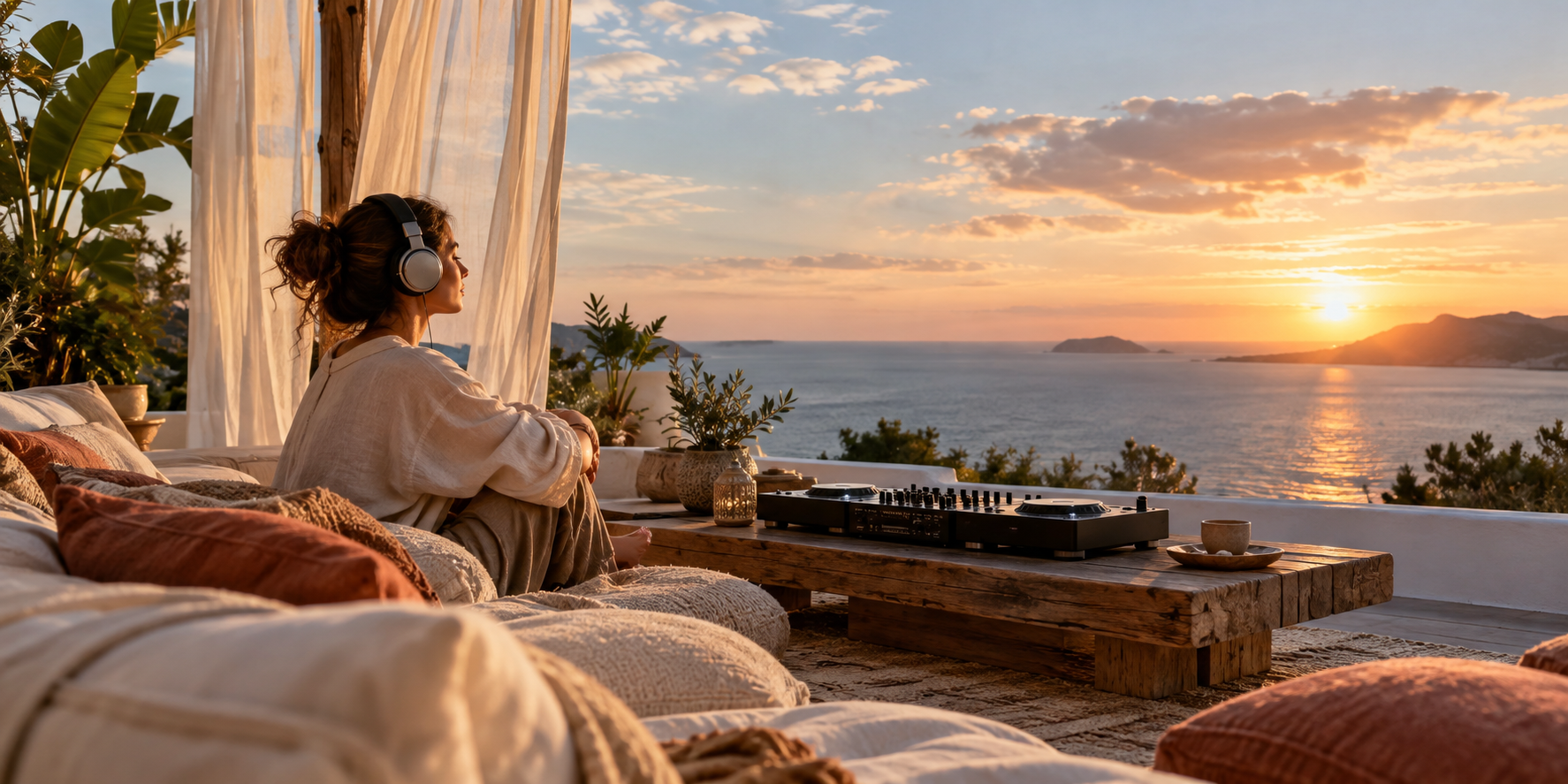
Chillout music offers a different listening experience from the high-energy sounds of club-oriented electronic music. Instead of demanding constant attention through heavy drops and driving rhythms, it often uses gentle beats, atmospheric textures, warm melodies, and carefully balanced arrangements.
For listeners who enjoy calm electronic sounds, chillout music radio provides a convenient way to discover artists, recordings, and styles without having to build a playlist from scratch.
Chillout can accompany a quiet evening, a reading session, a relaxed journey, or a peaceful break during a busy day. Yet the genre is more diverse than the familiar idea of soft background music.
Some chillout recordings feature steady downtempo grooves. Others emphasize acoustic instruments, soulful vocals, jazz influences, or spacious electronic soundscapes.
This guide explains what chillout music is, where it came from, how it differs from related genres, which artists helped shape its identity, and how to find a listening style that suits your preferences.
What Is Chillout Music?
Chillout music is a broad label for music generally associated with relaxed listening, moderate or slow-paced rhythms, and atmospheric arrangements.
It is not a genre defined by one fixed tempo, instrument, or production technique.
Instead, the term describes a listening approach and a family of overlapping musical styles.
Chillout selections may include elements of:
-
Downtempo electronic music.
-
Ambient music.
-
Trip-hop.
-
Lounge music.
-
Balearic-inspired sounds.
-
Soft instrumental electronica.
-
Jazz-influenced electronic arrangements.
-
Mellow vocal and acoustic music.
The defining quality is often the balance between movement and atmosphere.
A track may have a noticeable beat without sounding aggressive, or it may create a sense of space through slowly changing harmonies and textures.
In simple terms, chillout music is music selected or created for a relaxed listening experience, often combining gentle rhythms with atmospheric sounds.
The Origins of Chillout Music
The modern idea of chillout developed through several interconnected musical movements.
Chillout Rooms and Club Culture
During the late 1980s and early 1990s, some electronic dance music venues offered spaces where people could take a break from intense dance-floor music.
These areas, often called chillout rooms, featured quieter and more atmospheric selections.
The music could include ambient recordings, experimental electronic sounds, dub-influenced tracks, and slower rhythmic pieces.
Over time, the term chillout became associated with a wider range of relaxed electronic listening.
Ambient Music's Influence
Ambient music played an important role in shaping the atmospheric side of chillout.
Brian Eno's work, particularly Ambient 1: Music for Airports (1978), helped establish an influential approach to music that could coexist with an environment while still rewarding attentive listening.
Ambient and chillout are not identical, but their emphasis on texture, atmosphere, and space often overlaps.
Downtempo and Trip-Hop
During the 1990s, downtempo electronic music and trip-hop contributed new rhythmic possibilities.
Artists combined slower beats with influences from hip-hop, dub, jazz, soul, and electronic production.
These sounds helped create the mellow, groove-oriented side of modern chillout.
Lounge and Compilation Culture
Chillout also became popular through lounge-oriented compilations and radio programming.
Collections associated with relaxed nightlife, cafés, travel, and sunset listening introduced many listeners to electronic music outside the traditional dance-floor setting.
The Café del Mar compilation series, associated with Ibiza, became particularly influential in popularizing atmospheric and Balearic-influenced selections.
Today, chillout music continues to evolve through online radio, streaming platforms, independent producers, and contemporary electronic music.
What Does Chillout Music Sound Like?
Although chillout includes several styles, certain musical characteristics appear frequently.
Gentle Rhythms
Many chillout tracks use steady, understated beats.
Percussion may provide movement without becoming the dominant feature of the arrangement.
Unlike energetic dance music, chillout often avoids constant rhythmic intensity.
Atmospheric Synthesizers
Synthesizers can create soft pads, warm chords, and slowly evolving textures.
These sounds contribute to a sense of spaciousness.
Mellow Bass Lines
Bass can provide a subtle groove that connects the rhythm and harmony.
In some recordings, the bass line is one of the most memorable musical elements.
Repeating Melodic Motifs
A short melodic phrase may repeat with small changes throughout a track.
Gradual variation helps maintain interest without overwhelming the listener.
Acoustic and Organic Textures
Chillout is not exclusively electronic.
Acoustic guitar, piano, strings, percussion, and natural-sounding recordings may appear alongside synthesizers and programmed beats.
Soft Vocals
Some tracks feature intimate singing, wordless vocal textures, or sampled voices.
Others are entirely instrumental.
Spacious Production
Reverb, delay, stereo placement, and careful layering can create a wide, atmospheric sound.
The production itself often becomes part of the musical identity.
Main Styles of Chillout Music
1. Downtempo Chillout
Downtempo music generally emphasizes slower or more relaxed electronic grooves compared with many club-oriented styles.
It may incorporate hip-hop-influenced rhythms, warm synthesizers, and melodic arrangements.
Downtempo is particularly suitable for listeners who want a clear beat without high-intensity production.
Artists to explore: Bonobo, Nightmares on Wax, and Zero 7.
2. Ambient Chillout
Ambient-influenced chillout places greater emphasis on atmosphere and texture.
Some recordings have little or no conventional percussion.
Others combine spacious sound design with subtle rhythmic elements.
This style can appeal to listeners who prefer music with minimal rhythmic demands.
Artists to explore: Brian Eno, The Orb, and selected works by Aphex Twin.
Not all recordings by these artists are chillout; their catalogs include different musical approaches.
3. Lounge Chillout
Lounge-oriented chillout often combines mellow electronic production with jazz, soul, or acoustic influences.
It is frequently associated with relaxed social environments, cafés, and evening listening.
However, lounge music is a broad category that can also include recordings with little connection to electronic chillout.
Artists to explore: Thievery Corporation, Air, and selected Zero 7 recordings.
4. Trip-Hop-Inspired Chillout
Trip-hop emerged during the 1990s, particularly in Bristol, England.
It commonly combines hip-hop-influenced beats with atmospheric production, dub, soul, and other influences.
Some trip-hop recordings are dark, intense, or emotionally heavy rather than conventionally relaxing.
Nevertheless, its slower grooves and detailed sound design have influenced chillout programming.
Artists to explore: Massive Attack, Portishead, and Tricky.
5. Balearic-Inspired Chillout
Balearic music is associated with eclectic DJ culture and musical experiences connected with Ibiza.
Rather than one narrowly defined production style, Balearic selections can combine ambient music, relaxed dance tracks, acoustic sounds, and other genres.
Balearic-inspired chillout often emphasizes warm atmospheres and gentle rhythmic movement.
6. Acoustic and Organic Chillout
Some chillout selections rely heavily on acoustic instruments or natural-sounding textures.
Piano, guitar, hand percussion, and soft vocals may be combined with restrained electronic production.
This approach can provide a more intimate alternative to synthesizer-heavy chillout.
Chillout Music vs. Related Genres
Chillout overlaps with several musical categories, but the terms are not interchangeable.
Style Main Characteristics Typical Listening Experience Chillout Relaxed selection of atmospheric and mellow music Calm listening with varied textures Downtempo Slower electronic grooves and rhythmic production Relaxed but beat-oriented Ambient Emphasis on atmosphere, texture, and space Often minimal or beatless Lounge Sophisticated, mellow selections from several genres Relaxed social listening Trip-hop Hip-hop-influenced beats and atmospheric production Often moody and rhythmically distinctive Lo-fi hip-hop Repetitive mellow beats and intentionally textured production Often used for casual background listening Deep house House-derived dance rhythms and deeper electronic textures More consistently dance-orientedThese are general tendencies, not strict boundaries.
A single recording may fit more than one category depending on its arrangement and how it is programmed.
Influential Chillout and Downtempo Artists
Bonobo
Bonobo, the recording name of British musician and producer Simon Green, is known for combining electronic production with organic instrumentation and detailed rhythmic arrangements.
His music often moves between downtempo, electronica, and more energetic dance-oriented sounds.
Recommended albums:
-
Dial 'M' for Monkey (2003).
-
Black Sands (2010).
-
Migration (2017).
For relaxed listening, explore his more atmospheric and instrumental recordings.
Zero 7
Zero 7 is a British electronic music duo known for mellow arrangements, warm production, and collaborations with vocalists.
Their recordings often combine electronic textures with soul, jazz, and acoustic influences.
Recommended albums:
-
Simple Things (2001).
-
When It Falls (2004).
Zero 7 is an accessible starting point for listeners who enjoy gentle vocals and downtempo grooves.
Air
Air is a French electronic music duo whose work frequently combines vintage synthesizer textures, soft melodies, and atmospheric production.
Their album Moon Safari (1998) became an influential recording in relaxed electronic music.
Suggested tracks:
-
La femme d'argent.
-
All I Need.
-
Kelly Watch the Stars.
Air's music demonstrates how chillout can be melodic, playful, and carefully produced.
Nightmares on Wax
Nightmares on Wax is a British electronic music project associated with downtempo, hip-hop-influenced grooves, and warm sampling.
Its recordings often feature relaxed rhythms and soulful textures.
Recommended albums:
-
Smokers Delight (1995).
-
Carboot Soul (1999).
These albums are useful introductions to groove-oriented chillout.
Thievery Corporation
Thievery Corporation is an American electronic music duo known for blending downtempo production with dub, bossa nova, jazz, and other influences.
Their music illustrates the cross-genre nature of chillout.
Recommended albums:
-
Sounds from the Thievery Hi-Fi (1996).
-
The Mirror Conspiracy (2000).
Massive Attack
Massive Attack is a British group central to the development of trip-hop.
Their recordings combine atmospheric production with hip-hop, dub, soul, and electronic influences.
Recommended albums:
-
Blue Lines (1991).
-
Mezzanine (1998).
Some Massive Attack tracks are suitable for chillout playlists, but others are darker and more intense.
The Orb
The Orb is a British electronic music group associated with ambient house and atmospheric electronic experimentation.
Their work helped demonstrate how electronic music could emphasize immersive sound design rather than conventional pop structures.
Recommended album: The Orb's Adventures Beyond the Ultraworld (1991).
Brian Eno
Brian Eno is an influential musician and producer whose ambient work helped shape the broader landscape of atmospheric electronic music.
His recordings are particularly useful for understanding the difference between ambient listening and beat-driven chillout.
Recommended album: Ambient 1: Music for Airports (1978).
Essential Chillout Albums for Beginners
The following albums offer different approaches to relaxed electronic listening.
Album Artist Main Appeal Moon Safari Air Warm synthesizers and melodic arrangements Simple Things Zero 7 Gentle vocals and downtempo production Carboot Soul Nightmares on Wax Soulful grooves and relaxed beats Black Sands Bonobo Organic instrumentation and detailed electronica The Mirror Conspiracy Thievery Corporation Downtempo and global musical influences Ambient 1: Music for Airports Brian Eno Spacious ambient composition Smokers Delight Nightmares on Wax Mellow sampling and groove The Orb's Adventures Beyond the Ultraworld The Orb Expansive ambient electronic soundThese albums represent different influences on chillout listening. Not every track is equally calm or stylistically identical.
How Chillout Music Is Produced
Understanding a few production techniques can make chillout recordings more interesting to listen to.
Tempo and Groove
Chillout often favors an unhurried rhythmic feel.
However, tempo alone does not determine whether a track sounds relaxing.
A faster recording with gentle instrumentation may feel calmer than a slower track with heavy percussion.
Reverb and Delay
Reverb creates a sense of acoustic space, while delay produces repeating echoes.
Producers use these effects to add depth and atmosphere.
Layered Synthesizers
Several synthesizer sounds may be combined to create rich textures.
Some layers provide harmony, while others add subtle movement.
Sampling
Sampling allows producers to incorporate recorded sounds into new compositions.
Samples may include instrumental phrases, percussion, voices, or environmental textures.
Dynamic Restraint
Some chillout arrangements avoid dramatic changes in intensity.
Instead, they develop gradually through small variations in melody, harmony, and instrumentation.
Organic and Electronic Blending
A recording may combine acoustic guitar or piano with electronic beats and synthesizers.
This blend is common in many downtempo and lounge-oriented productions.
How to Find Chillout Music Radio Online
Online radio can be an effective way to explore chillout music without manually selecting each recording.
Step 1: Search for Chillout Stations
Useful search terms include:
-
Chillout music radio.
-
Downtempo radio.
-
Relaxing electronic music.
-
Lounge music radio.
-
Ambient chillout.
-
Balearic chillout.
-
Mellow electronica.
Different broadcasters may classify similar music under different categories.
Step 2: Explore Radio Directories
Visit the 1LiveRadio online radio directory to explore available stations and genres.
Look for station descriptions mentioning chillout, downtempo, lounge, ambient, or relaxed electronic music.
Radio programming and stream availability can change, so check the current station information.
Step 3: Choose a Sound That Fits Your Preferences
If you enjoy gentle beats, begin with downtempo.
If you prefer spacious soundscapes, explore ambient-influenced selections.
If you like mellow vocals and warm arrangements, try lounge-oriented chillout.
Step 4: Discover Artists Through Radio
When a track catches your attention, note its title and artist if the station provides that information.
Explore related albums to understand the artist's wider musical style.
Step 5: Explore Related Genres
Chillout shares musical influences with ambient, trip-hop, lounge, and other electronic styles.
You can explore additional music guides through the 1LiveRadio music blog.
Chillout Music for Different Activities
People often choose chillout music because they prefer a gentle musical atmosphere.
However, individual responses to music vary.
Chillout for Reading
Instrumental selections with restrained arrangements may be less distracting for some readers than songs with prominent lyrics.
Try ambient-influenced chillout or soft instrumental electronica.
Chillout for Working
Some listeners enjoy a steady, unobtrusive musical background while completing routine tasks.
Others find silence more helpful, especially for demanding concentration.
Choose music according to your preferences and the task.
Chillout for Evening Relaxation
Warm melodies, gentle beats, and slower arrangements can suit a quiet evening.
Try Zero 7, Air, or selected downtempo recordings.
Chillout for Travel
Atmospheric electronic music can provide a pleasant soundtrack for a train journey or other relaxed travel experience.
For driving, keep the volume appropriate and remain attentive to road conditions.
Chillout for Social Gatherings
Lounge-oriented chillout may work well as background music during a relaxed gathering.
Choose a volume that allows conversation.
Chillout for Quiet Reflection
Beatless ambient music or minimal electronic compositions can provide an alternative to rhythm-focused tracks.
There is no single correct way to listen to chillout music.
How to Spend One Hour Listening to Chillout Music
A varied listening session can help you discover which chillout styles you enjoy most.
Time Style Listening Focus 0–10 minutes Ambient-inspired chillout Notice spacious textures and gradual changes 10–20 minutes Downtempo Follow gentle beats and bass lines 20–30 minutes Vocal chillout Listen to soft singing and melodic arrangements 30–40 minutes Lounge Explore jazz and acoustic influences 40–50 minutes Balearic-inspired selections Notice warm, eclectic musical textures 50–60 minutes Organic electronica Compare acoustic instruments with electronic productionThis is a suggested listening exercise rather than a scheduled radio program.
How to Build a Personal Chillout Listening Routine
Chillout is a flexible category, so personal preference matters more than rigid genre rules.
Start with a Short Session
Try listening for fifteen or twenty minutes.
Notice whether you prefer instrumental tracks, vocals, electronic textures, or acoustic arrangements.
Adjust the Volume
Chillout does not need to be loud to remain engaging.
A comfortable listening level can help you appreciate subtle production details.
Avoid Overly Narrow Playlists
Mixing several related styles can make the experience more interesting.
For example, combine downtempo grooves with occasional ambient passages and acoustic recordings.
Pay Attention to Transitions
The order of tracks can shape the listening experience.
Moving gradually between similar moods may feel more coherent than switching abruptly between contrasting styles.
Discover New Artists
Use radio listening to identify unfamiliar performers.
Exploring their albums can reveal a wider range of musical ideas than a single track suggests.
Why Chillout Music Remains Popular
Chillout continues to attract listeners because it offers an alternative to more intense musical programming.
Musical Variety
The category includes electronic, acoustic, ambient, jazz-influenced, and vocal recordings.
Flexible Listening
Chillout can work as background music or as a subject of attentive listening.
Detailed Production
Subtle arrangements reward listeners who enjoy discovering new layers and textures.
Connections with Other Genres
Chillout provides a natural introduction to downtempo, ambient, trip-hop, lounge, and other electronic styles.
Accessible Radio Discovery
Online radio makes it easier to explore different selections without manually choosing every track.
Common Mistakes When Exploring Chillout Music
Assuming Chillout Is Always Beatless
Many chillout recordings include clear rhythmic patterns.
Beatless music is more commonly associated with certain ambient styles.
Treating Chillout and Ambient as Identical
Ambient often emphasizes texture and atmosphere, while chillout may include stronger grooves, vocals, and conventional song structures.
Expecting Every Chillout Track to Be Slow
Tempo varies considerably.
The overall arrangement and intensity are often more important than the exact number of beats per minute.
Assuming All Trip-Hop Is Relaxing
Some trip-hop recordings are dark, tense, or emotionally intense.
Their slower beats do not automatically make them suitable for every chillout playlist.
Believing One Artist Represents the Entire Category
Chillout includes many overlapping styles.
Exploring several artists gives a more accurate picture than relying on one famous album.
Frequently Asked Questions About Chillout Music
What is chillout music?
Chillout music is a broad category of relaxed listening music, often featuring gentle electronic beats, atmospheric textures, mellow melodies, and understated arrangements. It can include influences from downtempo, ambient, lounge, and other genres.
Is chillout music the same as ambient music?
No. Ambient music often emphasizes atmosphere and texture, sometimes without conventional rhythms. Chillout may include ambient influences but frequently features clearer beats, vocals, and melodic structures.
What is the difference between chillout and downtempo?
Downtempo generally refers to electronic music with relaxed rhythmic grooves. Chillout is a broader listening label that can include downtempo as well as ambient, lounge, and acoustic selections.
What are some famous chillout artists?
Artists frequently associated with chillout and related styles include Bonobo, Zero 7, Air, Nightmares on Wax, Thievery Corporation, and The Orb.
Is chillout music good for studying?
Some people enjoy instrumental chillout while studying, particularly when the music is not distracting. Others concentrate better without music. The effect depends on the listener, the task, and the recording.
Does chillout music help with sleep?
Some listeners find gentle music relaxing before bedtime, but chillout is not a medical treatment or a guaranteed sleep aid. Individual preferences and responses vary.
Does chillout music always have vocals?
No. Chillout includes both instrumental and vocal recordings.
What instruments are used in chillout music?
Synthesizers, drum machines, samplers, bass, piano, guitar, percussion, and various acoustic instruments may all appear in chillout recordings.
Where can I listen to chillout music radio?
You can explore online radio directories and broadcasters offering chillout, downtempo, lounge, or ambient programming. Visit 1LiveRadio to browse available stations and current listings.
Is chillout music suitable for background listening?
Yes, many chillout recordings are selected for relaxed background listening. However, detailed production and expressive arrangements can also reward focused attention.
Explore More Electronic Music on 1LiveRadio
Chillout is a useful introduction to the quieter and more atmospheric side of electronic music.
If you enjoy spacious textures, explore ambient music.
If you prefer a stronger groove, try downtempo and trip-hop.
If you like jazz-influenced arrangements and soft vocals, lounge music may be a natural next step.
Explore more listening guides on the 1LiveRadio music blog and browse available stations through the 1LiveRadio radio directory.
For further background on the development of ambient music, see Encyclopaedia Britannica's overview of ambient music.
Conclusion: Find Your Ideal Chillout Sound
Chillout music is not defined by one fixed tempo or production style.
Its appeal comes from the variety of relaxed musical experiences it can offer, from atmospheric ambient textures and gentle downtempo grooves to mellow vocals and organic electronic arrangements.
Artists such as Air, Zero 7, Bonobo, and Nightmares on Wax provide useful starting points, but the category extends far beyond a handful of familiar recordings.
The best way to explore chillout is to listen with curiosity.
Begin with a style you already enjoy, pay attention to the sounds and rhythms that appeal to you, and discover new artists through radio.
Chillout music radio can turn an ordinary listening session into an opportunity to explore the quieter, more detailed side of modern music.
Reader comments
No comments yet. Start the conversation.
Leave a comment
Your email stays private. Comments appear after approval.