
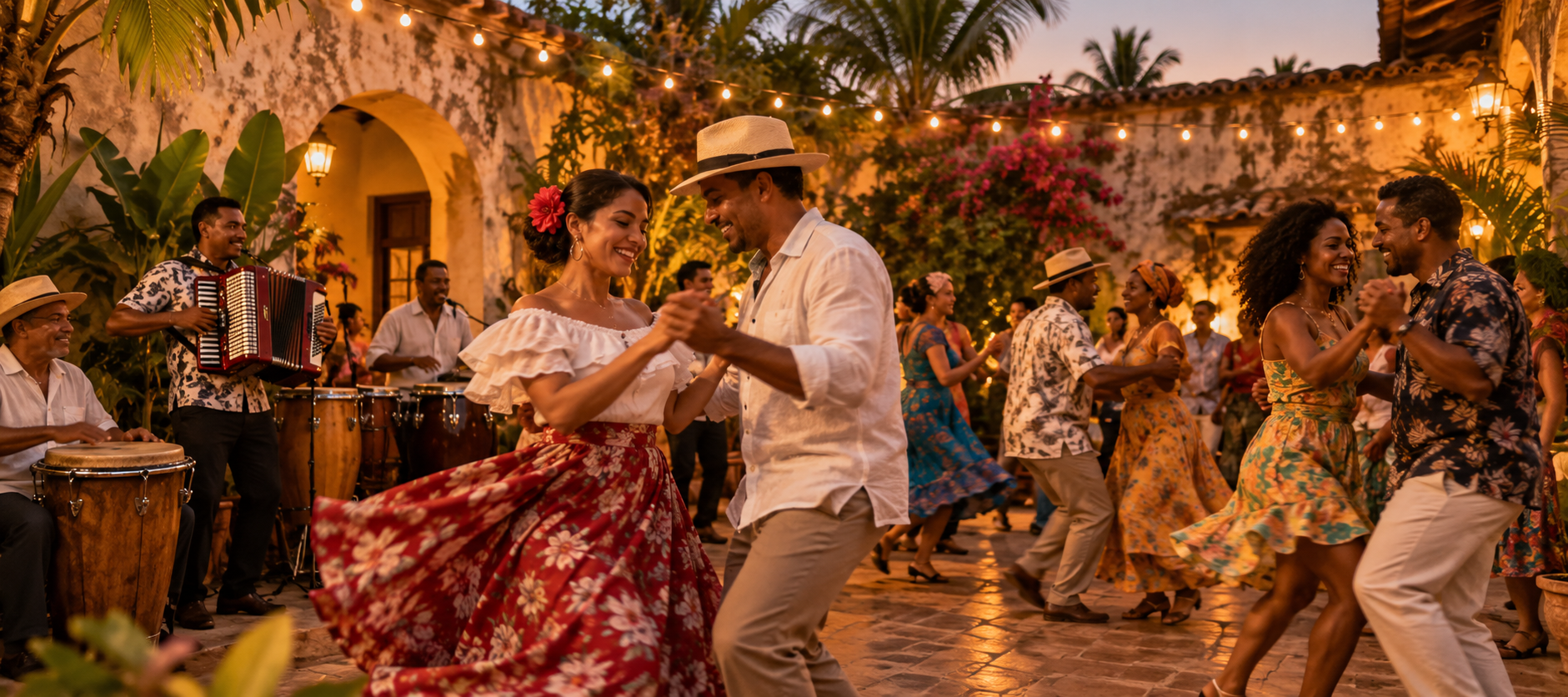
Cumbia is more than a dance rhythm. It is a musical tradition that has traveled across borders, connected generations, and inspired countless artists throughout Latin America. From its roots on Colombia's Caribbean coast to the energetic sounds of Mexican, Argentine, and Peruvian cumbia, the genre offers an incredible variety of musical experiences.
But where should you begin if you have never explored cumbia before?
The good news is that you don't need to be a music expert to appreciate its distinctive rhythms, infectious melodies, and rich cultural history.
In this guide, we'll take you through a 60-minute journey into cumbia music, helping you discover its origins, recognize its instruments, explore regional variations, and find artists worth listening to.
Whether you're relaxing at home, discovering new music, or preparing a Latin-inspired playlist, this listening session is an enjoyable way to experience one of Latin America's most influential musical traditions.
What Is Cumbia Music?
Cumbia is a musical and dance tradition that originated in Colombia, particularly along the country's Caribbean coast.
Its history reflects the interaction of African, Indigenous, and European cultural influences.
Traditional cumbia developed around percussion, dance, and melodic instruments, while later interpretations incorporated accordions, brass instruments, electric guitars, synthesizers, and modern production techniques.
One of cumbia's defining characteristics is its steady, danceable rhythmic pulse.
Unlike musical styles built around constant changes in tempo, many cumbia recordings rely on repeating rhythmic patterns that create a hypnotic sense of movement.
This makes the genre accessible to new listeners while offering plenty of musical details to discover.
Minutes 0–10: Discover Cumbia's Signature Rhythm
Begin your listening journey by focusing on rhythm rather than melody.
Choose a traditional Colombian cumbia recording and listen carefully to the percussion.
You may hear instruments such as:
-
Tambora: A large drum that contributes to the rhythmic foundation.
-
Tambor alegre: A hand drum that adds expressive rhythmic patterns.
-
Llamador: A drum that maintains a recurring rhythmic pulse.
-
Maracas: Shakers that add texture and movement.
-
Gaita: A traditional Colombian flute used in some cumbia styles.
Listen for the interaction between the steady underlying beat and the more expressive percussion.
The rhythm may sound simple at first, but different instruments contribute separate patterns that fit together.
Recommended listening
Try exploring recordings by Los Gaiteros de San Jacinto, a Colombian group celebrated for preserving traditional Caribbean musical styles.
Their music offers an excellent introduction to the relationship between drums, flutes, and traditional cumbia rhythms.
Listening tip: During the first few minutes, avoid multitasking. Follow one percussion instrument, then shift your attention to another.
You'll begin to notice how the different rhythmic parts interact.
Minutes 10–20: Explore Traditional Colombian Cumbia
Now that you recognize the basic rhythm, spend the next ten minutes discovering how traditional cumbia combines percussion with melody.
Colombia's Caribbean region has produced numerous musical traditions, and cumbia is closely connected to this cultural landscape.
Traditional performances may feature instrumental sections, call-and-response elements, and arrangements designed for dancing.
One of the most recognizable pieces associated with Colombian cumbia is “La Pollera Colorá,” composed by Juan Madera and Wilson Choperena.
The song became an enduring symbol of Colombian popular music.
Another important artist to explore is Andrés Landero, whose accordion-based recordings helped shape a distinctive approach to Colombian cumbia.
What should you listen for?
Pay attention to three musical elements:
1. The melody
Notice how the main instrument introduces and repeats recognizable phrases.
2. The percussion
Listen to how the drums maintain momentum without overpowering the melody.
3. The arrangement
Observe how different instruments enter and leave the performance.
Traditional cumbia often demonstrates how a relatively simple musical structure can create a rich and engaging listening experience.
Minutes 20–30: Travel to Mexico Through Cumbia
Cumbia became enormously popular in Mexico, where musicians developed their own interpretations of the genre.
Mexican cumbia frequently features prominent keyboards, accordion melodies, electric instruments, and arrangements influenced by regional popular music.
The result is a sound that can feel both familiar and distinct from traditional Colombian recordings.
Artists worth exploring
Los Ángeles Azules
This Mexican group is widely associated with cumbia sonidera and has introduced the genre to generations of listeners.
Their song “Cómo Te Voy a Olvidar” is a recognizable example of their melodic style.
Celso Piña
Known for his accordion playing and adventurous collaborations, Celso Piña combined cumbia with influences from other genres.
His recording “Cumbia Sobre el Río” offers an energetic example of his approach.
What makes Mexican cumbia different?
As you listen, compare the instrumental arrangements with the Colombian recordings from the previous section.
You may notice:
-
More prominent keyboards.
-
Different accordion styles.
-
Fuller electronic arrangements.
-
Stronger emphasis on memorable vocal melodies.
-
Production techniques associated with contemporary popular music.
These differences demonstrate how a musical tradition can evolve while retaining its recognizable rhythmic identity.
Minutes 30–40: Discover Peruvian Cumbia and Chicha
For the next ten minutes, move to Peru.
Peruvian cumbia developed distinctive sounds by combining cumbia rhythms with local musical influences and electric instrumentation.
One particularly interesting style is known as chicha.
This music became associated with electric guitars, psychedelic influences, and urban popular culture.
Listen to Los Mirlos
Los Mirlos are among the best-known groups associated with Amazonian Peruvian cumbia.
Their music often features expressive electric guitar melodies and rhythmic patterns that create a distinctive atmosphere.
Try listening to “La Danza de Los Mirlos.”
Pay particular attention to the guitar.
Unlike recordings where accordion or flute carries the melody, electric guitar becomes a central element of the arrangement.
What should you notice?
The rhythm remains connected to cumbia, but the overall sound changes considerably.
Electric guitar effects, instrumental melodies, and regional influences give the music a different personality.
This is one of the most fascinating aspects of cumbia: the genre can absorb new musical ideas without losing its rhythmic foundation.
Minutes 40–50: Experience Argentine Cumbia
Cumbia also became an important part of popular music in Argentina.
Over time, Argentine musicians developed several distinctive styles, including cumbia santafesina and cumbia villera.
These styles differ in instrumentation, lyrical themes, and cultural context.
Artists to explore
Los Palmeras
One of Argentina's best-known cumbia groups, Los Palmeras are associated with cumbia santafesina.
Their recordings feature danceable rhythms, memorable melodies, and strong connections to Argentine popular culture.
Damas Gratis
This group became influential within cumbia villera, a style associated with urban working-class communities and socially grounded lyrics.
Compare the atmosphere
During this section, notice how the vocals and arrangements differ from the Colombian, Mexican, and Peruvian recordings.
Some Argentine cumbia emphasizes communal celebration and singalong melodies.
Other recordings feature more electronic sounds and lyrics reflecting particular social environments.
These variations reveal how music can express the identity and experiences of different communities.
Minutes 50–60: Create Your Own Cumbia Playlist
You've now explored several important cumbia traditions.
Use the final ten minutes to revisit the sounds that interested you most.
Ask yourself:
Which rhythm made you want to dance?
Did you prefer traditional percussion or modern electronic arrangements?
Were you more attracted to accordion melodies or electric guitar?
Which regional style would you like to explore further?
Build a beginner-friendly cumbia playlist
Here are five recordings to consider:
-
La Pollera Colorá — a Colombian cumbia classic.
-
Cómo Te Voy a Olvidar — Los Ángeles Azules.
-
Cumbia Sobre el Río — Celso Piña.
-
La Danza de Los Mirlos — Los Mirlos.
-
A traditional recording by Los Gaiteros de San Jacinto.
These suggestions are starting points rather than a fixed 60-minute playlist. Recording lengths vary, so choose tracks that fit each listening segment.
You can also explore additional recordings by Los Palmeras and Damas Gratis to extend your journey.
The goal is not to memorize every artist or musical term.
Instead, focus on developing your own understanding of the genre.
Why Does Cumbia Sound Different Across Latin America?
Cumbia's international popularity is closely connected to its adaptability.
As the music spread beyond Colombia, musicians combined its rhythmic foundation with local traditions and contemporary influences.
This produced a wide variety of regional styles.
Colombian cumbia
Often associated with traditional percussion, flutes, accordion-based interpretations, and Caribbean cultural heritage.
Mexican cumbia
Known for diverse arrangements that may feature keyboards, accordion, electronic instruments, and melodic vocals.
Peruvian cumbia
Recognized for distinctive electric guitar sounds and regional influences, particularly in chicha and Amazonian cumbia.
Argentine cumbia
Includes multiple styles, ranging from melodic cumbia santafesina to the urban sounds of cumbia villera.
Although these traditions share historical connections, each has developed its own musical identity.
What Instruments Define Cumbia Music?
Understanding the instruments can make listening more rewarding.
Percussion
Drums and shakers create the rhythmic foundation that makes cumbia recognizable.
Accordion
The accordion became important in several Colombian and regional cumbia traditions.
Flutes
Traditional Colombian gaita flutes contribute distinctive melodies to certain styles.
Electric guitar
Especially prominent in many Peruvian cumbia recordings.
Keyboards and synthesizers
Common in numerous modern and regional interpretations.
Bass
The bass supports the rhythm and helps create the music's characteristic movement.
Different combinations of these instruments produce the variety heard across the genre.
Is Cumbia Easy to Dance To?
One reason cumbia became so popular is its accessible dance rhythm.
Many forms of cumbia dancing use repeated steps that follow the music's steady pulse.
However, dancing styles vary by region and cultural tradition.
If you're new to cumbia, begin by listening to the beat and moving naturally.
You don't need complicated choreography to enjoy the music.
Start with small steps, relax your shoulders, and let the rhythm guide your movement.
As you become more comfortable, you can explore traditional and contemporary cumbia dance styles.
How to Discover More Cumbia Music Online
After your first listening session, continue exploring the genre through radio stations, curated playlists, and artist catalogs.
Online radio can be especially useful because it introduces listeners to music they might not discover through familiar playlists.
Rather than searching only for famous artists, try exploring stations and programs dedicated to Latin American music.
You may encounter traditional Colombian cumbia, Mexican cumbia sonidera, Peruvian chicha, or contemporary interpretations.
Explore online radio stations on 1LiveRadio and discover more music from around the world.
Station availability and programming may vary, so check each station's current description to find the styles you want to hear.
Frequently Asked Questions About Cumbia Music
Where did cumbia originate?
Cumbia originated in Colombia, particularly along the Caribbean coast, and developed through the interaction of African, Indigenous, and European cultural influences.
What makes cumbia different from salsa?
Cumbia and salsa have different musical histories and characteristic rhythmic approaches. Cumbia often emphasizes a steady, repeating dance pulse, while salsa commonly features more complex Afro-Caribbean rhythmic arrangements.
Is cumbia popular outside Colombia?
Yes. Cumbia became widely popular across Latin America, particularly in countries such as Mexico, Peru, and Argentina, where musicians developed distinctive regional styles.
What is chicha music?
Chicha is a style associated with Peruvian cumbia that incorporates electric guitars and influences from psychedelic rock and regional musical traditions.
Who are some famous cumbia artists?
Well-known performers and groups include Los Ángeles Azules, Celso Piña, Los Mirlos, Andrés Landero, Los Palmeras, and Los Gaiteros de San Jacinto.
Can beginners enjoy cumbia without understanding Spanish?
Absolutely. Although lyrics are an important part of many recordings, cumbia's rhythms, melodies, and instrumental arrangements can be appreciated regardless of language.
How long does it take to understand cumbia music?
A one-hour listening session can provide a useful introduction, but the genre's regional diversity offers much more to explore.
Final Thoughts: One Hour, Many Cumbia Traditions
Spending an hour with cumbia is an opportunity to explore far more than a single musical style.
You begin with the traditional rhythms of Colombia, discover the melodic arrangements of Mexican cumbia, experience the electric guitar sounds of Peru, and encounter the distinctive musical culture of Argentina.
Along the way, you learn to recognize the percussion, melodies, instruments, and regional influences that give each recording its character.
The most rewarding part of the experience is discovering how familiar rhythms can take on completely different personalities.
Cumbia is a living musical tradition that continues to evolve, connect communities, and inspire new generations of musicians.
Whether you prefer traditional recordings or modern interpretations, there is always another rhythm, artist, or regional style waiting to be discovered.
Ready for your next musical journey? Visit 1LiveRadio and explore the world of online radio.
Reader comments
No comments yet. Start the conversation.
Leave a comment
Your email stays private. Comments appear after approval.