
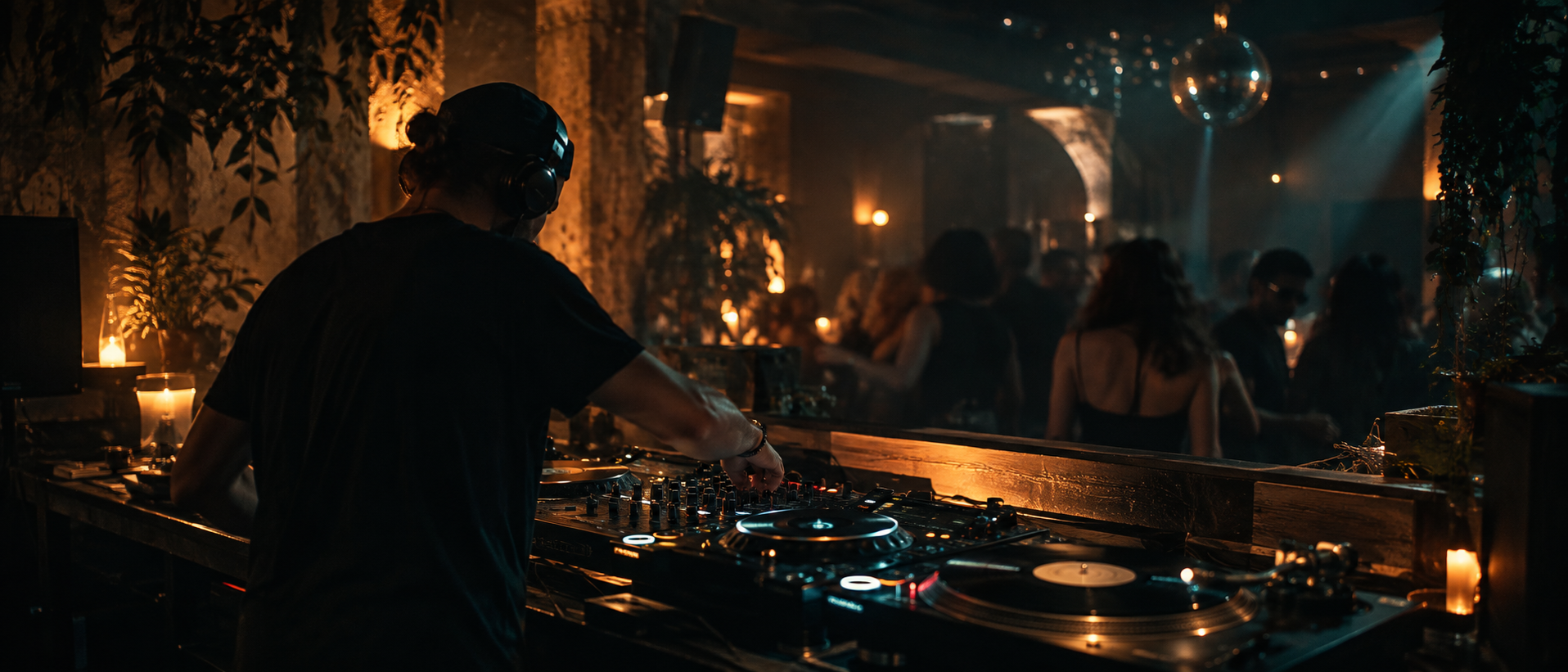
Some music demands your attention with explosive drops, powerful vocals, and dramatic changes in energy. Deep house takes a different approach.
Instead of relying on constant excitement, deep house invites listeners into a world of warm basslines, smooth rhythms, soulful melodies, and carefully layered electronic sounds.
Its appeal lies in subtlety. A gentle chord progression, a softly evolving synthesizer, or a perfectly timed percussion pattern can create an atmosphere that feels both relaxing and deeply engaging.
Whether you're enjoying a quiet evening, working on a creative project, or discovering electronic music for the first time, deep house offers a listening experience that rewards patience.
But what exactly is deep house, where did it come from, and how can you learn to appreciate its distinctive sound?
This guide explores the history, musical characteristics, influential artists, and listening techniques that make deep house one of electronic music's most enduring styles.
What Is Deep House Music?
Deep house is a style of electronic dance music that emerged during the 1980s, closely associated with the development of house music in Chicago.
It combines the steady rhythmic foundation of house music with influences from soul, jazz, funk, and disco.
Deep house is often characterized by warm chords, expressive basslines, atmospheric textures, and a groove that develops gradually.
While many electronic dance styles emphasize dramatic buildups and powerful drops, deep house frequently focuses on musical continuity.
The rhythm remains consistent while small changes in instrumentation, harmony, and production create movement.
This approach gives deep house its distinctive combination of dancefloor energy and relaxed atmosphere.
However, not every deep house recording is slow or mellow. Some tracks are energetic and designed specifically for club environments.
The genre includes a wide range of moods, from intimate and soulful to hypnotic and rhythmically intense.
1. The Origins of Deep House: From Chicago to the World
To understand deep house, it helps to explore the early history of house music.
During the late 1970s and early 1980s, DJs in Chicago began developing a new musical approach influenced by disco, soul, electronic music, and underground club culture.
House music emerged from these creative environments, with DJs and producers experimenting with drum machines, synthesizers, and extended dance arrangements.
The influence of Chicago house
Early Chicago house established several musical characteristics that remain important today.
These include:
-
A steady four-on-the-floor kick drum.
-
Repeating bass patterns.
-
Electronic percussion.
-
Extended instrumental sections.
-
Rhythmic arrangements designed for continuous dancing.
As producers explored different musical directions, some began incorporating richer harmonies and more atmospheric arrangements.
These developments contributed to the emergence of deep house.
Larry Heard and the deep house sound
One of the most influential figures in deep house history is Larry Heard, also known for his work under the name Mr. Fingers.
His 1986 recording "Can You Feel It" became a defining example of the atmospheric and emotionally expressive possibilities of house music.
The track features a hypnotic rhythmic foundation, warm synthesizer chords, and an arrangement that creates a sense of spaciousness.
Rather than relying on dramatic musical changes, it develops its atmosphere through repetition and subtle variation.
Larry Heard's productions helped establish an approach that would influence generations of deep house artists.
The genre's international development
As house music spread beyond Chicago, deep house developed strong connections with club scenes in cities such as New York, London, and other international electronic music centers.
Producers incorporated new influences, including jazz-inspired harmonies, soulful vocals, and increasingly sophisticated electronic production techniques.
Today, deep house is recognized around the world, although the term is sometimes used broadly to describe different styles of melodic or relaxed house music.
2. The Rhythm: Understanding the Deep House Groove
At the heart of deep house is a steady rhythmic pulse.
Most deep house recordings use a four-on-the-floor beat, meaning the kick drum plays on each beat of a typical four-beat measure.
This creates a consistent foundation that makes the music easy to follow.
The four-on-the-floor rhythm
Imagine counting:
One, two, three, four.
The kick drum usually marks each count.
Other percussion instruments add rhythmic movement around this foundation.
A typical arrangement may include:
-
Kick drum on every beat.
-
Clap or snare accents.
-
Hi-hats between the main beats.
-
Shakers and subtle percussion.
-
Small rhythmic variations.
The result is a groove that feels steady without becoming completely static.
Why subtle percussion matters
Deep house often uses percussion to create texture rather than overwhelming intensity.
A quiet shaker or carefully placed hi-hat can change the feeling of an entire section.
These details may not immediately stand out, but they contribute to the music's sense of movement.
Listening tip: Play a deep house track and focus only on the percussion for the first minute. Notice how the different sounds interact with the kick drum.
3. Warm Basslines: The Foundation of Deep House
Bass is one of the most recognizable elements of deep house.
A well-designed bassline provides rhythmic movement while adding warmth and depth to the overall sound.
Unlike styles that rely on extremely aggressive bass effects, many deep house recordings use rounded, smooth bass tones.
How bass and drums work together
The kick drum establishes the main pulse.
The bassline moves around that pulse, creating a relationship between rhythm and melody.
Sometimes the bass follows a simple repeating pattern.
In other recordings, it includes syncopated notes that make the groove feel more fluid.
Why the bassline feels hypnotic
Repetition allows listeners to become familiar with a musical pattern.
Once that pattern is established, even a small change can feel significant.
A bass note arriving slightly earlier than expected or a short pause between phrases can transform the groove.
What to listen for
During your next listening session, pay attention to:
-
The tone of the bass.
-
How the bass interacts with the kick drum.
-
Whether the bassline repeats or changes.
-
How the low frequencies contribute to the atmosphere.
These details help explain why deep house can feel immersive even when its arrangement appears simple.
4. Soulful Chords and Jazz Influences
One of the most distinctive characteristics of deep house is its use of rich harmonic textures.
While many dance tracks emphasize rhythm above everything else, deep house often gives chords an important emotional role.
The importance of harmony
Deep house producers frequently draw inspiration from soul, jazz, funk, and disco.
This can result in chord progressions that feel warm, nostalgic, dreamy, or reflective.
Electric piano sounds, synthesizer pads, and sampled keyboard phrases are common elements.
Why certain chords feel emotional
Music creates emotional responses through combinations of harmony, rhythm, timbre, and personal association.
In deep house, extended chords and carefully chosen synthesizer sounds can create a sense of warmth or spaciousness.
The effect is often subtle.
Rather than telling a dramatic musical story, the arrangement creates an atmosphere that listeners can settle into.
Listen for the chord progression
Try following the keyboard or synthesizer chords instead of the drums.
Notice whether the harmony changes frequently or repeats over several measures.
In many deep house tracks, a short chord progression provides the foundation for a much longer arrangement.
5. Atmospheric Textures: The Art of Creating Space
Deep house often feels spacious because of how producers arrange sounds within the mix.
Not every instrument needs to play continuously.
Some elements appear briefly, while others remain quietly in the background.
Common atmospheric elements
Deep house productions may include:
-
Soft synthesizer pads.
-
Electric piano chords.
-
Reverb-rich vocal samples.
-
Ambient background textures.
-
Filtered percussion.
-
Gentle melodic phrases.
-
Subtle sound effects.
These elements create depth without necessarily drawing attention away from the rhythm.
The importance of reverb and delay
Reverb creates the impression that a sound exists within a particular acoustic space.
Delay produces repeating echoes.
When used carefully, these effects can make a track feel open, atmospheric, or dreamlike.
Why silence matters
One of the most overlooked production techniques is leaving space between sounds.
A sparse arrangement allows each element to become more noticeable.
Sometimes removing an instrument creates a stronger emotional effect than adding another layer.
Listening tip: Notice what happens when a producer temporarily removes the chords or percussion. The return of those sounds may feel more powerful because of the contrast.
6. Deep House Vocals: Emotion Without Overcrowding the Mix
Not every deep house track features vocals.
Many recordings are entirely instrumental, allowing rhythm and atmosphere to carry the experience.
However, vocals have played an important role throughout the genre's history.
Soulful vocal performances
Some deep house recordings feature expressive singing influenced by soul and gospel traditions.
These vocals can add emotional depth to the music.
Vocal samples
Other tracks use short vocal phrases that repeat throughout the arrangement.
A single phrase may become part of the rhythmic structure.
Minimal vocal arrangements
Deep house producers sometimes use only a few words or a distant vocal texture.
This approach leaves room for listeners to focus on the instrumental groove.
What makes vocals effective?
The most important factor is how the voice fits into the arrangement.
A vocal does not need to dominate the track to become memorable.
Sometimes a quiet phrase placed at the right moment creates the strongest impression.
7. Deep House vs. House Music: What's the Difference?
Deep house belongs to the broader house music family.
Both styles share important rhythmic characteristics, particularly the steady four-on-the-floor beat.
However, deep house is generally associated with a particular approach to harmony, atmosphere, and groove.
Traditional house music
House music covers a broad range of styles.
Some tracks feature energetic piano melodies, powerful vocals, and arrangements designed for peak-time dancing.
Others are minimal, experimental, or heavily influenced by disco.
Deep house
Deep house frequently emphasizes:
-
Warm basslines.
-
Rich chord progressions.
-
Soulful or atmospheric textures.
-
Gradual musical development.
-
Subtle rhythmic variations.
-
An immersive listening experience.
Are the boundaries always clear?
No.
Electronic music genres often overlap, and different listeners may classify the same recording differently.
The term deep house has also been applied to some commercially popular melodic house styles that differ from the genre's earlier Chicago-influenced sound.
Understanding these distinctions can help listeners explore the music more thoughtfully.
8. Deep House vs. Tech House and Progressive House
Deep house is sometimes confused with other house subgenres.
Although these styles share common rhythmic foundations, they often emphasize different musical elements.
Deep house vs. tech house
Tech house combines elements associated with house and techno.
It frequently emphasizes percussion, rhythmic precision, and club-oriented arrangements.
Deep house is more closely associated with warm harmonies and soulful textures, although the two styles can overlap.
Deep house vs. progressive house
Progressive house often emphasizes long-form development, layered melodies, and gradual changes in energy.
Deep house can also develop slowly, but its defining characteristics are more closely connected to groove, harmonic warmth, and particular house music traditions.
Deep house vs. melodic house
Melodic house frequently places strong emphasis on expressive synthesizer melodies and atmospheric production.
Some recordings share characteristics with deep house, but the terms are not interchangeable.
Rather than relying entirely on genre labels, listen to the rhythm, harmony, and arrangement.
9. Influential Deep House Artists Worth Exploring
One of the best ways to understand deep house is to explore artists who helped shape its sound.
Larry Heard / Mr. Fingers
Larry Heard is one of the most important figures associated with deep house.
His productions helped establish the genre's warm, atmospheric, and emotionally expressive character.
Recommended track: "Can You Feel It" — Mr. Fingers.
Kerri Chandler
Kerri Chandler is widely respected for his contributions to house and deep house.
His music often combines strong rhythmic foundations with soulful influences and rich musical textures.
His work provides an excellent introduction to the relationship between traditional house grooves and deeper harmonic arrangements.
Ron Trent
Ron Trent is an influential American producer and DJ associated with deep house and Chicago's electronic music heritage.
His recordings frequently explore atmospheric textures, hypnotic rhythms, and extended musical development.
Osunlade
Osunlade is known for productions that combine house music with soulful, spiritual, and diverse musical influences.
His work demonstrates the expressive possibilities of deep house and related styles.
Jimpster
British producer Jimpster is associated with melodic, sophisticated deep house productions.
His recordings often feature detailed percussion, warm synthesizers, and carefully developed arrangements.
Moodymann
Moodymann is an influential Detroit artist whose music draws from house, soul, funk, disco, and sampling traditions.
His distinctive production approach offers another perspective on the broader musical world surrounding deep house.
These artists represent different approaches rather than a single fixed formula.
Exploring their catalogs can reveal how diverse deep house can be.
10. Why Deep House Works for Relaxed Listening
Deep house is strongly connected to dance culture, but many recordings also work well outside clubs.
Its steady rhythms and gradual development can make it suitable for different listening environments.
Relaxing at home
Warm harmonies and smooth grooves can create a pleasant atmosphere during a quiet evening.
Instrumental deep house is particularly appealing to listeners who prefer music without prominent lyrics.
Creative work
Some people enjoy listening to repetitive electronic music while writing, designing, or working on creative projects.
However, music affects concentration differently for everyone.
Tracks with fewer vocals may feel less distracting for certain tasks.
Evening listening
Deep house can complement a relaxed evening because many recordings develop without abrupt changes.
Social gatherings
Its consistent groove can provide background music for conversations while still creating a lively atmosphere.
Dancing
Despite its relaxed reputation, deep house remains dance music.
Many tracks are designed for clubs and can create powerful energy through rhythm and repetition.
The genre's versatility is one of its greatest strengths.
11. The Beauty of Repetition in Deep House
Repetition is sometimes misunderstood as a lack of musical complexity.
In deep house, however, repetition is often a deliberate creative technique.
A recurring bassline or chord progression establishes familiarity.
Once the listener understands the pattern, subtle changes become more noticeable.
Small variations create movement
A producer might:
-
Introduce a new hi-hat pattern.
-
Remove the bass for several beats.
-
Add a short vocal sample.
-
Change the filter on a synthesizer.
-
Introduce a gentle melodic variation.
-
Adjust the intensity of the percussion.
Each change can affect the atmosphere without interrupting the groove.
Gradual development
Many deep house tracks are structured around extended sections.
Instead of moving rapidly between contrasting ideas, the music develops gradually.
This creates an immersive experience in which the listener becomes increasingly aware of individual layers.
How to appreciate repetition
Choose a track lasting six or seven minutes.
Listen without skipping ahead.
Try to identify each new sound as it appears.
By the end, you may realize that the arrangement has changed considerably even though the underlying rhythm remained consistent.
12. A 30-Minute Deep House Listening Journey
If you're new to deep house, a structured listening session can help you recognize its defining characteristics.
You don't need specialized equipment or technical knowledge.
A comfortable listening environment and a little curiosity are enough.
Minutes 0–5: Discover the foundations
Begin with "Can You Feel It" by Mr. Fingers.
Focus on the steady rhythm and warm synthesizer chords.
Notice how the atmosphere develops without dramatic changes.
Minutes 5–10: Follow the bassline
Choose a deep house recording by Kerri Chandler.
Listen closely to the relationship between the bass and kick drum.
Try to recognize how the groove creates movement.
Minutes 10–15: Explore atmospheric textures
Select a recording by Ron Trent.
Pay attention to the background sounds, synthesizer layers, and gradual changes in arrangement.
Minutes 15–20: Experience soulful influences
Explore a production by Osunlade.
Notice how musical influences beyond electronic dance music contribute to the atmosphere.
Minutes 20–25: Hear modern deep house
Listen to a track by Jimpster.
Focus on production details, percussion, and the balance between melody and rhythm.
Minutes 25–30: Return to your favorite sound
Revisit the recording that interested you most.
This time, concentrate on the small details you missed during your first listen.
The suggested tracks may have different durations, so treat the time blocks as flexible listening windows rather than exact song lengths.
13. How to Build the Perfect Deep House Playlist
Creating a deep house playlist is about more than choosing songs with similar beats.
A good playlist balances mood, energy, and musical variety.
Start with a warm introduction
Choose tracks with gentle rhythms and atmospheric chords.
These recordings help establish a relaxed mood.
Gradually increase the energy
Introduce songs with more prominent percussion and stronger basslines.
The goal is to create movement without abrupt changes.
Include different musical textures
Mix instrumental recordings with soulful vocal tracks.
Explore both classic deep house and contemporary productions.
Maintain a consistent atmosphere
Pay attention to transitions between songs.
Tracks with dramatically different energy levels may interrupt the listening experience.
Finish with something reflective
End with a recording that emphasizes warmth, melody, or atmosphere.
This gives the playlist a satisfying sense of closure.
A thoughtfully arranged playlist can turn a collection of songs into a complete musical journey.
14. Discover Deep House Through Online Radio
Online radio is an excellent way to discover electronic music beyond familiar playlists.
Deep house radio programming can introduce listeners to new artists, independent producers, classic recordings, and contemporary releases.
Why online radio is useful
A playlist often reflects music you already know.
Radio programming can introduce unexpected discoveries.
You may hear a classic Chicago-inspired production followed by a modern atmospheric track.
This variety helps reveal the genre's history and ongoing development.
Explore electronic music on 1LiveRadio
If you enjoy discovering new sounds, visit 1LiveRadio to explore available online radio stations.
Browse station descriptions and music categories to find programming that matches your interests.
Whether you're looking for deep house, classic house, or other electronic music styles, online radio can be a useful starting point for further exploration.
Station availability and programming may vary.
Frequently Asked Questions About Deep House Music
What is deep house music?
Deep house is a style of electronic dance music associated with warm basslines, soulful harmonies, steady rhythms, and atmospheric production.
Where did deep house originate?
Deep house emerged during the 1980s, closely connected to the development of house music in Chicago.
Who helped create the deep house sound?
Larry Heard, also known as Mr. Fingers, is widely recognized as one of the most influential pioneers of deep house.
Is deep house relaxing?
Many deep house recordings feature warm textures and gradual musical development that listeners may find relaxing. However, the genre also includes energetic club-oriented music.
What is the difference between house and deep house?
House is a broad electronic dance music genre. Deep house is a style within that tradition, often emphasizing rich harmonies, soulful influences, and atmospheric grooves.
Does deep house always have vocals?
No. Deep house includes both instrumental recordings and tracks featuring soulful singing or vocal samples.
What instruments are used in deep house?
Common elements include drum machines, synthesizers, electronic bass, keyboards, sampled instruments, and digitally processed vocals.
What tempo is deep house?
Many deep house tracks fall roughly between 110 and 125 beats per minute, although the genre does not have a strict tempo requirement.
Is deep house good for studying or working?
Some listeners enjoy instrumental deep house while studying or working because of its consistent rhythm. However, its effect on concentration varies from person to person.
Where can I discover deep house music?
You can explore influential artists, curated playlists, DJ mixes, and online radio stations featuring house and electronic music.
Final Thoughts: Let the Deep House Groove Take Its Time
Deep house proves that electronic music does not need constant dramatic changes to create a memorable experience.
Its strength lies in the relationship between rhythm, harmony, bass, and atmosphere.
A repeating chord progression can become emotionally engaging through subtle variations.
A simple bassline can create movement when paired with carefully arranged percussion.
A quiet vocal sample can add personality without overwhelming the instrumental groove.
These details make deep house rewarding for both casual listeners and dedicated electronic music enthusiasts.
From the pioneering productions of Larry Heard to the sophisticated arrangements of contemporary artists, the genre continues to offer new ways of experiencing rhythm and atmosphere.
The next time you listen to deep house, resist the temptation to skip ahead.
Allow the groove to develop naturally.
Follow the bassline, notice the changing textures, and appreciate the small musical decisions that shape the experience.
Sometimes the most memorable musical journeys are the ones that take their time.
Discover more music and explore online radio stations at 1LiveRadio.
Reader comments
No comments yet. Start the conversation.
Leave a comment
Your email stays private. Comments appear after approval.