
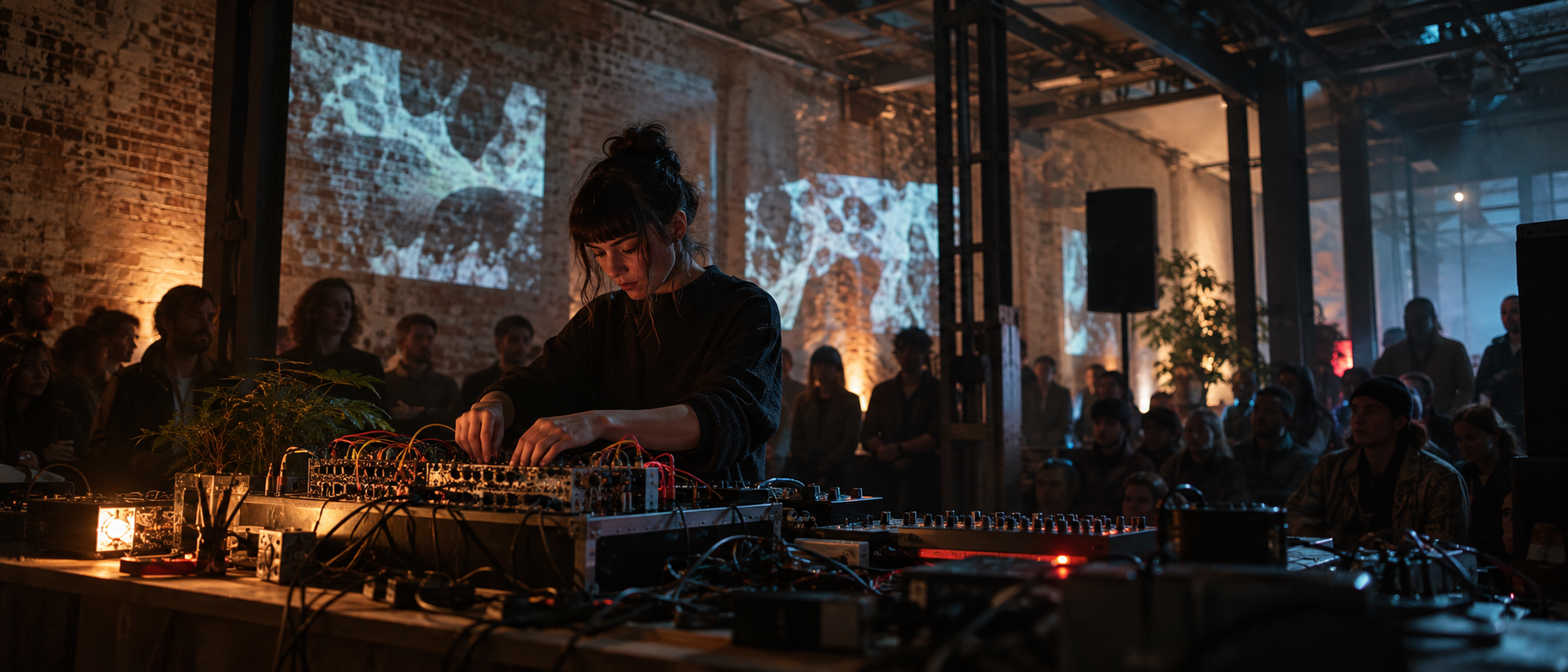
Electronic music can take many forms. Some recordings are designed to fill dance floors with powerful rhythms, while others create immersive atmospheres through delicate melodies, unusual textures, and carefully arranged sounds.
Between these approaches lies the expansive world of electronica music.
Electronica is a broad term used to describe a wide range of electronic music, particularly recordings that reward attentive listening as well as rhythmic enjoyment.
A single electronica radio selection might move from gentle ambient soundscapes to intricate programmed beats, melodic synthesizer compositions, or experimental electronic productions.
For newcomers, this variety can feel confusing. Unlike genres defined by a specific tempo or rhythmic pattern, electronica does not follow one strict musical formula.
Instead, it offers a flexible way to explore electronic sound.
Some tracks develop gradually, introducing new layers over several minutes. Others establish a recognizable groove and transform it through subtle changes in texture, harmony, or rhythm.
The most rewarding approach is often to listen without expecting every recording to sound alike.
Whether you're interested in relaxing electronic music, creative sound design, or discovering influential electronic artists, electronica radio offers a natural starting point.
This guide explores the origins of electronica, its defining musical characteristics, important artists and albums, related genres, and practical ways to enjoy a more thoughtful listening experience.
1. What Is Electronica Music?
Electronica is a broad musical category associated with electronic instruments, digital production, and creative approaches to rhythm, melody, and sound.
The term became especially prominent during the 1990s, when electronic music gained wider recognition beyond traditional club environments.
Rather than describing one narrowly defined genre, electronica can encompass several styles.
These include ambient music, downtempo, trip-hop, experimental electronic music, and selected forms of intelligent dance music, commonly abbreviated as IDM.
Common characteristics of electronica
Depending on the artist and recording, electronica may feature:
-
Electronic synthesizers.
-
Programmed drum patterns.
-
Atmospheric soundscapes.
-
Digital sampling.
-
Layered melodies.
-
Experimental sound design.
-
Repetitive rhythmic motifs.
-
Ambient textures.
-
Unconventional song structures.
-
Gradual musical development.
Not every electronica track includes all these elements.
Some recordings are strongly rhythmic, while others contain little or no percussion.
Is electronica a specific genre?
Electronica is often more useful as an umbrella category than as a strict genre.
Its meaning can vary between countries, music publications, radio stations, and streaming platforms.
For listeners, this flexibility creates opportunities to discover electronic styles they might not otherwise explore.
2. The History of Electronica
Electronica developed through decades of experimentation with electronic instruments and recording technology.
Its history connects early electronic composition, synthesizer music, ambient production, dance culture, and experimental sound design.
Early electronic experimentation
During the twentieth century, composers and engineers began exploring the creative possibilities of electronically generated sound.
Tape manipulation, electronic oscillators, and early synthesizers introduced new approaches to musical composition.
These developments helped establish the foundation for later electronic genres.
Synthesizer music in the 1970s
The 1970s saw influential developments in electronic music.
Artists such as Kraftwerk, Tangerine Dream, and Jean-Michel Jarre explored synthesizer-based composition.
Their recordings demonstrated that electronic instruments could create memorable melodies, rhythmic structures, and expansive musical environments.
The influence of ambient music
Brian Eno became an important figure in the development of ambient music.
His work explored how music could create atmosphere without demanding constant attention.
Ambient production later became an important influence on many electronica artists.
Electronic music during the 1980s
Synthesizers, drum machines, and digital recording technology became increasingly accessible.
Electronic instruments appeared across pop, dance, experimental, and underground music.
This encouraged greater stylistic diversity.
Electronica in the 1990s
The term electronica became especially visible during the 1990s.
Artists combined electronic dance rhythms with experimental arrangements, ambient textures, and alternative musical influences.
Albums by artists such as Aphex Twin, The Orb, Boards of Canada, and The Chemical Brothers helped introduce different electronic approaches to wider audiences.
Electronica today
Contemporary electronica continues to evolve.
Modern artists use software synthesizers, digital sampling, modular equipment, and advanced audio processing to create new sounds.
The category remains broad, connecting experimental music with accessible electronic compositions.
3. What Makes Electronica Different From Other Electronic Music?
Electronica shares many instruments and production techniques with house, techno, trance, and other electronic genres.
However, it often places particular emphasis on musical exploration.
Listening rather than only dancing
Many electronic dance genres developed around club culture.
Electronica can also be rhythmic and danceable, but it frequently includes music intended for home listening, headphones, or reflective environments.
Flexible song structures
A house track may rely on a consistent rhythmic pulse.
An electronica composition might begin with an ambient introduction, introduce percussion gradually, and finish with an entirely different texture.
Sound design as musical expression
Electronica producers frequently treat sound itself as a central creative element.
The character of a synthesizer tone or processed sample can be as important as the melody.
Broad emotional range
Electronica can feel:
-
Peaceful.
-
Melancholic.
-
Energetic.
-
Playful.
-
Mysterious.
-
Futuristic.
-
Nostalgic.
-
Experimental.
This diversity is one of the category's greatest strengths.
4. The Role of Synthesizers in Electronica
Synthesizers are among the most recognizable instruments in electronic music.
They allow musicians to create and manipulate sounds electronically.
How synthesizers work
A synthesizer generates or processes sound using electronic or digital methods.
Musicians can adjust characteristics such as pitch, tone, modulation, and volume.
These controls make it possible to create sounds that resemble traditional instruments or produce entirely new textures.
Melodic synthesizers
Some electronica tracks feature clear synthesizer melodies.
These melodies can provide emotional direction and make complex arrangements more accessible.
Atmospheric synthesizers
Other recordings emphasize sustained sounds known as pads.
Pads can create a sense of space and atmosphere.
Bass synthesizers
Electronic basslines provide rhythmic and harmonic foundations.
They may be smooth and understated or powerful and distorted.
Experimental sound design
Producers can manipulate synthesizer sounds through filtering, distortion, modulation, and other effects.
These techniques allow simple musical ideas to develop into complex sonic experiences.
Listening tip
Choose an electronica track and focus on one synthesizer sound.
Notice whether its tone changes throughout the recording.
A subtle change in filtering or modulation can transform the atmosphere without changing the melody.
5. Understanding Rhythm in Electronica
Rhythm plays an important role in many electronica recordings.
However, unlike genres built around a particular beat, electronica can use a wide range of rhythmic structures.
Programmed beats
Producers often create percussion using drum machines or music software.
These tools allow precise control over timing and sound.
Breakbeats
Some electronica recordings feature broken, syncopated drum patterns.
These rhythms can create movement without relying on a steady four-on-the-floor beat.
Minimal percussion
Certain tracks use only a few percussion sounds.
This creates space for melodies and atmospheric textures.
Complex rhythmic patterns
Experimental electronica may include unusual time signatures, rapid percussion, or shifting rhythmic accents.
Beatless electronica
Some compositions contain no traditional drum pattern.
Instead, they create movement through changes in melody, harmony, and sound texture.
Why rhythmic variety matters
This flexibility allows electronica to support different listening experiences.
One recording may feel energetic and dance-oriented.
Another may encourage calm, focused attention.
6. Ambient Electronica: Music Built Around Atmosphere
Ambient electronica emphasizes texture, space, and gradual musical development.
It often combines electronic sound design with ideas associated with ambient music.
Common characteristics
Ambient electronica may include:
-
Soft synthesizer pads.
-
Slowly evolving melodies.
-
Minimal percussion.
-
Environmental recordings.
-
Reverb and delay.
-
Spacious arrangements.
-
Repeating musical patterns.
The importance of atmosphere
Rather than relying on dramatic changes, ambient electronica often develops gradually.
A sound may slowly become brighter.
A melody might emerge from the background.
A new layer can appear almost unnoticed.
Why listeners enjoy it
Ambient electronica can provide an immersive listening experience.
Some people enjoy it during quiet activities, while others prefer to listen closely to its subtle details.
Artists to explore
Brian Eno, The Orb, and selected works by Aphex Twin offer useful starting points for exploring atmospheric electronic music.
Their approaches differ, but each demonstrates the expressive possibilities of electronic texture.
7. Downtempo Electronica: Relaxed Beats and Melodic Soundscapes
Downtempo is a broad category associated with relatively relaxed rhythms and atmospheric production.
It often overlaps with electronica.
Musical characteristics
Downtempo recordings may feature:
-
Moderate or slow beats.
-
Warm basslines.
-
Electronic melodies.
-
Sampled instruments.
-
Atmospheric textures.
-
Jazz, soul, or hip-hop influences.
Why downtempo works well on radio
Downtempo tracks often flow naturally between different moods.
A radio selection can move from gentle instrumental music to more rhythmic electronic compositions without creating abrupt changes in energy.
Influential artists
Bonobo, Nightmares on Wax, and Thievery Corporation are frequently associated with downtempo or related electronic styles.
Their music demonstrates different ways to combine rhythm, melody, and atmosphere.
Listening tip
Focus on the relationship between percussion and melody.
Notice how the beat supports the arrangement without necessarily dominating it.
8. Trip-Hop: Where Electronica Meets Hip-Hop and Atmosphere
Trip-hop developed during the 1990s, particularly through the Bristol music scene in the United Kingdom.
It combines elements of hip-hop, electronic production, soul, dub, and atmospheric music.
Common characteristics
Trip-hop often features:
-
Slow or moderate breakbeats.
-
Deep basslines.
-
Sample-based production.
-
Atmospheric textures.
-
Expressive vocals.
-
Dark or reflective moods.
Important artists
Massive Attack, Portishead, and Tricky are closely associated with the development of trip-hop.
Why trip-hop matters to electronica
Trip-hop helped demonstrate how electronic production could create emotionally expressive music beyond conventional dance-floor structures.
Its influence can be heard in many later electronic and alternative recordings.
Listening recommendation
Explore Massive Attack's Mezzanine or Portishead's Dummy to experience different approaches to atmospheric electronic production.
9. IDM: The Experimental Side of Electronica
IDM stands for intelligent dance music, although the term is controversial and many artists and listeners dislike its implications.
It is commonly used to describe certain forms of experimental electronic music that developed during the 1990s.
Musical characteristics
Recordings associated with IDM may feature:
-
Intricate drum programming.
-
Unusual rhythmic structures.
-
Experimental synthesizers.
-
Abstract melodies.
-
Digital sound manipulation.
-
Unexpected arrangement changes.
Influential artists
Aphex Twin, Autechre, and Squarepusher are frequently associated with this musical territory.
Why IDM can feel challenging
Some recordings use complex rhythms or unconventional structures.
For newcomers, the music may initially seem unpredictable.
How to approach it
Start by following one repeating sound.
Notice how it changes throughout the track.
Instead of trying to understand every detail immediately, allow the arrangement to develop naturally.
10. Influential Electronica Artists Worth Discovering
Electronica includes artists with very different musical approaches.
Exploring their recordings reveals the category's diversity.
Aphex Twin
Aphex Twin, the recording name of Richard D. James, is known for experimental electronic production.
His music ranges from ambient compositions to intricate rhythmic experiments.
The album Selected Ambient Works 85–92 is an influential starting point.
Boards of Canada
Boards of Canada are known for nostalgic synthesizer textures, unusual samples, and atmospheric arrangements.
Their music often combines warm melodies with subtle rhythmic experimentation.
Music Has the Right to Children is one of their most celebrated albums.
The Orb
The Orb became influential through ambient house and expansive electronic compositions.
Their recordings combine atmospheric textures, samples, and electronic rhythms.
Autechre
Autechre are associated with experimental electronic music and complex rhythmic programming.
Their work explores the relationship between technology, structure, and sound.
Bonobo
Bonobo creates melodic electronic music that frequently combines downtempo rhythms with organic instrumentation.
His recordings provide an accessible introduction to atmospheric electronica.
Four Tet
Four Tet, the recording name of Kieran Hebden, is known for combining electronic production with diverse musical influences.
His work includes melodic, rhythmic, and experimental approaches.
Tycho
Tycho is associated with atmospheric electronic music featuring warm synthesizers, melodic arrangements, and organic instrumental elements.
The Chemical Brothers
The Chemical Brothers became influential through energetic electronic productions associated with big beat and related dance styles.
Their work demonstrates electronica's connection to club culture.
Moby
Moby achieved international recognition through electronic recordings that combined dance rhythms, ambient textures, and sampled musical elements.
His album Play became especially influential in bringing electronic music to mainstream audiences.
Jon Hopkins
Jon Hopkins creates electronic music that ranges from atmospheric compositions to powerful rhythmic productions.
His work often emphasizes detailed sound design and emotional development.
11. Essential Electronica Albums for Beginners
Exploring complete albums can provide a deeper understanding of electronica than listening to isolated tracks.
Aphex Twin – Selected Ambient Works 85–92
An influential collection of atmospheric electronic compositions.
The album combines melodic synthesizers with rhythmic experimentation.
Boards of Canada – Music Has the Right to Children
A landmark recording known for nostalgic textures and unusual electronic arrangements.
The Orb – Adventures Beyond the Ultraworld
An influential ambient house album featuring expansive compositions and creative sampling.
Massive Attack – Mezzanine
A darker, atmospheric album associated with trip-hop.
It demonstrates how electronic production can support powerful emotional expression.
Bonobo – Black Sands
A melodic electronic album combining downtempo rhythms with rich instrumental textures.
Four Tet – Rounds
An influential album featuring detailed sampling, rhythmic experimentation, and melodic arrangements.
Tycho – Dive
An accessible introduction to atmospheric electronic music.
Its warm synthesizers and flowing melodies make it suitable for relaxed listening.
Jon Hopkins – Immunity
An album that moves between powerful rhythmic sections and atmospheric electronic compositions.
Moby – Play
A widely recognized electronic album combining samples, melodies, and varied production styles.
These albums represent different musical approaches rather than one uniform electronica sound.
12. Electronica vs. House Music
Electronica and house music frequently overlap.
However, their meanings are different.
House music
House developed through dance music culture and is commonly associated with steady four-on-the-floor rhythms.
Electronica
Electronica is a broader category that may include beat-driven music, ambient compositions, and experimental production.
The main difference
House describes a more specific rhythmic and cultural tradition.
Electronica can encompass a much wider range of electronic music.
Why this matters for radio
A house station may maintain a relatively consistent dance rhythm.
An electronica station may shift between melodic, atmospheric, and experimental recordings.
13. Electronica vs. Techno
Techno is another important electronic genre.
It developed through musical innovation associated with Detroit during the 1980s.
Techno characteristics
Techno often features:
-
Repetitive electronic rhythms.
-
Synthesizer sequences.
-
Gradual arrangement changes.
-
Dance-oriented structures.
-
Detailed electronic sound design.
Electronica characteristics
Electronica may include techno influences but is not limited to techno's rhythmic conventions.
Where they overlap
Some electronic artists explore both experimental listening music and club-oriented production.
The distinction depends on the recording and its musical context.
14. Electronica vs. Ambient Music
Ambient music emphasizes atmosphere and texture.
Electronica is broader.
Ambient music
Ambient recordings may feature minimal percussion, slowly changing textures, and extended soundscapes.
Electronica
Electronica can include ambient music but also encompasses rhythmic and melodic electronic styles.
Listening differences
Ambient music often encourages attention to subtle changes.
Electronica may offer more pronounced rhythmic movement.
However, individual recordings can blur these boundaries.
15. The Importance of Sound Design in Electronica
Sound design is one of electronica's most distinctive creative elements.
It involves shaping the character of individual sounds.
Filtering
Filters change the frequency content of a sound.
A producer might gradually remove high frequencies to create a softer tone.
Reverb
Reverb creates a sense of acoustic space.
It can make electronic sounds feel distant or expansive.
Delay
Delay repeats a sound after a selected interval.
These repetitions can create rhythmic or atmospheric effects.
Sampling
Sampling involves using recorded sounds as musical material.
Samples may come from instruments, voices, environmental recordings, or other sources.
Granular synthesis
Granular synthesis manipulates tiny fragments of audio.
It can create unusual textures and evolving soundscapes.
Modulation
Modulation changes aspects of a sound over time.
This can produce movement even when the musical notes remain the same.
Why these techniques matter
In electronica, production choices often become part of the composition.
A small change in sound can alter the emotional character of an entire passage.
16. How to Listen to Electronica More Closely
Electronica rewards curiosity and repeated listening.
Because many tracks contain subtle production details, focusing on individual elements can reveal how the music works.
First listen: Identify the atmosphere
Ask yourself how the recording feels.
Is it calm, energetic, mysterious, or reflective?
Second listen: Follow the rhythm
Notice whether the track uses a steady beat, broken percussion, or no drums at all.
Third listen: Focus on the melody
Identify any repeating melodic phrases.
Observe how they change throughout the recording.
Fourth listen: Explore the background textures
Listen for quiet sounds behind the main instruments.
These details often contribute significantly to the atmosphere.
Fifth listen: Notice the structure
Pay attention to when new elements enter or disappear.
Does the track develop gradually or change suddenly?
Sixth listen: Experience the complete arrangement
Finally, listen without concentrating on a particular element.
Notice how the sounds work together.
17. A One-Hour Electronica Listening Journey
One hour is enough to experience several important sides of electronica.
The following listening plan introduces atmospheric, melodic, rhythmic, and experimental approaches.
Treat the time blocks as flexible listening windows rather than exact track durations.
Minutes 0–10: Begin with ambient electronic music
Suggested artist: Brian Eno
Start with selected recordings from Ambient 1: Music for Airports.
Focus on atmosphere and gradual musical development.
Minutes 10–20: Explore classic electronica
Suggested artist: Aphex Twin
Listen to selections from Selected Ambient Works 85–92.
Notice how electronic rhythms interact with atmospheric synthesizers.
Minutes 20–30: Discover nostalgic electronic textures
Suggested artist: Boards of Canada
Explore tracks from Music Has the Right to Children.
Focus on warm synthesizer tones and unusual background details.
Minutes 30–40: Enjoy melodic downtempo
Suggested artist: Bonobo
Listen to selections from Black Sands.
Notice the relationship between electronic percussion and organic instrumentation.
Minutes 40–50: Explore rhythmic experimentation
Suggested artist: Four Tet
Choose recordings from Rounds.
Pay attention to sampling and the way rhythmic patterns develop.
Minutes 50–60: Finish with immersive electronic production
Suggested artist: Jon Hopkins
Explore selected tracks from Immunity.
Notice how the music moves between rhythmic intensity and atmospheric passages.
Reflect on your preferences
After listening, consider:
-
Which recording created the strongest atmosphere?
-
Did you prefer melodic or experimental sounds?
-
Which rhythmic patterns were most interesting?
-
Did you enjoy ambient passages or beat-driven tracks?
-
Which artist would you like to explore further?
These questions can help you discover your preferred electronica styles.
18. Electronica for Different Listening Moments
Electronica's broad musical range makes it adaptable to different activities.
Relaxed evenings
Ambient and downtempo electronica can provide a gentle listening atmosphere.
Creative work
Some listeners enjoy instrumental electronic music while writing, designing, or working on creative projects.
Traveling
Melodic electronica can create a sense of movement during journeys.
Exercise
Beat-driven electronica may provide energy for physical activity.
Focused listening
Experimental recordings can reward careful attention to sound design and structure.
Social gatherings
Accessible downtempo and melodic electronic music can provide an interesting alternative to conventional background playlists.
Individual preferences vary, so the best choice depends on the moment.
19. How to Choose the Right Electronica Radio Station
Because electronica covers many musical styles, station descriptions are particularly useful.
For relaxing electronic music
Look for:
-
Ambient electronica.
-
Downtempo.
-
Chill electronic music.
-
Atmospheric electronic music.
For melodic electronica
Explore programming associated with:
-
Bonobo.
-
Tycho.
-
Four Tet.
-
Melodic electronic music.
For experimental sounds
Look for:
-
IDM.
-
Experimental electronica.
-
Abstract electronic music.
-
Glitch.
-
Avant-garde electronic music.
For energetic listening
Explore:
-
Big beat.
-
Breakbeat.
-
Selected electronic dance music.
-
Rhythm-focused electronica.
Why radio is useful
Radio can introduce unexpected musical transitions.
A selection may move from a familiar melodic track to an experimental composition you would never have searched for directly.
This sense of discovery is one of electronica radio's greatest strengths.
20. Building Your Own Electronica Playlist
Creating an electronica playlist is a good way to explore your musical preferences.
Begin with an accessible recording
Choose a melodic or atmospheric track.
Introduce rhythmic variety
Add recordings with different percussion patterns.
Include contrasting textures
Alternate between warm synthesizer sounds and more experimental production.
Balance familiar and unfamiliar artists
Include recordings you already enjoy alongside new discoveries.
Consider the listening environment
A playlist for quiet work may differ from one intended for travel or exercise.
Allow gradual transitions
Organize tracks so that changes in energy feel intentional.
Finish with a memorable atmosphere
Choose a closing recording that provides a satisfying conclusion.
The goal is not to represent every electronic style.
Instead, create a listening journey that feels coherent and enjoyable.
21. Why Electronica Radio Is Worth Exploring
Electronica radio offers several advantages for curious listeners.
Musical variety
The category includes a wide range of electronic sounds.
Unexpected discoveries
Radio can introduce artists and subgenres you might not search for independently.
Creative production
Electronica highlights the possibilities of electronic instruments and sound manipulation.
Flexible listening
Different styles can suit relaxed moments, active listening, or energetic activities.
Historical connections
Exploring electronica can reveal relationships between ambient music, hip-hop production, experimental composition, and dance culture.
Continuous musical development
New production technologies and creative approaches continue to expand the possibilities of electronic music.
22. Discover Electronica and Other Electronic Music on 1LiveRadio
Online radio provides a convenient way to explore music from different countries, cultures, and genres.
If you enjoy electronica, you may also appreciate:
-
Ambient music.
-
Downtempo.
-
Trip-hop.
-
IDM.
-
House.
-
Techno.
-
Breakbeat.
-
Electro.
-
Chillout.
-
Experimental electronic music.
Each style offers a different approach to rhythm, melody, and sound design.
Visit 1LiveRadio to browse available radio stations and discover music from around the world.
Explore station descriptions and categories to find programming that matches your preferences.
Whether you're interested in atmospheric soundscapes, melodic electronic compositions, or experimental rhythms, online radio can help you discover new listening experiences.
Station availability and programming may vary.
Frequently Asked Questions About Electronica Music
What is electronica music?
Electronica is a broad category of electronic music that includes atmospheric, melodic, rhythmic, and experimental styles.
Is electronica a specific genre?
Electronica is often used as an umbrella term rather than a narrowly defined genre.
When did electronica become popular?
The term gained particular prominence during the 1990s, although the music draws from earlier electronic traditions.
What instruments are used in electronica?
Common tools include synthesizers, drum machines, samplers, computers, and electronic effects.
Is electronica the same as electronic dance music?
Not necessarily. Electronica can include dance-oriented music, but it also encompasses recordings primarily intended for listening.
What is the difference between electronica and techno?
Techno is a more specific electronic genre, while electronica covers a broader range of musical approaches.
What is ambient electronica?
Ambient electronica emphasizes atmospheric textures, spacious arrangements, and gradual musical development.
What is downtempo electronica?
Downtempo electronica generally combines relaxed rhythms with electronic melodies and atmospheric production.
What does IDM mean?
IDM stands for intelligent dance music, a controversial label commonly associated with certain forms of experimental electronic music.
Who are some famous electronica artists?
Influential artists include Aphex Twin, Boards of Canada, The Orb, Autechre, Bonobo, Four Tet, Tycho, Moby, and Jon Hopkins.
Can electronica be relaxing?
Yes. Ambient and downtempo electronica can provide gentle listening experiences.
Is electronica always instrumental?
No. Some recordings include vocals, while others are entirely instrumental.
What makes electronica different from pop music?
Electronica often places greater emphasis on electronic sound design and experimental production, although the two categories can overlap.
Where can I listen to electronica online?
You can explore electronica through online radio, streaming services, DJ mixes, and specialist electronic music collections.
What is the best way to start exploring electronica?
Begin with melodic or atmospheric recordings, then gradually explore more rhythmic and experimental styles.
Final Thoughts: Finding Your Own Way Into Electronica
Electronica offers one of the most diverse listening experiences in modern music.
Its appeal comes from the creative possibilities of electronic sound.
A simple synthesizer melody can create a powerful emotional atmosphere.
A carefully programmed rhythm can transform an otherwise minimal arrangement.
A subtle change in texture can make a familiar musical phrase feel entirely new.
From the atmospheric compositions of Brian Eno to the experimental productions of Aphex Twin, the nostalgic textures of Boards of Canada, and the melodic arrangements of Bonobo, electronica demonstrates how electronic instruments can support an extraordinary range of musical expression.
For newcomers, the best approach is to remain curious.
You don't need to understand every subgenre immediately.
Start with a recording that catches your attention.
Follow a melody.
Notice the rhythm.
Listen to how the layers develop.
Then allow the next track to introduce something unexpected.
Electronica is not one fixed sound. It is an invitation to explore what electronic music can become.
Whether you prefer peaceful soundscapes, intricate rhythms, or adventurous production, electronica radio offers countless opportunities for musical discovery.
Explore more music and discover online radio stations at 1LiveRadio.
Reader comments
No comments yet. Start the conversation.
Leave a comment
Your email stays private. Comments appear after approval.