
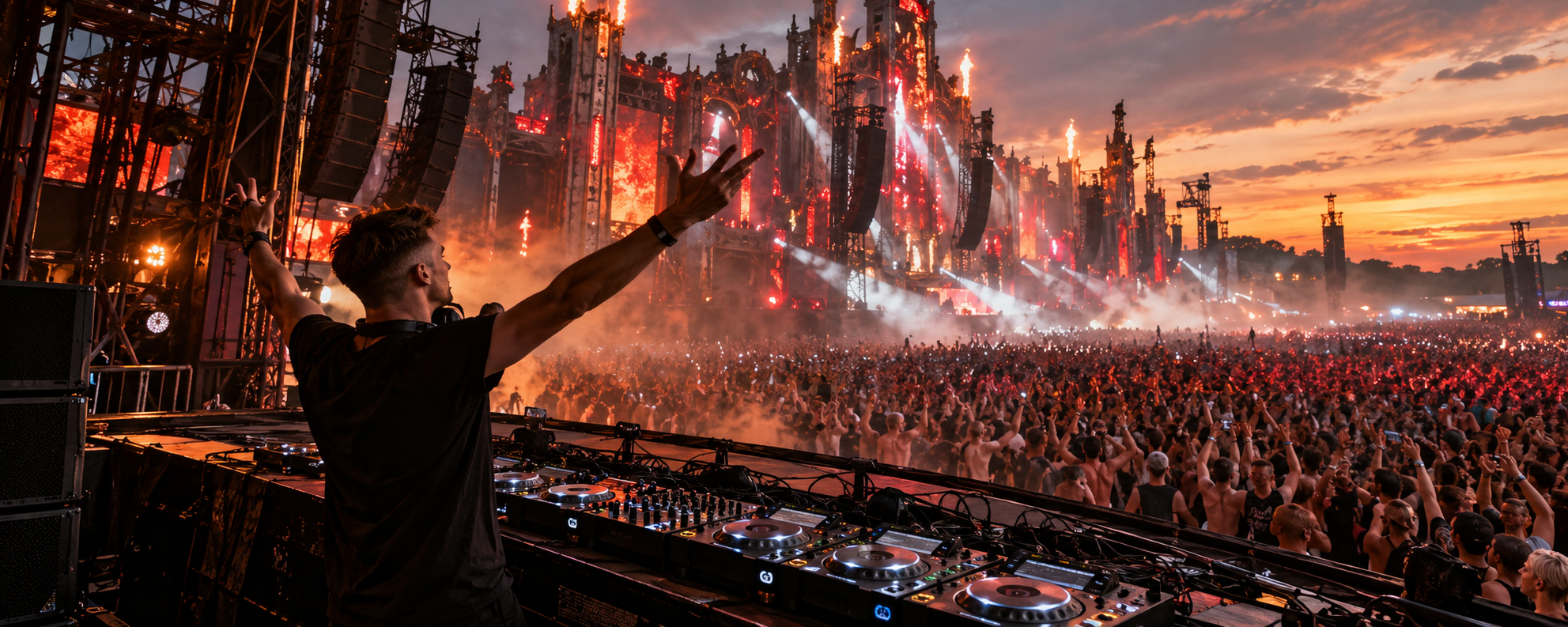
Some electronic music invites listeners into a gradual, hypnotic rhythm. Other styles emphasize intricate percussion, atmospheric textures, or subtle changes in sound.
Hardstyle music creates excitement through a particularly powerful combination of rhythm, melody, and contrast.
A steady electronic beat establishes the pulse. A synthesizer introduces a melody, and additional layers gradually increase the tension.
The drums become quieter.
A vocal sample appears.
The melody grows more dramatic.
Then the kick returns with renewed force, transforming the energy of the track.
That moment of release is one of hardstyle's most recognizable musical experiences.
Yet hardstyle is not simply about loud kicks and dramatic drops.
Its arrangements can include carefully developed melodies, distinctive bass patterns, atmospheric introductions, emotional breakdowns, and complex sound design.
Some recordings emphasize euphoric melodies and memorable vocal hooks.
Others focus on aggressive kick drums, rhythmic experimentation, and darker electronic textures.
For newcomers, hardstyle radio offers an accessible way to explore these different approaches.
One track might introduce an early reverse-bass rhythm. Another could feature a melodic festival anthem, a rawstyle production, or a modern recording built around several contrasting kick sounds.
The key is to listen for the relationship between anticipation and impact.
Notice how a producer builds tension.
Follow the melody.
Listen to the kick and bass.
Then pay attention to what changes when the main rhythm returns.
In this guide, we'll explore hardstyle's history, defining characteristics, major subgenres, influential artists, essential tracks, and connections with other electronic dance styles.
We'll also create a practical one-hour hardstyle listening journey to help you discover the genre without feeling overwhelmed.
Whether you're completely new to hardstyle or already enjoy energetic electronic music, this guide will help you recognize the details that make the genre memorable.
1. What Is Hardstyle Music?
Hardstyle is a genre of electronic dance music known for its powerful kick drums, energetic rhythms, synthesizer melodies, and dramatic changes in intensity.
It emerged around the turn of the 2000s, particularly through Dutch electronic dance music scenes.
Hardstyle developed through influences from hard trance, hard house, hardcore, and other electronic styles.
Over time, it established a distinctive musical identity.
Common characteristics of hardstyle
Hardstyle frequently features:
-
Powerful electronic kick drums.
-
Distorted bass textures.
-
Energetic dance rhythms.
-
Synthesizer melodies.
-
Dramatic breakdowns.
-
Tension-building transitions.
-
Drops.
-
Reverse-bass patterns.
-
Vocal samples or sung passages.
-
Atmospheric introductions.
-
Layered electronic production.
-
Contrasting rhythmic sections.
Not every hardstyle track contains all these elements.
The genre has changed considerably since its early years.
Why hardstyle is distinctive
Hardstyle often emphasizes the contrast between melodic anticipation and rhythmic impact.
A producer may spend considerable time preparing a moment when the kick returns.
The arrangement surrounding that moment is just as important as the drop itself.
2. The History of Hardstyle Music
Hardstyle developed through European electronic dance music culture.
Its early history is particularly associated with the Netherlands.
Late-1990s influences
Hard house, hard trance, and hardcore influenced the musical environment from which hardstyle emerged.
Early experimentation
Producers began combining driving rhythms with distinctive bass and kick patterns.
Early-2000s development
Hardstyle became increasingly recognizable as a separate electronic dance genre.
Dutch dance culture
The Netherlands became an important center for hardstyle production and events.
International expansion
The genre gradually developed audiences outside the Netherlands.
Melodic developments
During the late 2000s and early 2010s, many producers placed greater emphasis on expansive melodies and emotional breakdowns.
Rawstyle
Harder and more rhythmically aggressive approaches became increasingly prominent.
Contemporary hardstyle
Modern hardstyle includes several different production styles, ranging from melodic tracks to experimental kick-focused arrangements.
Why the history matters
Understanding the genre's development helps explain why early hardstyle can sound very different from contemporary recordings.
3. What BPM Is Hardstyle?
Hardstyle is commonly associated with tempos around 150 beats per minute, although the precise tempo varies.
What does BPM mean?
BPM stands for beats per minute.
It measures the speed of a musical pulse.
Early hardstyle
Some early recordings use tempos lower than those associated with later hardstyle.
Modern hardstyle
Many contemporary tracks operate around 150 BPM or somewhat faster.
Rawstyle
Rawstyle tracks may use similar tempos while creating a more aggressive rhythmic impression.
Tempo is not everything
Two tracks at the same BPM can feel very different because of their kick design, melodies, and arrangements.
Listening exercise
Choose two hardstyle recordings with similar tempos.
Compare their drum patterns and melodic sections.
Notice how production choices change the perceived intensity.
4. The Hardstyle Kick: The Heart of the Genre
The kick drum is one of hardstyle's defining musical elements.
Unlike a simple electronic drum hit, a hardstyle kick often contains several carefully designed sonic components.
The initial attack
The beginning of the kick creates a sharp rhythmic impact.
The low-frequency body
Bass frequencies give the sound weight.
Distortion
Distortion contributes to the kick's distinctive character.
Pitch movement
Some kicks include noticeable changes in pitch.
Rhythmic repetition
Repeated kick patterns establish the dance pulse.
Modern kick variation
Contemporary producers may use several different kick designs within one track.
Why kick design matters
A kick can influence the mood and identity of an entire hardstyle recording.
Listening tip
Focus on the kick during a drop.
Notice whether it sounds deep, sharp, distorted, pitched, or unusually textured.
Then compare it with the kick used in another track.
5. Reverse Bass: An Early Hardstyle Signature
Reverse bass is strongly associated with early hardstyle and related hard dance styles.
What is reverse bass?
Reverse bass describes a distinctive rhythmic bass sound that emphasizes movement between kick drum hits.
The term refers to the characteristic sound and rhythmic placement rather than simply playing an ordinary bass recording backward.
Rhythmic movement
Reverse-bass patterns create a recognizable bouncing feel.
Early hardstyle
The technique became an important part of early hardstyle's musical identity.
Related genres
Similar bass approaches also appear in other hard dance styles.
Modern appearances
Contemporary producers sometimes revisit reverse-bass sounds.
Why reverse bass matters
It provides an accessible way to recognize the sound of early hardstyle.
6. The Importance of Melody in Hardstyle
Melody plays a central role in many hardstyle recordings.
Synthesizer leads
Bright electronic lead sounds frequently carry the main melody.
Emotional themes
Some melodies are designed to create uplifting or dramatic feelings.
Repetition
Repeated phrases help establish memorable musical hooks.
Harmonic progressions
Chord changes support the melody.
Melodic breakdowns
Producers may introduce a melody during a quieter section.
Melodic climaxes
The same theme may return during a powerful drop.
Why melody matters
A memorable melody can give a hardstyle track an identity beyond its rhythmic intensity.
7. Hardstyle Builds and Drops
Builds and drops are important structural features of many hardstyle tracks.
The introduction
The track establishes its musical environment.
The breakdown
The arrangement becomes less rhythmically intense.
The build
Additional sounds create anticipation.
The transition
A pause, effect, or rhythmic change prepares the next section.
The drop
The kick and main rhythmic elements return.
The climax
A melody and powerful kick may combine.
Why contrast matters
The impact of a drop depends partly on the tension created before it.
Listening exercise
Choose a hardstyle track.
Listen from the beginning of a breakdown to the following drop.
Identify each element introduced during the build.
Notice what disappears immediately before the rhythm returns.
8. Euphoric Hardstyle: Powerful Melodies and Emotional Energy
Euphoric hardstyle is associated with melodic arrangements, uplifting themes, and dramatic climaxes.
Musical characteristics
Euphoric hardstyle often features:
-
Expansive synthesizer melodies.
-
Emotional chord progressions.
-
Atmospheric breakdowns.
-
Vocal hooks.
-
Powerful kick drums.
-
Memorable climaxes.
Melodic emphasis
The melody frequently becomes the central musical idea.
Vocal elements
Some tracks feature singers or recognizable vocal samples.
Festival appeal
Euphoric hardstyle became strongly associated with large dance events.
Why euphoric hardstyle matters
It demonstrates how hardstyle combines rhythmic power with melodic expression.
9. Rawstyle: A Harder Approach to Hardstyle
Rawstyle is a harder-edged style within the hardstyle family.
Its development is associated with more aggressive kick design and darker production approaches.
Musical characteristics
Rawstyle may feature:
-
Heavily distorted kicks.
-
Aggressive bass textures.
-
Dark synthesizer sounds.
-
Sharp rhythmic accents.
-
Short vocal samples.
-
Dramatic kick changes.
-
Intense drops.
Kick-focused production
The kick often becomes a central musical feature.
Melodic variety
Rawstyle can still include melodies and atmospheric breakdowns.
Why rawstyle matters
It demonstrates how producers can create musical intensity through sound design and rhythmic contrast.
Listening tip
Compare a euphoric hardstyle track with a rawstyle recording.
Notice how the balance between melody and kick design changes.
10. Early Hardstyle: Discovering the Classic Sound
Early hardstyle refers to the genre's earlier musical approaches, especially those associated with the first half of the 2000s.
Musical characteristics
Early hardstyle often features:
-
Reverse-bass patterns.
-
Driving electronic rhythms.
-
Hard trance influences.
-
Repetitive synthesizer motifs.
-
Distinctive kick and bass combinations.
-
Extended DJ-friendly arrangements.
Production differences
Early recordings may sound less densely layered than modern hardstyle.
Rhythmic emphasis
The groove often plays a central role.
Why early hardstyle matters
It provides valuable context for understanding the genre's later development.
11. Rawphoric Hardstyle: Melody Meets Aggression
The term rawphoric is sometimes used within hardstyle communities to describe music combining euphoric melodic elements with harder rawstyle production.
It is an informal stylistic label rather than a universally fixed genre category.
Musical characteristics
Rawphoric tracks may combine:
-
Expansive melodies.
-
Emotional breakdowns.
-
Aggressive kick drums.
-
Heavy bass.
-
Dramatic transitions.
Why the combination works
The contrast between melodic passages and powerful drops can create a distinctive listening experience.
Important distinction
The boundaries between euphoric hardstyle, rawstyle, and rawphoric are flexible.
Individual tracks may contain elements associated with several styles.
12. Hardstyle Vocals and Vocal Samples
Vocals appear in many hardstyle recordings.
Sung melodies
Some tracks feature melodic vocal performances.
Spoken samples
Other recordings use short spoken phrases.
Atmospheric voices
Vocal textures may appear during breakdowns.
Repeated hooks
A recognizable phrase can become central to the track.
Festival anthems
Some hardstyle songs use vocals designed for audience participation.
Why vocals matter
A vocal can create emotional connection before the track reaches its main rhythmic climax.
13. Sound Design in Hardstyle Production
Hardstyle relies heavily on electronic sound design.
Kick synthesis
Producers shape the attack, body, distortion, and pitch of kicks.
Bass processing
Bass sounds contribute weight and rhythmic movement.
Synthesizer layering
Multiple synth sounds can create a fuller melody.
Effects
Reverb, delay, distortion, and filtering influence the arrangement.
Transitions
Risers, impacts, and other effects help connect musical sections.
Automation
Producers change sound parameters throughout a track.
Why sound design matters
Small production choices can dramatically change the energy of a recording.
14. Headhunterz: A Major Hardstyle Artist
Headhunterz is one of the most influential artists associated with hardstyle.
His work contributed to the genre's international recognition.
Musical identity
His recordings frequently emphasize:
-
Memorable melodies.
-
Powerful kicks.
-
Emotional breakdowns.
-
Carefully developed climaxes.
-
Distinctive electronic production.
Essential tracks
-
Rock Civilization
-
The Power of the Mind
-
Dragonborn
Why Headhunterz matters
His music became influential during hardstyle's melodic development and international expansion.
Listening tip
Focus on the relationship between the melody and the kick during a climactic section.
15. Wildstylez: Melodic Hardstyle Innovation
Wildstylez is an influential Dutch hardstyle producer and DJ.
Musical characteristics
His work often features:
-
Expansive melodies.
-
Recognizable synthesizer leads.
-
Emotional arrangements.
-
Powerful rhythmic sections.
-
Polished production.
Essential tracks
-
Timeless
-
Year of Summer
-
Lose My Mind (with Brennan Heart)
Why Wildstylez matters
His recordings helped shape the melodic side of modern hardstyle.
16. Brennan Heart: Melodies and Festival Anthems
Brennan Heart is a prominent hardstyle producer known for melodic arrangements and energetic performances.
Musical identity
His recordings frequently combine:
-
Strong kick drums.
-
Memorable melodies.
-
Vocal hooks.
-
Emotional breakdowns.
-
Festival-oriented arrangements.
Essential tracks
-
Imaginary (with Jonathan Mendelsohn)
-
Lose My Mind (with Wildstylez)
-
Just as Easy
Why Brennan Heart matters
His music demonstrates the broad appeal of melodic hardstyle.
17. D-Block & S-te-Fan: Energy and Musical Variety
D-Block & S-te-Fan are an influential Dutch hardstyle duo.
Musical characteristics
Their recordings often feature:
-
Powerful kicks.
-
Detailed arrangements.
-
Memorable melodies.
-
Vocal elements.
-
Energetic drops.
Essential tracks
-
Music Made Addict
-
Twilight Zone
-
Ghost Stories
Why the duo matters
Their work demonstrates the relationship between hardstyle's rhythmic power and melodic creativity.
18. Noisecontrollers: Distinctive Hardstyle Production
Noisecontrollers became influential through their distinctive approach to hardstyle production.
Originally a duo, the project later continued as a solo act.
Musical identity
Noisecontrollers recordings often emphasize:
-
Detailed electronic production.
-
Recognizable melodies.
-
Distinctive kick sounds.
-
Creative arrangements.
-
Rhythmic experimentation.
Essential tracks
-
So High
-
Gimme Love
-
Down Down
Why Noisecontrollers matter
The project's work influenced hardstyle production and sound design.
19. Other Important Hardstyle Artists
Hardstyle includes many influential producers and DJs.
Frontliner
Frontliner became known for melodic hardstyle production.
Suggested track: "Symbols"
Coone
Coone is a Belgian hardstyle DJ and producer associated with the genre's international development.
Suggested track: "Words from the Gang"
Da Tweekaz
Da Tweekaz are known for energetic, melodic hardstyle with playful and recognizable musical themes.
Suggested track: "Jägermeister"
Sub Zero Project
Sub Zero Project are associated with modern hardstyle production and distinctive kick design.
Suggested track: "The Project"
Ran-D
Ran-D is known for powerful hardstyle productions and memorable anthems.
Suggested track: "Zombie"
Radical Redemption
Radical Redemption is associated with harder rawstyle approaches.
Rebelion
Rebelion are known for aggressive modern hardstyle and rawstyle production.
Why explore different artists?
Each producer offers a distinctive approach to melody, rhythm, and sound design.
20. Hardstyle Festivals and Dance Culture
Hardstyle has a strong connection with large electronic dance music events.
Defqon.1
Defqon.1 is one of the most recognizable festivals associated with hard dance music.
Qlimax
Qlimax became an influential event associated with hardstyle and theatrical stage production.
Its final edition took place in 2024.
Decibel Outdoor
Decibel Outdoor is an established Dutch festival featuring hard dance music.
Reverze
Reverze is a Belgian event associated with hardstyle and related genres.
Festival anthems
Some events commission or promote tracks associated with particular editions.
Visual production
Lighting, stage design, and synchronized effects contribute to the experience.
Why festivals matter
Large events helped hardstyle develop an international audience.
21. Hardstyle vs. Hardcore Techno
Hardstyle and hardcore techno share historical connections.
However, they are distinct electronic dance music traditions.
Hardstyle
Hardstyle commonly emphasizes:
-
Powerful kick drums.
-
Melodic breakdowns.
-
Dramatic builds.
-
Tempos often around 150 BPM.
-
Contrasting rhythmic sections.
Hardcore techno
Hardcore techno encompasses several styles, often featuring:
-
Faster tempos.
-
Aggressive electronic percussion.
-
Distorted kick drums.
-
Rave-oriented arrangements.
Shared characteristics
Both may use:
-
Distortion.
-
Electronic kick drums.
-
Bass-heavy production.
-
Energetic dance rhythms.
Important distinction
Tempo alone does not determine the genre.
Production conventions and musical history also matter.
22. Hardstyle vs. Hard Trance
Hardstyle developed partly through influences from hard trance.
However, the genres established different musical conventions.
Hard trance
Hard trance frequently emphasizes driving rhythms, synthesizer melodies, and trance-derived arrangements.
Hardstyle
Hardstyle developed distinctive kick and bass techniques.
Shared characteristics
Both may feature:
-
Electronic dance rhythms.
-
Synthesizer leads.
-
Melodic breakdowns.
-
Energetic builds.
Important differences
Hardstyle generally places greater emphasis on its characteristic kick design.
Why the distinction matters
Understanding hard trance provides useful context for hardstyle's early development.
23. Hardstyle vs. Hard House
Hard house was another influence on hardstyle's development.
Hard house
Hard house is a broad electronic dance music category associated with driving rhythms and energetic club production.
Hardstyle
Hardstyle developed a more distinctive approach to kick and bass design.
Shared characteristics
Both may feature:
-
Strong electronic beats.
-
Repeated rhythmic patterns.
-
Synthesizer melodies.
-
Energetic arrangements.
Important distinction
Hard house and hardstyle have different musical histories and production conventions.
24. Hardstyle vs. EDM
EDM is an umbrella term for electronic dance music.
Hardstyle is one genre within that broader category.
EDM
EDM includes many styles, such as house, trance, techno, drum and bass, and hardstyle.
Hardstyle
Hardstyle emphasizes distinctive kick drums and dramatic melodic or rhythmic structures.
Shared characteristics
Both may feature:
-
Electronic production.
-
Builds.
-
Drops.
-
Synthesizers.
-
Dance-oriented rhythms.
Why the distinction matters
Not every electronic festival track is hardstyle.
25. Essential Hardstyle Tracks for Beginners
If you're discovering hardstyle for the first time, several recordings provide useful starting points.
1. Headhunterz – Rock Civilization
A classic hardstyle recording with a recognizable melodic identity.
2. Headhunterz – The Power of the Mind
An influential hardstyle anthem associated with Qlimax 2007.
3. Wildstylez – Timeless
A melodic hardstyle recording emphasizing atmosphere and emotional development.
4. Brennan Heart & Wildstylez – Lose My Mind
A recognizable example of melodic hardstyle.
5. Brennan Heart & Jonathan Mendelsohn – Imaginary
A vocal-driven hardstyle track.
6. D-Block & S-te-Fan – Music Made Addict
An influential recording associated with modern hardstyle's development.
7. Noisecontrollers – So High
A melodic hardstyle track featuring detailed production.
8. Frontliner – Symbols
A recording emphasizing powerful melodic themes.
9. Ran-D – Zombie
A recognizable hardstyle recording featuring a dramatic vocal theme.
10. Sub Zero Project – The Project
A track associated with modern hardstyle's harder production approaches.
These recordings introduce different periods and musical styles within hardstyle.
26. How to Listen to Hardstyle More Closely
Hardstyle rewards attentive listening because the arrangement often depends on small production details.
First listen: Follow the kick
Notice the kick's attack, bass, and distortion.
Second listen: Focus on the melody
Identify the main synthesizer theme.
Third listen: Explore the breakdown
Pay attention to the quieter musical sections.
Fourth listen: Notice the build
Identify the sounds that create anticipation.
Fifth listen: Hear the drop
Notice what changes when the main rhythm returns.
Sixth listen: Compare kick designs
Some tracks introduce multiple kick sounds.
Seventh listen: Hear the complete arrangement
Finally, listen without focusing on one element.
Notice how the producer balances rhythm, melody, and contrast.
Why repeated listening helps
A hardstyle track may reveal new details each time you hear it.
27. A One-Hour Hardstyle Listening Journey
One hour is enough to introduce several important hardstyle styles and production approaches.
The following listening plan moves from early hardstyle to melodic and harder contemporary recordings.
Use the time blocks as flexible listening windows rather than exact track durations.
Minutes 0–10: Begin With Early Hardstyle
Listening focus:
-
Reverse bass.
-
Driving rhythms.
-
Early electronic textures.
Choose a classic early-2000s hardstyle mix or a selection of early recordings.
Minutes 10–20: Discover Classic Hardstyle
Suggested artists:
-
Headhunterz.
-
Noisecontrollers.
Listen for the relationship between melody and kick.
Minutes 20–30: Explore Euphoric Hardstyle
Suggested artists:
-
Wildstylez.
-
Brennan Heart.
Focus on emotional melodies and dramatic climaxes.
Minutes 30–40: Experience Festival Hardstyle
Suggested artists:
-
D-Block & S-te-Fan.
-
Frontliner.
Notice the use of vocal hooks and memorable melodic themes.
Minutes 40–50: Explore Modern Kick Design
Suggested artists:
-
Sub Zero Project.
-
Ran-D.
Listen for changes in kick texture and rhythmic impact.
Minutes 50–60: Discover Rawstyle
Suggested artists:
-
Radical Redemption.
-
Rebelion.
Focus on aggressive sound design and contrasting drops.
Reflect on your listening experience
After the hour, consider:
-
Which kick sound was most memorable?
-
Did you prefer melodic or aggressive tracks?
-
Which breakdown created the strongest anticipation?
-
Which drop had the greatest impact?
-
Which artist would you like to explore further?
These questions can guide your next listening session.
28. Hardstyle Music for Different Listening Moments
Hardstyle can complement several different activities.
Exercise
Energetic rhythms may provide motivation during workouts.
Running
Some listeners enjoy the steady pulse of hardstyle while running.
Driving
Hardstyle can create an energetic soundtrack, provided the volume remains comfortable and attention stays on the road.
Music discovery
The genre offers an introduction to European hard dance culture.
Festival preparation
Listening to hardstyle can help familiarize you with artists and tracks before an event.
Studying production
Hardstyle provides examples of electronic kick design, synthesis, and arrangement.
Focused listening
Detailed electronic production rewards close attention.
The best selection depends on personal preference.
29. How to Choose a Good Hardstyle Radio Station
A good hardstyle radio station should clearly communicate its musical focus.
Early Hardstyle
Some stations emphasize classic reverse-bass tracks.
Euphoric Hardstyle
These selections often feature melodic arrangements and uplifting themes.
Rawstyle
Other stations focus on aggressive kick drums and harder production.
Festival Hardstyle
Some programming emphasizes popular anthems.
Mixed Hardstyle
A broader station may combine classic and contemporary recordings.
Hard Dance
Some stations include hardstyle alongside hardcore, hard trance, and related genres.
Clear Station Descriptions
Checking a station's description helps identify its musical identity.
Why variety matters
A station combining familiar tracks with lesser-known productions can encourage discovery.
30. Building Your Own Hardstyle Playlist
Creating a hardstyle playlist is an enjoyable way to explore the genre.
Begin with early recordings
Start with classic reverse-bass hardstyle.
Add influential artists
Include Headhunterz and Noisecontrollers.
Explore melodic tracks
Add Wildstylez and Brennan Heart.
Introduce festival anthems
Include D-Block & S-te-Fan and Frontliner.
Explore modern production
Add Sub Zero Project and Ran-D.
Discover rawstyle
Include Radical Redemption and Rebelion.
Balance energy levels
Mix melodic tracks with more aggressive recordings.
Pay attention to transitions
Arrange tracks so that the intensity develops naturally.
Include unfamiliar producers
Explore artists beyond the most famous names.
Finish with a favorite
Choose a track that captures the qualities you enjoy most.
A thoughtful playlist can reveal hardstyle's musical diversity.
31. Why Hardstyle Music Remains Influential
Hardstyle continues to attract listeners because of its distinctive musical identity.
Powerful rhythms
The genre emphasizes recognizable kick and bass designs.
Melodic creativity
Many tracks feature memorable synthesizer melodies.
Emotional contrast
Breakdowns and drops create dramatic changes in intensity.
Production innovation
Producers continue to experiment with electronic sound design.
Festival culture
Large events connect hardstyle audiences.
International development
The genre has listeners and producers around the world.
Stylistic diversity
Hardstyle includes early, euphoric, raw, and other approaches.
Digital discovery
Online radio makes historical and contemporary recordings easier to explore.
These qualities help explain hardstyle's continuing relevance.
32. Discover Hardstyle and Related Music on 1LiveRadio
Online radio provides a convenient way to explore hardstyle and related electronic dance genres.
If you enjoy hardstyle, you may also appreciate:
-
Hardcore techno.
-
Hard trance.
-
Hard house.
-
Gabber.
-
Happy hardcore.
-
Frenchcore.
-
Hard dance.
-
Trance.
-
Techno.
-
Electronic dance music.
Each category offers a different approach to rhythm, melody, and production.
Visit 1LiveRadio to browse available radio stations and discover music from around the world.
Explore station categories and descriptions to find programming that matches your interests.
Whether you're interested in classic reverse-bass hardstyle, euphoric melodies, or modern rawstyle, online radio can help you discover new favorites.
Station availability and programming may vary.
Frequently Asked Questions About Hardstyle Music
What is hardstyle music?
Hardstyle is an electronic dance music genre known for powerful kick drums, energetic rhythms, synthesizer melodies, and dramatic changes in intensity.
Where did hardstyle originate?
Hardstyle developed through European electronic dance music scenes, particularly in the Netherlands.
When did hardstyle begin?
Hardstyle emerged around the turn of the 2000s.
What BPM is hardstyle?
Many hardstyle tracks operate around 150 BPM, although tempos vary across periods and subgenres.
What is a hardstyle kick?
A hardstyle kick is a heavily processed electronic drum sound that often combines a sharp attack, powerful bass, distortion, and pitch movement.
What is reverse bass?
Reverse bass is a distinctive rhythmic bass technique associated with early hardstyle and related hard dance styles.
What is euphoric hardstyle?
Euphoric hardstyle emphasizes expansive melodies, emotional breakdowns, and powerful climaxes.
What is rawstyle?
Rawstyle is a harder-edged style of hardstyle associated with aggressive kick design and darker production.
What is early hardstyle?
Early hardstyle refers to the genre's earlier musical approaches, particularly those associated with the early 2000s.
What is rawphoric hardstyle?
Rawphoric is an informal term sometimes used for tracks combining euphoric melodies with rawstyle production.
Is hardstyle the same as hardcore techno?
No. Hardstyle and hardcore techno are distinct electronic dance music traditions.
Is hardstyle the same as hard trance?
No. Hard trance influenced hardstyle's development, but the genres have different production conventions.
Is hardstyle a type of EDM?
Yes. Hardstyle is one genre within the broader electronic dance music category.
Who are some famous hardstyle DJs?
Important artists include Headhunterz, Wildstylez, Brennan Heart, D-Block & S-te-Fan, Noisecontrollers, and Frontliner.
What are some famous hardstyle festivals?
Important events include Defqon.1, Decibel Outdoor, and Reverze. Qlimax was also influential, with its final edition held in 2024.
Is hardstyle always aggressive?
No. Some tracks emphasize emotional melodies and uplifting atmospheres, while others focus on aggressive sound design.
Where can I listen to hardstyle online?
You can explore hardstyle through online radio, streaming services, specialist playlists, and recorded DJ sets.
Final Thoughts: Discovering the Energy of Hardstyle Music
Hardstyle offers a distinctive electronic music experience built around rhythm, melody, and dramatic contrast.
Its appeal comes from the relationship between anticipation and impact.
A steady beat establishes the pulse.
A synthesizer introduces a melody.
The arrangement gradually builds tension.
The drums become quieter.
A short pause creates anticipation.
Then the kick returns with renewed force.
These moments demonstrate how hardstyle can transform relatively simple musical ideas into powerful listening experiences.
From early reverse-bass recordings to the melodic productions of Headhunterz, Wildstylez, and Brennan Heart, and the aggressive sound design associated with modern rawstyle, the genre offers a rich musical journey.
For newcomers, hardstyle radio provides an accessible starting point.
Begin with the kick.
Follow the melody.
Listen to the breakdown.
Notice the build.
Then pay attention to the drop.
You may discover that the most memorable moments are not always the loudest.
A subtle melodic variation, a carefully placed pause, or a change in kick texture can completely transform the energy of a track.
Hardstyle reminds us that musical power comes not only from intensity but also from the contrast between tension, melody, and rhythmic release.
Whether you're exploring classic hardstyle, discovering euphoric anthems, or enjoying modern rawstyle, the genre offers countless opportunities for musical discovery.
Explore more music and discover online radio stations at 1LiveRadio.
Reader comments
No comments yet. Start the conversation.
Leave a comment
Your email stays private. Comments appear after approval.