
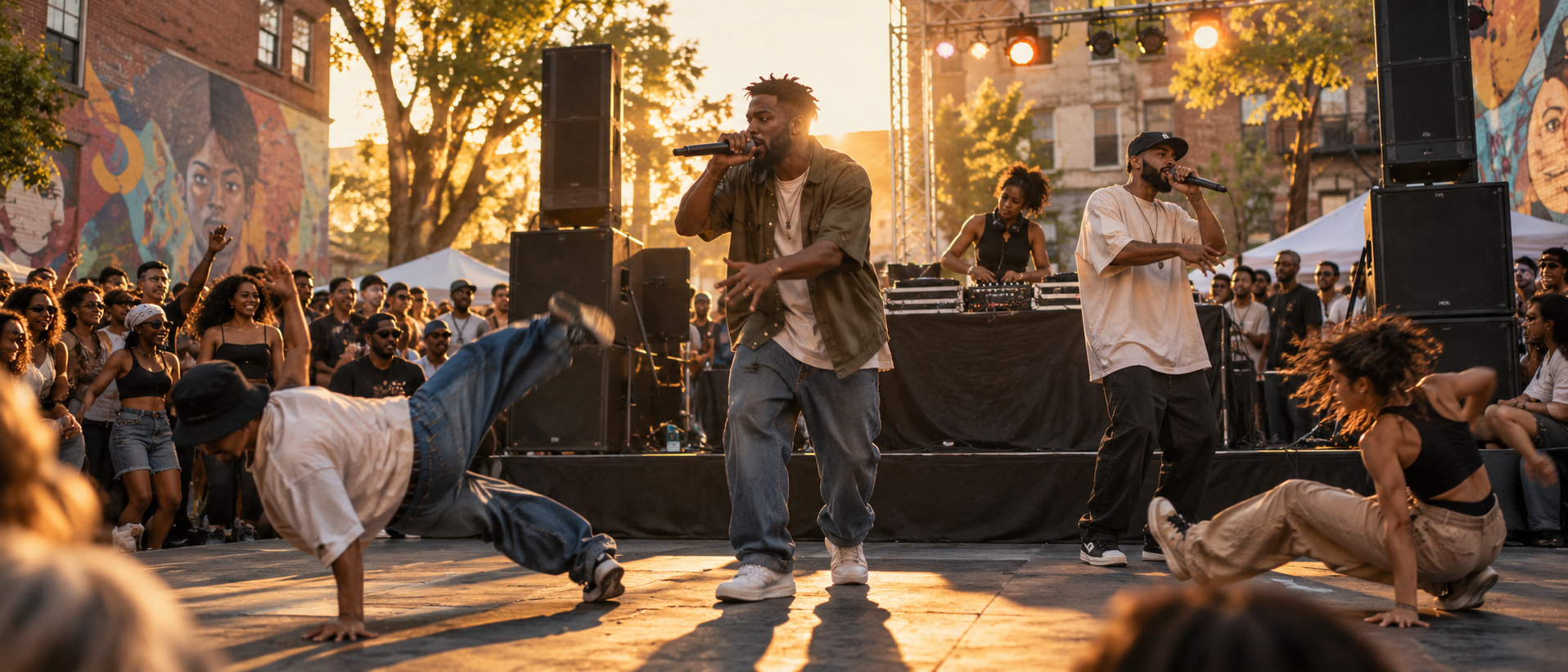
Rap is more than words delivered over a beat. It is a musical form where rhythm, language, storytelling, and production work together to create something distinctive. A carefully placed pause can change the meaning of a line, while an unexpected rhyme can make an ordinary phrase unforgettable.
Listening to rap radio offers a way to experience that creativity across different artists, generations, and musical traditions. Some tracks are built around detailed personal stories. Others emphasize intricate wordplay, memorable hooks, or experimental production.
Understanding a few essential elements can make rap radio a more rewarding listening experience.
## What Makes Rap Music Unique?
Rap places rhythmic vocal delivery at the center of a musical performance. Instead of relying primarily on sustained sung melodies, rappers organize spoken or semi-melodic phrases into patterns of rhythm, rhyme, and emphasis.
The interaction between the voice and instrumental beat is especially important. Two artists performing over the same instrumental can create entirely different results through their phrasing, timing, and lyrical choices.
### Rap and Hip-Hop: What Is the Difference?
Rap is a musical and vocal practice closely associated with hip-hop. Hip-hop is a broader cultural movement that includes MCing, DJing, breaking, and graffiti writing.
The two terms overlap in everyday usage, but recognizing the distinction helps explain why rap is connected to a larger history of creative expression.
## The Origins of Rap and Hip-Hop
Modern hip-hop developed in the Bronx, New York City, during the 1970s, shaped especially by African American and Latino communities.
DJs extended instrumental breaks from funk, soul, and other records, creating opportunities for dancers and MCs. Early MC performances gradually developed into more elaborate rhythmic verses and lyrical structures.
### From Block Parties to Recorded Rap
Hip-hop's early community gatherings helped establish the relationship between DJs, performers, and audiences.
The commercial success of The Sugarhill Gang's "Rapper's Delight" in 1979 helped bring recorded rap to wider audiences.
Grandmaster Flash and the Furious Five's "The Message" in 1982 demonstrated the power of rap as a form of social storytelling.
Over the following decades, rap expanded into numerous regional styles and became a major international musical influence.
## Understanding Rap Flow and Cadence
One of the most fascinating aspects of rap is flow: the way a performer arranges syllables and stresses against a musical beat.
### How Flow Changes a Performance
Some rappers use a relaxed, conversational delivery. Others create tightly controlled patterns that move rapidly between drum accents.
Listen for the placement of syllables. A performer may emphasize the main beat, anticipate it, or deliberately place words between its strongest accents.
These choices influence the track's energy and personality.
### The Power of Pauses
Silence can be as expressive as a rhyme.
A brief pause before an important phrase creates anticipation. A longer break after a striking line gives listeners time to consider its meaning.
Great rap performances use these spaces deliberately rather than filling every moment with words.
## Why Rhyme Schemes Matter
Rap lyrics frequently use sophisticated sound patterns that reward close listening.
### Internal and Multisyllabic Rhymes
End rhymes appear near the ends of lines, while internal rhymes connect sounds within the same line or across phrases.
Multisyllabic patterns extend those connections across several syllables, adding rhythmic complexity.
### Wordplay and Storytelling
Rappers also use metaphors, double meanings, humor, and vivid imagery.
Some songs tell complete stories with characters and changing perspectives. Others focus on a particular emotion or observation.
Listening to a verse several times can reveal details that are easy to miss initially.
## How Hip-Hop Beats Shape the Music
Production is not merely background accompaniment. The instrumental arrangement influences how lyrics are heard and interpreted.
### Drums and Bass
Kick drums, snares, claps, and hi-hats establish rhythmic structure.
Basslines provide weight and movement, sometimes reinforcing the drums and sometimes creating contrasting patterns.
### Sampling and Musical Connections
Sampling has been central to many hip-hop production traditions.
Producers transform recorded musical fragments into new arrangements, creating connections between hip-hop and earlier styles such as jazz, funk, and soul.
A familiar sample can add historical or emotional meaning to a track.
### Minimalism Versus Layered Production
A sparse beat leaves room for detailed lyrics and subtle changes in vocal delivery.
A layered arrangement may create a more dramatic atmosphere through synthesizers, samples, percussion, and changing textures.
Both approaches can be effective when they support the artist's intention.
## Exploring Different Rap Styles
Rap includes many musical approaches rather than one fixed sound.
### Boom Bap
Boom bap is associated with prominent kick and snare patterns, sample-based production, and lyrical emphasis.
### Trap
Trap emerged from Southern hip-hop and is commonly associated with deep 808-style bass, rapid hi-hat patterns, and distinctive electronic production.
### Jazz Rap
Jazz rap incorporates jazz-influenced samples, instrumentation, and harmonic ideas, often emphasizing lyrical creativity.
### Conscious and Storytelling Rap
These overlapping approaches emphasize subjects such as personal experiences, social conditions, and cultural perspectives.
They are not restricted to one particular instrumental sound.
### Global Rap
Rap has developed distinctive scenes in France, the United Kingdom, Brazil, Germany, Morocco, and many other countries.
Local languages and musical traditions give these scenes their own identities.
## Influential Artists Worth Exploring
Rap's development can be heard through artists who expanded its lyrical and musical possibilities.
Run-D.M.C. helped establish rap's mainstream visibility during the 1980s.
Public Enemy combined politically engaged lyrics with dense, innovative production.
Nas became influential through detailed storytelling and vivid imagery, particularly on his 1994 album "Illmatic."
The Notorious B.I.G. demonstrated remarkable rhythmic flexibility and narrative control.
Tupac Shakur explored personal struggles, relationships, and social themes through emotionally direct performances.
Lauryn Hill brought expressive lyricism and musical versatility to influential hip-hop recordings.
Kendrick Lamar has continued to explore conceptual storytelling, character perspectives, and complex vocal approaches.
These artists offer different entry points into rap's creative possibilities.
## Why Listen to Rap Radio?
Rap radio can introduce listeners to music they might never select individually.
A varied station may move between classic hip-hop, contemporary releases, regional scenes, and lesser-known performers.
That variety makes it easier to recognize connections between musical generations.
### Discover Unexpected Artists
Rather than listening only to familiar performers, pay attention to unfamiliar voices.
Notice differences in pronunciation, cadence, lyrical subject matter, and production.
### Compare Different Eras
Listening to recordings from different decades reveals how technology and artistic preferences have changed.
Earlier sample-based productions may sound very different from modern electronic arrangements, yet both can share an emphasis on rhythm and lyrical expression.
### Hear the Beat as Part of the Message
A reflective verse over a restrained instrumental can communicate intimacy.
The same lyrical idea delivered over an energetic beat might create a very different impression.
The instrumental arrangement contributes to the meaning of the performance.
## A Simple Guide to Listening More Closely
You do not need musical training to appreciate rap's technical details.
### First Listen: Follow the Beat
Concentrate on the drums and bass. Identify the main pulse and notice any changes in the arrangement.
### Second Listen: Focus on the Voice
Pay attention to flow, cadence, emphasis, and pauses.
Notice whether the rapper follows the beat closely or creates rhythmic tension by shifting phrases around it.
### Third Listen: Explore the Lyrics
Listen for storytelling, internal rhymes, imagery, and changes in perspective.
When cultural references are unfamiliar, learning their context can improve your understanding.
### Fourth Listen: Notice the Production
Focus on instrumental loops, samples, transitions, and moments when the arrangement becomes quieter or more intense.
These elements reveal how producers and performers build a complete musical experience.
## Rap as Cultural Expression
Rap has long provided space for entertainment, competition, social commentary, and personal storytelling.
Its significance cannot be reduced to a single theme or musical style.
Some performers explore community experiences and historical conditions. Others emphasize humor, celebration, technical skill, or intimate personal reflections.
Understanding the context behind a recording helps listeners appreciate its creative choices without assuming that every artist represents the same perspective.
For further historical reading, consult Encyclopaedia Britannica's article on rap music:
https://www.britannica.com/art/rap
## Frequently Asked Questions About Rap Radio
### What is rap radio?
Rap radio is radio programming focused on rap music, often featuring classic hip-hop, contemporary releases, and different regional or stylistic traditions.
### What makes rap different from other music?
Rap frequently emphasizes rhythmic speech, lyrical patterns, cadence, and the interaction between vocal delivery and instrumental beats.
### Is rap the same as hip-hop?
Not exactly. Rap is a musical form closely associated with hip-hop, while hip-hop refers to a broader cultural movement.
### What is flow in rap music?
Flow is the rhythmic organization of syllables, stresses, pauses, and vocal phrases over a beat.
### Can I enjoy rap without understanding every lyric?
Yes. Vocal rhythm, production, tone, and musical structure can be engaging even before you understand every word.
### What rap styles should beginners explore?
Boom bap, jazz rap, storytelling rap, trap, and regional hip-hop scenes offer useful starting points for discovering different approaches.
## Final Thoughts: Why Rap Radio Rewards Attention
Rap radio is worth listening to because it reveals how much creativity can emerge from the relationship between language and rhythm.
A memorable performance might depend on a clever rhyme, a subtle pause, an expressive story, or a beat that perfectly supports the artist's voice.
The more closely you listen, the easier it becomes to recognize those details.
Explore different performers, compare production styles, and pay attention to the space between the words and the beat.
That is often where rap's most interesting musical ideas come alive.
Reader comments
No comments yet. Start the conversation.
Leave a comment
Your email stays private. Comments appear after approval.