
A relaxed listener’s guide to Rock'n'Roll
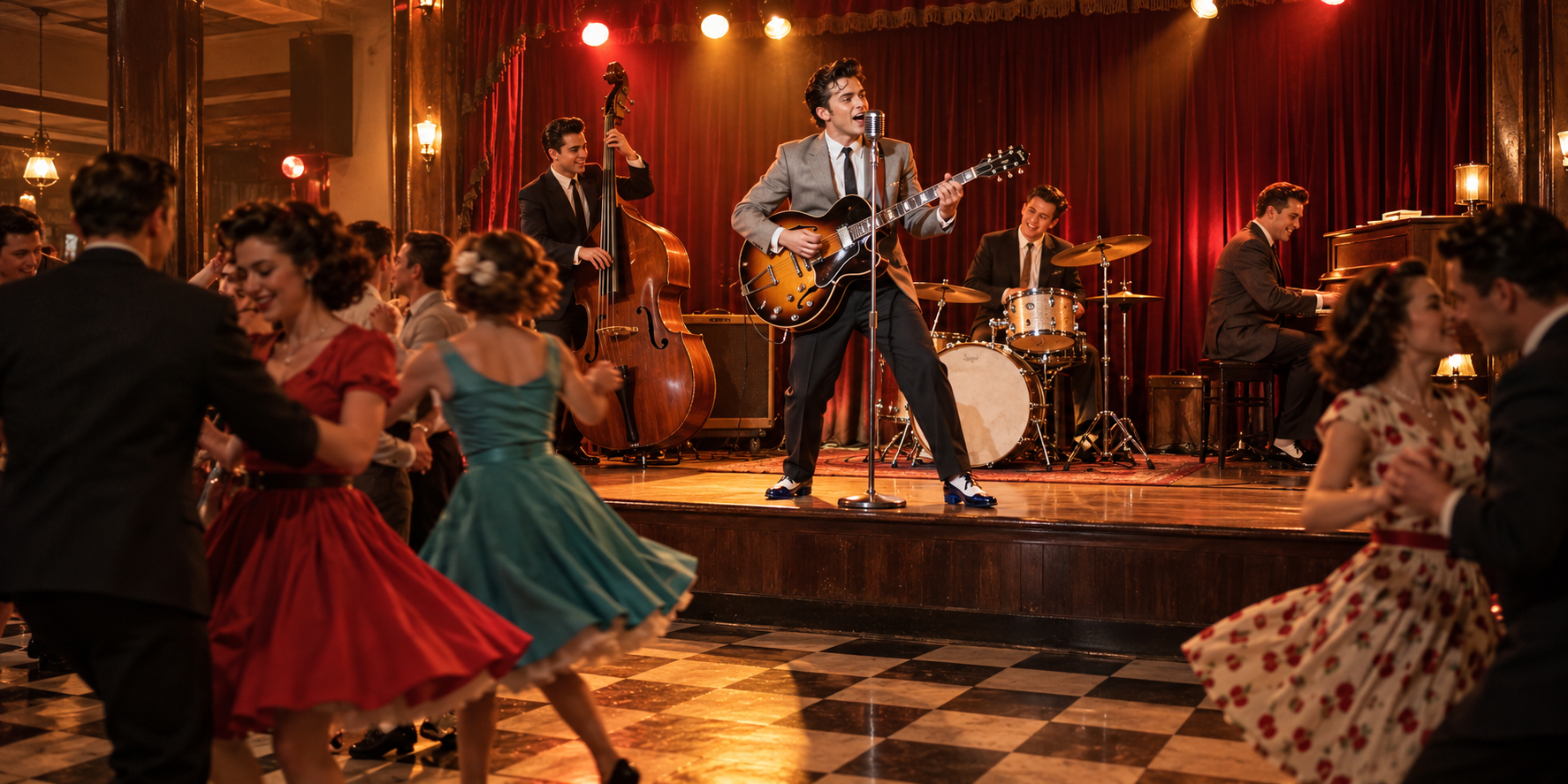
Rock and roll has a special ability to make a song feel alive within seconds. A guitar introduces a bright riff, a piano adds a rolling rhythm, the drummer establishes a strong backbeat, and a singer delivers a memorable line. Before the first chorus arrives, the music has already created a sense of movement.
The excitement of rock and roll does not depend on complicated arrangements. Many of its most enduring recordings use concise musical ideas, distinctive performances, and carefully placed rhythmic accents. A short guitar phrase, an unexpected vocal shout, or a brief instrumental break can become the moment that makes a song unforgettable.
For listeners exploring rock and roll radio, the genre offers more than nostalgia. Its recordings reveal important connections between rhythm and blues, country music, gospel, and the development of modern popular music.
They also demonstrate how performers transformed familiar musical ingredients into a new cultural phenomenon during the 1950s.
This guide explores rock and roll's history, its essential instruments and rhythms, the artists who shaped its sound, and the details worth noticing during a relaxed listening session.
You do not need to know music theory to enjoy the journey. Start with the beat, follow the instruments, and let each recording reveal its personality.
What Is Rock and Roll Music?
Rock and roll is a popular music style that emerged in the United States during the 1950s from the interaction of several established musical traditions.
Rhythm and blues was especially important, alongside country, gospel, boogie-woogie, and other styles. The resulting music frequently emphasized a strong rhythmic pulse, memorable hooks, energetic vocals, and instruments such as electric guitar, piano, bass, and drums.
The term rock and roll became widely associated with a new generation of popular recordings and performers.
Although the music is often described as fast and danceable, not every rock and roll song has the same tempo or mood. Some recordings are playful and exuberant. Others feature blues-influenced grooves, romantic lyrics, or a more restrained performance.
The defining qualities often lie in the rhythmic feel and the way the musicians interact.
A guitar may repeat a short figure while the piano plays a rolling accompaniment. The bass provides movement between chords, and the drummer emphasizes a backbeat that gives the music its unmistakable drive.
Vocals are equally important. A performer can turn a simple lyric into something memorable through timing, expression, and personality.
Rock and roll became the foundation for many later rock styles, but its original sound remains distinctive enough to deserve attention on its own.
The Roots of Rock and Roll
Rock and roll did not begin with a single artist or recording. Its emergence was the result of musical developments that had been taking place for decades.
African American musical traditions played a central role. Blues, rhythm and blues, gospel, and boogie-woogie contributed rhythmic patterns, vocal approaches, and instrumental techniques that became essential to early rock and roll.
Country music and other American popular styles also contributed musical ideas and performance traditions.
During the late 1940s and early 1950s, performers and producers were already experimenting with combinations of these sounds.
As electric amplification and recording technology became more accessible, musicians could create a stronger instrumental presence. Electric guitar and amplified rhythm sections became increasingly important.
Radio broadcasting, jukeboxes, record stores, and live performances helped the music reach new audiences.
The 1950s were also a period of racial segregation in the United States. The commercial growth of rock and roll involved complicated relationships between Black musical innovation, recording companies, radio programmers, and white mainstream audiences.
Understanding that history is essential. The genre's rise cannot be explained solely through the performers who became its most commercially visible stars.
Artists including Sister Rosetta Tharpe, Fats Domino, Big Joe Turner, Chuck Berry, Little Richard, and Bo Diddley made important contributions to the musical foundations and early development of rock and roll.
Their recordings reveal how the genre emerged through overlapping styles rather than a sudden invention.
Why the Backbeat Matters
One of rock and roll's most recognizable characteristics is its rhythmic emphasis.
Many classic recordings use a four-beat measure with a strong backbeat, often emphasizing beats two and four through the snare drum, handclaps, or other percussion.
This pattern creates an inviting sense of movement.
The kick drum and bass provide the underlying pulse, while the snare adds accents that make the rhythm feel lively and direct.
Piano and guitar parts often reinforce or interact with those accents.
A guitarist may play short rhythmic chords between vocal phrases. A pianist may repeat a rolling figure that gives the track continuous momentum.
The rhythm section does not need to play at maximum intensity to create excitement. A carefully timed pause or a short drum fill can make the next phrase feel more energetic.
Try listening to a classic rock and roll recording while concentrating only on the drums.
Notice where the snare falls and how the rest of the band responds.
Then listen again for the bass.
The relationship between those two instruments often explains why a recording feels so danceable, even when its melody is relatively simple.
The Electric Guitar and the Power of the Riff
The electric guitar became one of rock and roll's defining sounds.
Early performers used it for rhythmic accompaniment, short melodic figures, solos, and distinctive introductions.
Chuck Berry's guitar style became especially influential. His recordings combined recognizable opening phrases, energetic rhythmic playing, and concise solos that later musicians studied and adapted.
A riff is a short musical idea that repeats or returns during a song. In rock and roll, a riff can provide an immediate identity.
A few well-placed notes may establish the mood before the singer enters.
Guitar tone also contributes to the character of a recording. Early electric guitar sounds could be bright, sharp, warm, or slightly distorted depending on the instrument, amplifier, and recording conditions.
Unlike some later rock styles, classic rock and roll often leaves plenty of room between instruments.
The guitar may answer a vocal phrase rather than playing continuously.
That interaction creates a conversational quality.
When listening, notice whether the guitar introduces the song, supports the rhythm, or takes a brief solo.
The most memorable performance is not necessarily the most technically elaborate. Timing, phrasing, and personality can make a simple guitar idea remarkably effective.
The Piano's Essential Role
Although electric guitar became an enduring symbol of rock music, piano was equally important in the early development of rock and roll.
Boogie-woogie and rhythm-and-blues piano traditions contributed rolling bass figures, rhythmic chords, and energetic right-hand melodies.
Little Richard's recordings demonstrate how powerful piano playing could become a central part of the arrangement.
Jerry Lee Lewis also developed a highly recognizable performance style built around vigorous piano rhythms, dramatic flourishes, and expressive vocals.
Piano can create movement in several ways.
A repeating left-hand figure may provide rhythmic stability, while the right hand adds chords, fills, or melodic responses.
In some recordings, the piano reinforces the guitar. In others, it becomes the dominant instrumental voice.
Its percussive attack makes it particularly effective in fast, rhythm-driven music.
Listen for the difference between a sustained guitar note and a sharply struck piano chord.
These contrasting textures help give classic rock and roll its lively sound.
A useful listening exercise is to compare a guitar-centered Chuck Berry recording with a piano-driven Little Richard performance.
Both belong to the same broad musical tradition, but their instrumental personalities are immediately different.
Bass, Drums and the Feeling of Motion
The bass and drums form the rhythmic foundation of many rock and roll recordings.
Early performances often used upright bass, although electric bass became increasingly common as popular music developed.
A walking bassline moves through a sequence of notes that outlines the harmony and creates continuous motion.
Other bass patterns emphasize repeated notes or rhythmic accents that reinforce the drums.
The drummer establishes the tempo and shapes the groove through kick drum, snare, cymbals, and fills.
A short fill near the end of a verse may prepare the listener for the chorus.
The bass player may respond by moving into a higher or lower register, subtly changing the energy.
These details are easy to overlook because the guitar and vocals often attract attention first.
However, the rhythm section determines much of the music's physical character.
Try following the bassline through an entire song.
Notice whether it repeats the same pattern or changes as the harmony moves.
Then listen for the drummer's transitions.
You may discover that the feeling of excitement comes from small, coordinated decisions rather than from any single instrument.
The Voices That Defined Early Rock and Roll
Rock and roll's pioneering vocalists brought extraordinary variety to the music.
Little Richard combined explosive energy, gospel-influenced intensity, and unmistakable vocal personality.
Fats Domino offered a warmer, relaxed delivery that blended naturally with his piano-based rhythm-and-blues arrangements.
Chuck Berry's conversational phrasing and vivid storytelling helped make his songs memorable beyond their guitar riffs.
Elvis Presley became a major commercial figure through a performance style that drew from country, blues, gospel, and rhythm-and-blues traditions.
Buddy Holly demonstrated the appeal of melodic songwriting and a distinctive, sometimes understated vocal approach.
These artists did not sing in identical ways.
Some emphasized rhythmic excitement, while others focused on melody, storytelling, or emotional expression.
Vocal timing is particularly important.
A singer may begin a phrase slightly before the beat, hold a note longer than expected, or pause to allow an instrumental response.
Such decisions can make familiar lyrics feel spontaneous.
Listen to the space between vocal phrases.
The guitar, piano, or drums may fill that space with a short musical answer.
This relationship between voice and band is one of the most enjoyable details in classic rock and roll.
Essential Rock and Roll Artists and Songs
A rewarding introduction to rock and roll should include performers whose recordings demonstrate different aspects of the genre.
Chuck Berry's "Johnny B. Goode" is an essential example of guitar-driven rock and roll. Its opening phrase, rhythmic energy, and storytelling made it one of the most influential recordings in the style.
Little Richard's "Tutti Frutti" demonstrates explosive vocal delivery and the excitement of piano-centered early rock and roll.
Fats Domino's "Ain't That a Shame" offers a different atmosphere, combining a memorable melody with a relaxed rhythmic feel.
Bo Diddley's "Bo Diddley" is especially useful for hearing a distinctive rhythmic pattern and understanding how percussion-oriented guitar music contributed to rock's development.
Elvis Presley's "That's All Right" provides an important example of early rockabilly-associated performance, bringing together country and blues influences.
Buddy Holly's "That'll Be the Day" highlights concise songwriting, vocal personality, and memorable melodic structure.
Jerry Lee Lewis's "Great Balls of Fire" showcases the dramatic possibilities of piano-led rock and roll.
Bill Haley and His Comets' "Rock Around the Clock" became a widely recognized symbol of the genre's mainstream breakthrough during the 1950s.
These songs are not interchangeable. Each has its own arrangement, rhythmic character, and performance style.
Listening to them together reveals the diversity hidden beneath the familiar rock and roll label.
Rockabilly and Other Early Styles
Rockabilly is closely connected to the development of rock and roll.
The style drew particularly on country and rhythm-and-blues influences, often featuring energetic guitar playing, distinctive vocal phrasing, and prominent rhythmic accompaniment.
Early recordings associated with Elvis Presley, Carl Perkins, and other performers helped establish rockabilly's identity.
Carl Perkins's "Blue Suede Shoes" provides a useful example of the style's rhythmic directness and memorable songwriting.
Rockabilly recordings sometimes feature slap bass, in which the player creates additional percussive sounds while performing.
This technique can contribute a sharp rhythmic texture that complements the drums and guitar.
Other early rock and roll recordings leaned more strongly toward rhythm and blues, boogie-woogie, or vocal-group traditions.
Doo-wop, for example, contributed close vocal harmonies and memorable melodic arrangements to the wider musical landscape of the period.
These related styles demonstrate that early rock and roll was never completely uniform.
Some songs emphasized instrumental energy. Others placed vocal harmonies or storytelling at the center.
Exploring these variations makes the genre's history more interesting and prevents its most famous recordings from becoming the only reference points.
How Rock and Roll Changed Popular Music
Rock and roll transformed the sound and culture of popular music during the 1950s and beyond.
Its growing popularity coincided with the expansion of youth-oriented entertainment, record sales, radio programming, and live performance culture.
The music became closely associated with teenage audiences, dancing, and changing cultural expectations.
Its commercial success also exposed tensions involving race, representation, and the ownership and marketing of musical innovation.
Black performers were central to the development of the genre, yet the music industry did not always provide equal recognition or opportunities.
The influence of rock and roll extended into the following decade.
The Beatles, the Rolling Stones, and many other 1960s performers drew inspiration from American rock and roll and rhythm-and-blues recordings.
As musicians experimented with songwriting, amplification, and studio techniques, the broader rock genre developed new styles.
Hard rock, folk-rock, psychedelic rock, punk, and later alternative movements emerged through different combinations of influences.
Rock and roll's legacy is therefore not limited to its original recordings.
Its emphasis on rhythm, instrumental identity, expressive performance, and memorable songwriting helped shape much of modern popular music.
What Makes a Rock and Roll Song Memorable?
A memorable rock and roll recording often communicates its main idea quickly.
The introduction may establish a distinctive riff or rhythmic figure within a few seconds.
The verse develops the musical idea while the singer delivers a recognizable melody or story.
A refrain or chorus provides a point of return.
Many early recordings use concise arrangements, allowing each instrumental gesture to serve a clear purpose.
The most interesting details may be brief.
A drummer stops for a fraction of a second. A guitarist answers the singer. A pianist adds a flourish before the final chorus.
These moments create variety without making the arrangement complicated.
Repetition is another essential element.
A familiar riff becomes more satisfying when it returns after a contrasting section.
A vocal phrase may gain additional impact when the singer changes the timing or intensity.
The song's recording quality can also contribute to its personality.
Older recordings may sound less polished than contemporary productions, but their instrumental balance and performance character can be especially engaging.
Rather than judging classic rock and roll by modern production standards, listen for the musical decisions that communicate energy and identity.
How to Spend a Relaxed Hour With Rock and Roll
A focused hour of rock and roll listening can be enjoyable without feeling like a formal history lesson.
Minutes 0–10: Find the Pulse
Begin with energetic recordings such as "Rock Around the Clock" and "Johnny B. Goode."
Follow the backbeat and notice how the guitar, bass, and drums work together.
Minutes 10–20: Explore Piano-Driven Rock and Roll
Choose songs associated with Little Richard, Fats Domino, or Jerry Lee Lewis.
Listen to the piano's rhythmic movement and the relationship between the keyboard and vocals.
Minutes 20–30: Compare Vocal Personalities
Move between recordings by Chuck Berry, Elvis Presley, and Buddy Holly.
Notice how storytelling, melodic phrasing, and vocal tone create different moods.
Minutes 30–40: Discover Rockabilly
Explore Carl Perkins and early Elvis Presley recordings.
Listen for country influences, guitar textures, and distinctive bass patterns.
Minutes 40–50: Focus on the Small Details
Return to a song you already know.
This time, listen for drum fills, instrumental responses, pauses, and subtle changes in the arrangement.
Minutes 50–60: Follow the Influence
Finish with early recordings by later rock performers who drew inspiration from 1950s rock and roll.
Notice which musical elements remain recognizable and which have changed.
The exact number of songs will depend on recording lengths. There is no need to rush through a fixed playlist.
The goal is to finish with a clearer understanding of the music and at least one recording you want to hear again.
Rock and Roll Radio: More Than Nostalgia
Rock and roll radio can introduce listeners to music they might otherwise encounter only through familiar greatest-hits collections.
A varied selection provides opportunities to compare guitar-driven recordings, piano-led performances, rockabilly, and rhythm-and-blues-influenced tracks.
These differences are important because the genre's history is richer than a short list of famous songs.
Radio also encourages discovery.
An unfamiliar recording may feature a remarkable guitar introduction, an unusual vocal performance, or a rhythmic pattern that immediately catches your attention.
Hearing songs in sequence can reveal connections between artists and styles.
A piano-driven performance may be followed by a guitar-centered recording, allowing the listener to recognize how similar rhythmic ideas can produce different musical personalities.
Rock and roll can also be enjoyed in different settings.
Its energy makes it suitable for driving, gatherings, and dancing, while its concise arrangements reward focused listening through headphones.
The key is to remain open to both the famous recordings and the lesser-known performances that contributed to the genre's development.
Listening Tips for Beginners
You do not need to recognize every performer or understand every historical detail to enjoy rock and roll.
Start by listening to the backbeat. Notice how the snare and bass create a steady sense of movement.
Next, follow the main riff. Identify the short musical phrase that gives the song its character.
Then listen to the singer.
Pay attention to the timing of each phrase and the way the voice interacts with the instruments.
Compare a piano-driven recording with a guitar-driven one.
Notice how the instrumental texture changes even when the music shares a similar rhythmic foundation.
Listen for pauses and transitions.
A brief stop before the chorus may create anticipation, while a short drum fill can signal a new section.
Finally, explore the historical context.
Knowing how rhythm and blues, country, gospel, and boogie-woogie contributed to rock and roll makes the recordings more meaningful.
For a researched overview of the genre's early history, see Encyclopaedia Britannica's article on rock and roll:
https://www.britannica.com/art/rock-and-roll-early-style-of-rock-music
Learning the background should enrich the listening experience rather than replace the simple pleasure of enjoying the music.
Frequently Asked Questions About Rock and Roll
What is rock and roll music?
Rock and roll is a popular music style that emerged during the 1950s, drawing strongly on rhythm and blues, country, gospel, and related musical traditions.
Where did rock and roll originate?
Rock and roll developed in the United States through the interaction of several musical communities and traditions.
Who invented rock and roll?
No single artist invented the genre. Its development involved many performers, including important African American pioneers whose music shaped its rhythmic and instrumental foundations.
What instruments are common in rock and roll?
Electric guitar, piano, bass, drums, and vocals are common, although arrangements vary.
What is a backbeat?
A backbeat is a rhythmic emphasis often placed on beats two and four of a four-beat measure.
What is rockabilly?
Rockabilly is an early rock and roll-related style that combines strong country and rhythm-and-blues influences.
Who are some essential rock and roll artists?
Chuck Berry, Little Richard, Fats Domino, Bo Diddley, Elvis Presley, Buddy Holly, Carl Perkins, and Jerry Lee Lewis are important starting points.
Is rock and roll the same as rock music?
Rock and roll usually refers to the earlier style associated particularly with the 1950s, while rock is a broader category that includes many later developments.
Why is rock and roll still influential?
Its rhythmic approach, instrumental techniques, songwriting, and performance traditions helped shape generations of popular musicians.
How can I enjoy rock and roll radio?
Listen to a mixture of familiar and unfamiliar recordings, paying attention to rhythm, riffs, vocal personality, and instrumental interaction.
Final Thoughts: Enjoy the Rhythm and the Craft
Rock and roll remains exciting because its musical ideas are direct, expressive, and full of personality.
A short guitar riff can introduce an entire song. A rolling piano pattern can create irresistible momentum. A singer can transform a simple phrase through timing and emotional delivery.
The music's history also reveals important connections between American musical traditions and the performers who helped transform popular culture.
Listening closely brings those connections to life.
Follow the backbeat, notice the bassline, compare guitar and piano textures, and pay attention to the brief moments when musicians respond to one another.
You may find that the most memorable detail is not the loudest or fastest passage.
Sometimes it is a pause, a single guitar note, a playful vocal expression, or a perfectly timed drum fill.
That combination of energy and concise musical craft is what makes rock and roll worth returning to, one recording at a time.
Reader comments
No comments yet. Start the conversation.
Leave a comment
Your email stays private. Comments appear after approval.